

From one Production line to UGX60bn turnover: How finance Helped scale Master Grain Milling
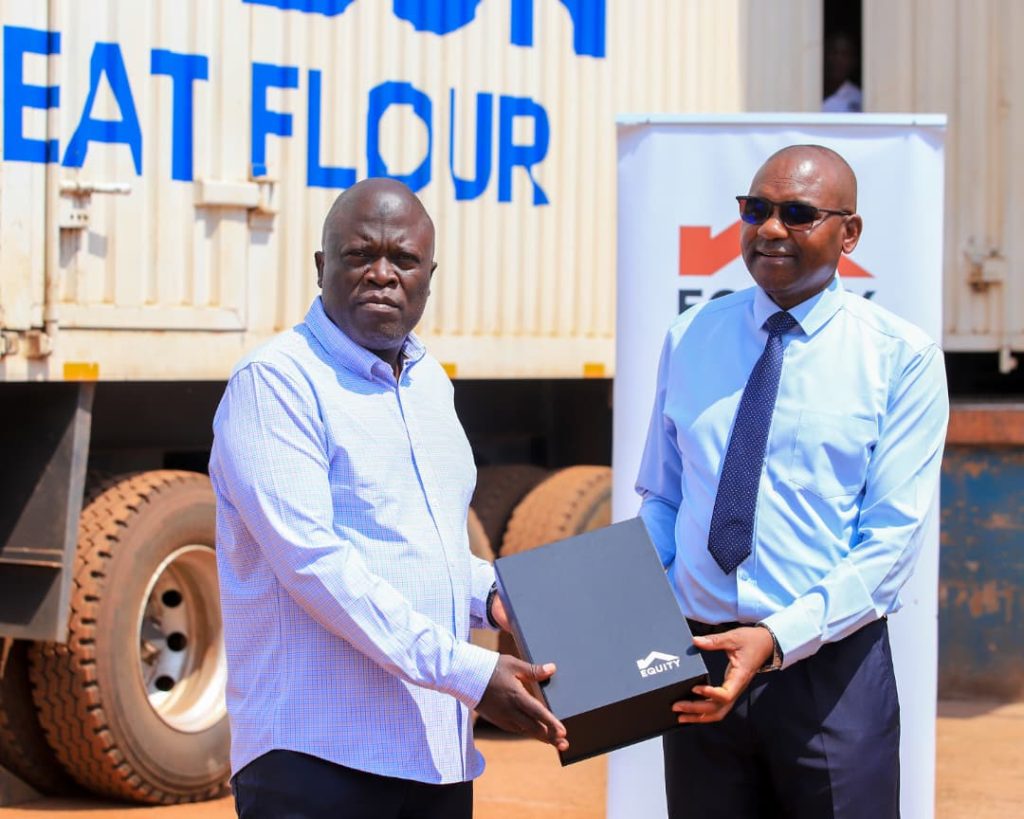
Master Grain Milling’s journey from a single production line to a UGX60 billion-plus agro-processing business illustrates how access to finance can help Ugandan manufacturers invest in machinery, distribution and business systems, while highlighting the growing importance of working capital in converting installed capacity into higher output and jobs.
For Uganda’s agro-processors, access to finance can determine whether investment in machinery translates into a bigger business or simply leaves expensive production capacity underutilised.
Master Grain Milling Limited illustrates this well. The Jinja-based wheat processor started production in 2013 with a single production line. By the 2025/26 financial year, the company had grown into an agro-processing business with annual turnover of more than UGX60 billion, a nationwide distribution network and installed production capacity of 540 tonnes a day.
The company attributes a significant part of that expansion to access to finance, including funding and trade-finance support from Equity Bank Uganda, which became its banker in 2018 after its previous financiers could no longer meet its funding requirements.
“Equity Bank saved us some time back. Our former bankers reached a point where they couldn’t support us financially, but Equity Bank came on board and gave us the exact funds we needed,” said Hajji Swammit Itaaga, Master Grain Milling’s managing director.
The significance of the financing was not simply that it provided money to the business. It enabled the company to invest in the productive assets and operating systems required to move beyond its original scale.
In 2019, Master Grain Milling acquired a modern production line from Europe, substantially increasing its production capacity. It subsequently expanded its distribution infrastructure, replaced an ageing transport fleet and established dedicated finance, production and sales functions.
The company now has about 22 sales representatives serving distributors across Uganda, each supported by company vehicles.
Meddy Mbaziira, the company’s head of sales and marketing, said the changes represented a shift from an owner-managed operation to a more structured business.
“Initially, the structures weren’t there because it was a one-man-run business, but right now the business has structures,” Mbaziira said.
The distinction matters because financing productive capacity is only one part of the growth equation.
For manufacturers and agro-processors, machinery creates the ability to produce more, but working capital determines whether that capacity can be consistently deployed. Businesses need cash to buy raw materials, maintain inventories, meet operating expenses and bridge the gap between supplying customers and receiving payment.
That is now becoming Master Grain Milling’s next financing challenge.
“If we continue working closely with Equity Bank to meet these current needs, we will be able to employ even more people,” Itaaga said.
The company says its immediate ambition is to make fuller use of its 540-tonne daily production capacity.
That puts working capital at the centre of the next phase of its growth rather than machinery alone.
The company’s experience illustrates a broader issue for Uganda’s push for agricultural value addition. Financing industrialisation is not limited to long-term loans for equipment. Businesses also require appropriately structured short- and medium-term funding to keep factories operating at commercially viable levels once the machinery is in place.
Equity Bank’s relationship with Master Grain Milling began with a financing requirement but has since extended into trade finance and discussions around the company’s expansion needs.
The bank’s executive leadership recently visited the company’s Jinja plant, led by Board Chair Henry Rugamba and Managing Director Gift Shoko, as part of engagement with the business around its operations and growth prospects.
For Master Grain Milling, the trajectory from a single production line to a business reporting more than UGX60 billion in annual turnover illustrates the potential impact of finance when it is matched with investment in technology, distribution and management systems.
But the next stage could be more revealing. The company already has substantial installed production capacity. The question is whether it can secure enough working capital to operate that capacity more intensively and turn fixed investment into higher volumes, revenues and employment.
That is a more fundamental test of finance’s impact on industrialisation; not merely whether banks can fund factories, but whether they can help viable businesses keep those factories running, expand markets and convert productive capacity into sustained economic activity.
Related Posts
 Why Unlocking Africa’s Next Mining Powerhouse Requires Strong Financial Partnerships
 Relief as UAE Eases Ebola-era Entry Curbs on Ugandans, Reopening Key Aviation Corridor
 Equity Turns Schools into Climate Restoration Hubs as Lender Launches 200,000-tree Uganda drive
 13 Feared Killed as Tracep Aviation L-410 Crashes in DRC
 IATA Warns Cargo Screening Alone Cannot Contain Undeclared Dangerous Goods Risk
 Entebbe-Based Jet Fresh Cargo Takes Ugandan Air Freight into Global Awards Contest
Get business news delivered to you everyday
Latest News

Why Unlocking Africa’s Next Mining Powerhouse Requires Strong Financial Partnerships

Relief as UAE Eases Ebola-era Entry Curbs on Ugandans, Reopening Key Aviation Corridor

Equity Turns Schools into Climate Restoration Hubs as Lender Launches 200,000-tree Uganda drive

13 Feared Killed as Tracep Aviation L-410 Crashes in DRC

IATA Warns Cargo Screening Alone Cannot Contain Undeclared Dangerous Goods Risk

Rwenzori Marathon: A Case of What’s Possible in Diversifying Uganda’s Tourism Offering

Afreximbank Issues USD29m Guarantee to Expand EAC Customs Bond

Uganda puts UGX1.4tn Treasury Bonds on Auction

DHL Launches Direct Bahrain-Johannesburg Freighter Service

Uganda Set for First National ESG Conference as Sustainable Finance Gains Ground