

Forex shortages limit African businesses access to bank trade finance
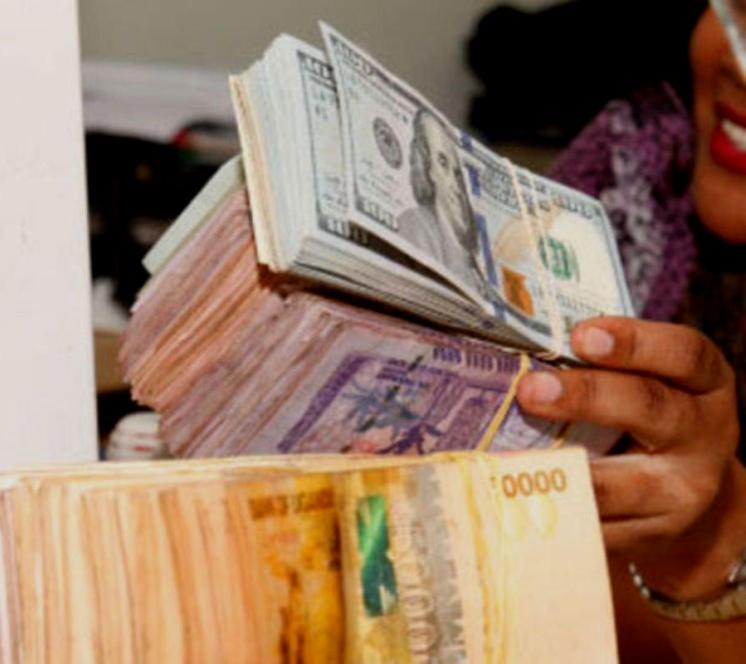 Recently, several African countries, including Nigeria, Egypt, Ethiopia, Ghana, Malawi, Mozambique, and Tanzania, have faced significant forex shortages, but Uganda has mostly been unscathed.
Foreign exchange shortages are a major barrier limiting African commercial banks’ capacity to offer trade finance which directly impacts businesses capacity to operate across borders and in international markets.
About 36 pc of banks cited limited foreign exchange liquidity as the primary constraint to their trade finance growth between 2020 and 2024, compared with 18 pc during the interlude between 2015 and 2019.
Forex shortages, usually US dollars, severely restrict trade finance for African businesses by reducing bank liquidity, increasing import costs, and delaying international payments. This gap cripples small and medium-sized enterprises (SMEs) that rely on foreign currency to import raw materials and inventory.
Political instability is a primary driver of limited foreign exchange access in Africa, as it directly damages investor confidence, disrupts export-generating industries, and limits central banks’ ability to maintain currency reserves.
Nevertheless, the fifth edition of the Trade Finance Report, published by the African Development Bank AfDB), paints a picture of resilient African financial institutions in the post Covid-19 years, despite a challenging global environment.
Presenting the report at the AfDB Annual Meetings in Brazzaville on Thursday, Anthony Simpasa, Director of the Macroeconomic Policy, Forecasting and Research, said unmet demand for trade finance declined by nearly 10 pc between 2019 and 2024. This was a result of strong interventions from multilateral development banks, governments, export credit agencies, and global banks.
Forex shortages in Africa are also driven by a structural imbalance between foreign currency inflows and outflows. Primary causes include heavy reliance on imported goods, fluctuating global commodity prices, high external debt servicing, capital flight, and volatile foreign direct investment (FDI).
Recently, several African countries, including Nigeria, Egypt, Ethiopia, Ghana, Malawi, Mozambique, and Tanzania, have faced significant forex shortages, but Uganda has mostly been unscathed.
AfDB and other development financial institutions (DFIs) facilitated about $32 billion in trade finance annually between 2020 and 2024, accounting for about three percent of Africa’s total merchandise trade on average over the same period.
According to the report, these interventions were critical in sustaining trade flows, with estimates suggesting that, in the absence of DFI support, the annual trade finance gap could have exceeded $100 billion during the four years ending 2024.
However, Simpasa said “Renewed geopolitical tensions and disruptions to global supply chains and trade flows could reverse post-pandemic progress in narrowing the trade finance gap. For instance, tighter correspondent risk appetite could widen the trade finance gap to $86.6 to $102.6 billion by 2027 under a moderate to severe scenario. This is at least 17.7 pc above the 2024 level, potentially erasing a decade of gains.”
African trade remains underserved by commercial banks. Over the five years covered by the report, commercial banks intermediated an average of 23 pc of Africa’s total trade, down from 40 pc during the period between 2011 and 2019.
Furthermore, the adoption of digital trade finance solutions by banks remains low, primarily due to high implementation costs and inadequate technological infrastructure.
Only 28 pc of the banks responded to having adopted digital tools or platforms for their trade finance operations. Yet, exciting innovations are gaining ground, such as digitization, guarantees and asset management initiatives to expand the trade finance asset class and related offerings to the market.
Discussing the report, Mehdi Tanani, the Proparco Regional Director for Central Africa, said, “Africa will not close its trade finance gap by adding constraints, but by building a more resilient, more digital, and more sustainable trade finance ecosystem — one that protects SMEs against global shocks while accelerating the continent’s economic integration.”
Proparco is a development finance institution partly owned by the French Development Agency and private shareholders from the developed countries.
Related Posts
 Bank of Uganda hikes base rate from 9.75% to 12% amidst global tensions
 Stanbic Business Forum told Uganda’s Schools Need to Outlive Their Founders
 COMESA Competition Watchdog Calls for Stronger Skills-Sets to Police Complex Regional Markets
 CMA Opens Dangote Refinery IPO to Uganda’s Wealthy investors as SBG Securities Uganda Limited Becomes Sole Intermediary
 UDB Commissions Titivated Headquarter Tower as Development Lender Scales up Transformation Role
 Equity Bank Urges Diaspora Ugandans to Turn Remittances into Investments
Get business news delivered to you everyday
Latest News

SITA Acquisition of Collins Airport Solutions Signals Moves to Consolidate Aviation Technology

Uganda Coffee Roasters Tap Richard Rugaya as Executive Director, with Focus on Commercial Growth

Equity Bank Reports UGX37.6 Billion in Green Loans as Uganda Seeks to Scale Climate Investment

Why Africa’s Institutions Must Turn Knowledge and Investment into Farmer Prosperity

Forbes ranks MTN Group third globally on best telecom employer list

Stanbic experts offer investment insights to navigate current market uncertainty

Africa Carbon Markets Urged to Turn Potential into Investment and Delivery

Bank of Uganda hikes base rate from 9.75% to 12% amidst global tensions

Corporate Buyers Could Help Unlock SAF Market Worth Millions of Tonnes by 2030

Airbus sees USD420bn Global Aviation Services Boom: Can Africa Capture its Share?