

Equity Bank Concludes School Bridge Financing Campaign with Education Sector Forum
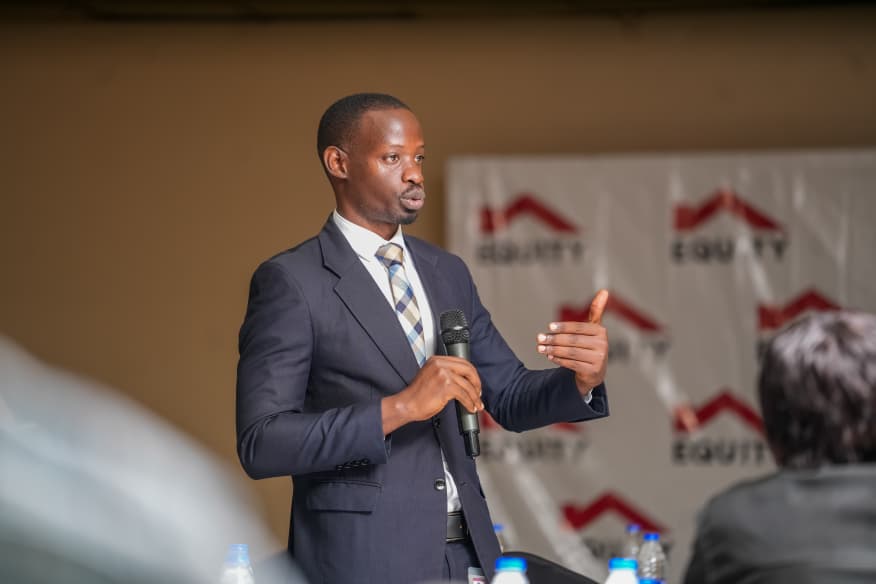 Martin Basiima, Supervisor Bancassurance addressing school owners during School Bridge Finance Seminar
Equity Bank Uganda has concluded its School Bridge Financing campaign with an education sector engagement at Hotel Africana on June 23, bringing together school leaders to explore tailored financing solutions aimed at easing cash flow pressures and supporting long-term institutional growth. The initiative highlights the growing role of structured education financing in sustaining Uganda’s schools amid rising operational and infrastructure demands.
Equity Bank Uganda concluded its nationwide School Bridge Financing campaign June 23 with a high-level engagement for school proprietors, administrators and education leaders at Hotel Africana, reaffirming its commitment to strengthening financial resilience across Uganda’s education sector.
The event marked the culmination of months of outreach promoting tailored education financing solutions designed to help schools navigate cash flow challenges while investing in long-term growth. Participants discussed financing opportunities, sector-specific challenges and practical strategies for building more sustainable educational institutions.
The engagement underscored the growing importance of specialised financial products at a time when many schools continue to face mounting operational pressures.
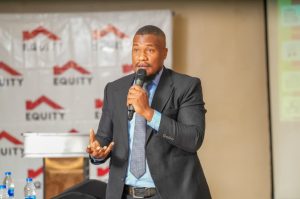
Brian Ddamba Business Development Manager at the Seminar
Uganda’s second school term is now well underway, but many institutions are still grappling with the familiar challenge of meeting day-to-day operational costs while waiting for parents to complete payment of school fees.
Teachers’ salaries, food supplies, scholastic materials, utilities, maintenance and security all require immediate financing, yet fee collections often arrive weeks or even months later.
Public and government-aided schools similarly grapple with delayed capitation grants, while private schools must balance the need for upfront expenditure against the financial realities facing many households, where school fees are increasingly paid in instalments.
Schools are also contending with rising utility costs, stricter regulatory compliance requirements, growing enrolment, infrastructure expansion needs and sustained pressure to improve academic performance in national examinations.
Teacher retention remains another persistent concern, particularly in rural communities where qualified educators often relocate to urban centres in search of better remuneration.
Infrastructure gaps continue to compound these challenges, with many schools struggling to finance new classrooms, dormitories, science laboratories, libraries, sanitation facilities and technology upgrades needed to deliver quality education.
Against this backdrop, access to timely and affordable financing has become increasingly critical.
Through its School Bridge Financing facility, Equity Bank Uganda provides unsecured loans of up to UGX 500 million, enabling schools to maintain operations during temporary cash flow shortages without disrupting learning.
The financing can be used to meet essential operational requirements including staff salaries, food supplies, scholastic materials, infrastructure maintenance, repairs, security improvements and other day-to-day expenses.
The facility is complemented by Asset Financing of up to UGX 1.6 billion, allowing schools to acquire buses, backup generators, computers, ICT equipment and science laboratory infrastructure.
Institutions planning long-term expansion can also access School Improvement and Expansion Loans to finance the construction of classrooms, dormitories, administration blocks, libraries and other facilities required to accommodate growing student populations.
Recognising the lasting effects of disruptions such as the COVID-19 pandemic, the bank has also extended recovery financing to assist schools in rebuilding and stabilising their operations.
Beyond lending, Equity Bank Uganda offers digital banking solutions that simplify school fee collection through mobile banking, agency banking and digital payment platforms, enabling real-time transactions, improved accountability and greater administrative efficiency.
Schools also have access to insurance solutions that protect infrastructure, financed assets and institutional operations against unforeseen risks.
Through its Public Sector and Social Investments (PSSI) initiatives, the bank further supports school proprietors and administrators through capacity-building programmes covering financial management, budgeting, governance, cash flow forecasting, record-keeping and risk management.
These programmes are intended to strengthen institutional sustainability and equip education leaders with the skills required to manage increasingly complex educational enterprises.
Support extends beyond schools themselves.
Parents and guardians can access School Fees Loans of up to UGX 5 million per child, enabling learners to report to school on time while allowing families to repay through flexible arrangements aligned to their income cycles.
The facility also helps schools receive more predictable fee collections, easing financial pressure and improving operational planning.
As Uganda continues to prioritise investment in human capital, strengthening access to education finance is becoming an increasingly important pillar of educational resilience.
The June 23 engagement concluded the School Bridge Financing campaign, but it also reinforced a broader message: sustainable education depends not only on quality teaching and infrastructure, but also on reliable financial systems that enable schools, parents and learners to plan with confidence despite short-term financial pressures.
Related Posts
 SITA Acquisition of Collins Airport Solutions Signals Moves to Consolidate Aviation Technology
 Uganda Coffee Roasters Tap Richard Rugaya as Executive Director, with Focus on Commercial Growth
 Equity Bank Reports UGX37.6 Billion in Green Loans as Uganda Seeks to Scale Climate Investment
 Nile Breweries Celebrates 75 Years of Growing with Uganda
 Stanbic installs solar power system at Mbale School for the Deaf
 Airbus-Kratos Valkyrie Unmanned Combat Aircraft Completes First Flight Ahead of 2029 Combat Target
Get business news delivered to you everyday
Latest News

SITA Acquisition of Collins Airport Solutions Signals Moves to Consolidate Aviation Technology

Uganda Coffee Roasters Tap Richard Rugaya as Executive Director, with Focus on Commercial Growth

Equity Bank Reports UGX37.6 Billion in Green Loans as Uganda Seeks to Scale Climate Investment

Why Africa’s Institutions Must Turn Knowledge and Investment into Farmer Prosperity

Forbes ranks MTN Group third globally on best telecom employer list

Stanbic experts offer investment insights to navigate current market uncertainty

Africa Carbon Markets Urged to Turn Potential into Investment and Delivery

Bank of Uganda hikes base rate from 9.75% to 12% amidst global tensions

Corporate Buyers Could Help Unlock SAF Market Worth Millions of Tonnes by 2030

Airbus sees USD420bn Global Aviation Services Boom: Can Africa Capture its Share?