

Smart kitchens cut school fuel bills by two-thirds as education sector seeks cost savings
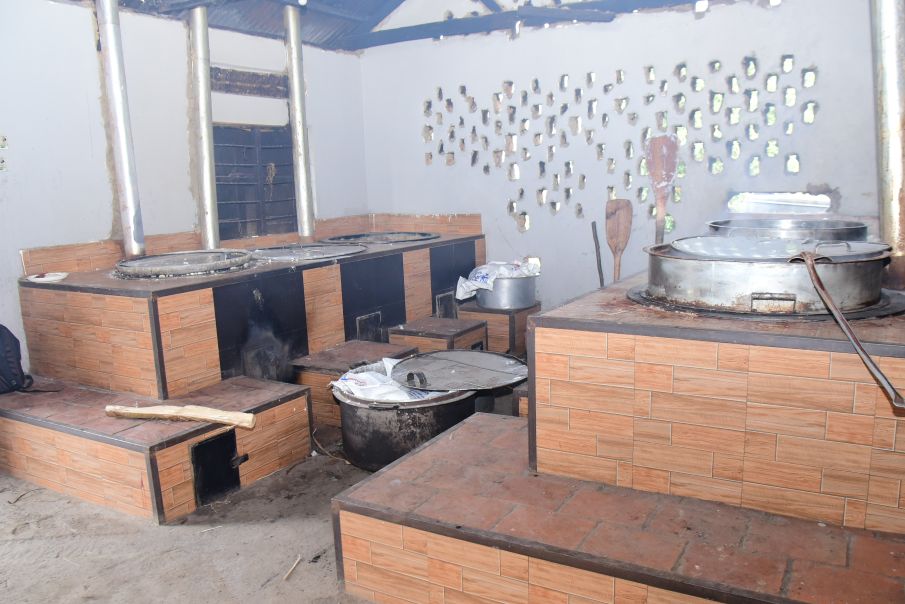
Ugandan schools are increasingly adopting energy-efficient cooking technologies to rein in operational costs and improve sustainability. At St. Andrew’s Secondary School in Rubindi, a transition to smart cooking has slashed firewood consumption by more than half, freeing up millions of shillings annually for other school priorities while reducing environmental pressure and improving working conditions.
As schools across Uganda grapple with rising operational costs, a growing number are turning to energy-efficient cooking technologies to reduce expenditure, protect the environment and improve working conditions for staff.
One example is St. Andrew’s Secondary School in Rubindi, Mbarara District, where a shift from traditional firewood-based cooking to energy-saving cookstoves is expected to save the institution about UGX11 million annually.
The school, which serves hundreds of learners and staff, had for years relied on conventional wood-fired stoves that consumed large quantities of firewood and exposed kitchen workers to smoke-filled conditions.
According to school administrators, the institution previously used about 45 truckloads of firewood annually at a cost of approximately UGX18 million. Following the installation of improved energy-saving cookstoves and the redesign of its kitchen facilities, annual consumption is projected to fall to about 18 truckloads, reducing expenditure to roughly UGX7.2 million.
The change translates into annual savings of nearly UGX11 million, with school leaders expecting further efficiencies as the system is optimised.

Robert Bayo-the head Teacher of St. Andrews Secondary School Rubindi
“We used 15 lorries of firewood every term, spending UGX400,000 per lorry. This method was inefficient both financially and in terms of the health effects on staff working in the kitchen,” said Robert Bayo, the Head Teacher of St. Andrew’s Secondary School.
“Starting this term, we have only used three lorries and we project to use only six lorries for the entire term. The results have been encouraging.”
The project involved reconstructing the school’s kitchen, installing built-in energy-saving stoves and redesigning the cooking area to improve ventilation and cleanliness.
Beyond reducing fuel costs, the new system has significantly lowered smoke emissions, heat levels and ash production, creating a healthier working environment for cooks.
The Parents Teacher Association says the financial benefits extend beyond energy savings.
“Reduction in the budget spent on firewood means the school can redirect resources to other development projects,” said Timothy, the PTA chairman.
The school has also reduced pressure on its own woodlot, which had previously been harvested for cooking fuel.
Education sector stakeholders say such investments are becoming increasingly important as schools seek ways to manage operational costs without increasing the financial burden on parents.
The transition was supported through the Results-Based Financing (RBF) programme, a partnership involving Equity Bank Uganda, Energising Development (EnDev) Uganda and GIZ.
The programme provides incentives to suppliers of clean cooking and renewable energy technologies, helping institutions overcome the high upfront cost of adoption.
Virginia Semakula, Equity Bank Uganda’s Manager for Energy, Environment and Climate Change, said the initiative is helping schools, households and businesses reduce dependence on traditional fuels while lowering operating expenses.
“Many schools have reduced dependence on charcoal, firewood and kerosene by adopting cleaner cooking solutions. Businesses and households are also embracing solar-powered systems that help reduce energy costs and improve productivity,” she said.
The experience at St. Andrew’s reflects a wider trend emerging across Uganda’s education sector, where schools are increasingly viewing energy efficiency not simply as an environmental initiative, but as a financial management strategy.
With fuel costs continuing to rise and pressure mounting to preserve forest resources, clean cooking technologies are gaining recognition as a practical tool for improving school finances while advancing sustainability goals.
Related Posts
 Uganda Coffee Roasters Tap Richard Rugaya as Executive Director, with Focus on Commercial Growth
 Why Africa’s Institutions Must Turn Knowledge and Investment into Farmer Prosperity
 Forbes ranks MTN Group third globally on best telecom employer list
 Stanbic experts offer investment insights to navigate current market uncertainty
 Africa Carbon Markets Urged to Turn Potential into Investment and Delivery
 Corporate Buyers Could Help Unlock SAF Market Worth Millions of Tonnes by 2030
Get business news delivered to you everyday
Latest News

SITA Acquisition of Collins Airport Solutions Signals Moves to Consolidate Aviation Technology

Uganda Coffee Roasters Tap Richard Rugaya as Executive Director, with Focus on Commercial Growth

Equity Bank Reports UGX37.6 Billion in Green Loans as Uganda Seeks to Scale Climate Investment

Why Africa’s Institutions Must Turn Knowledge and Investment into Farmer Prosperity

Forbes ranks MTN Group third globally on best telecom employer list

Stanbic experts offer investment insights to navigate current market uncertainty

Africa Carbon Markets Urged to Turn Potential into Investment and Delivery

Bank of Uganda hikes base rate from 9.75% to 12% amidst global tensions

Airbus sees USD420bn Global Aviation Services Boom: Can Africa Capture its Share?

Nile Breweries Celebrates 75 Years of Growing with Uganda