

Ayebare’s UN Experience puts Economic Diplomacy at Centre of Foreign Affairs Agenda
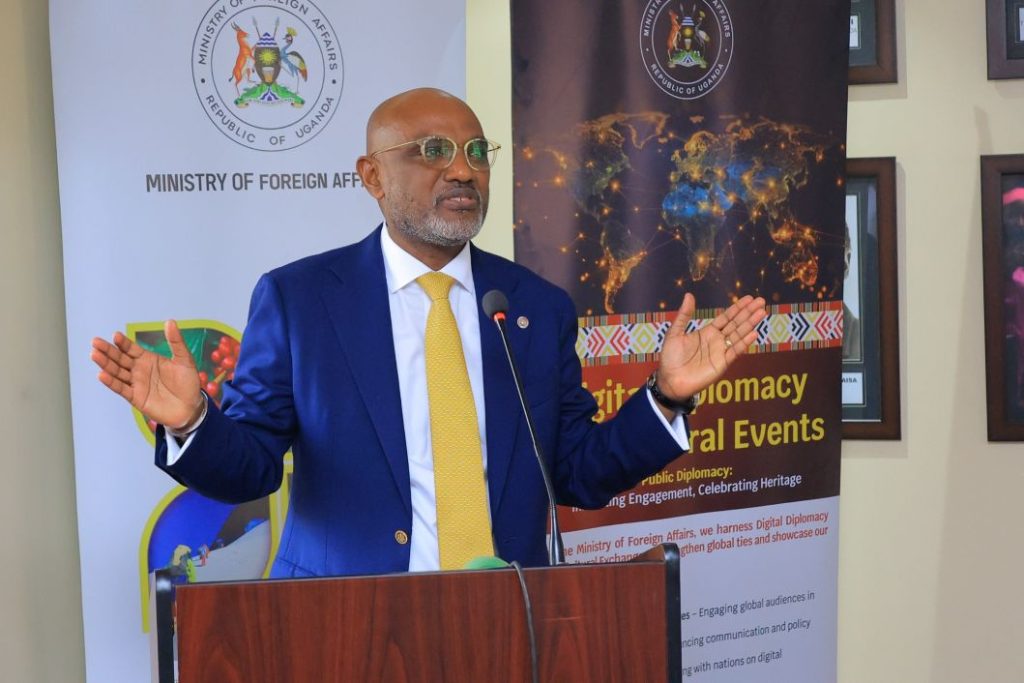
Adonia Ayebare brings nine years at the UN and NAM leadership experience to Uganda’s Foreign Affairs ministry, with economic diplomacy at the core.
Uganda’s new Foreign Affairs Minister, Ambassador Adonia Ayebare, takes over the ministry with nearly a decade of experience at the centre of global diplomacy — an asset he is now expected to deploy more aggressively in advancing Uganda’s economic interests abroad.
Ayebare formally assumed office on August 12, following his swearing-in a day earlier at State House, Entebbe, ending a nomination process that had stretched from May.
He returns to Kampala after serving as Uganda’s Permanent Representative to the United Nations in New York from 2016 to 2025, where he represented Uganda across the UN system and coordinated the country’s multilateral engagements.
That experience could prove particularly valuable as Uganda seeks to turn its diplomatic network into a more effective instrument for investment, export promotion and market access under the country’s Tenfold Growth Strategy.
At the handover ceremony, Acting Foreign Affairs Minister Haruna Kasolo Kyeyune highlighted Ayebare’s extensive experience, expressing confidence that it would strengthen the ministry’s delivery of its core mandate, including bilateral and multilateral relations, attracting foreign investment and securing markets for Ugandan products.
Ayebare’s strongest comparative advantage is his familiarity with the multilateral system and the diplomatic networks through which global political, development and economic interests are negotiated.
His nine years at the UN also gave him exposure to the priorities of governments, development institutions and international partners at a time when Uganda increasingly needs to convert diplomatic relationships into tangible economic opportunities.
He also played a central coordinating role during Uganda’s chairmanship of the Non-Aligned Movement (NAM) in 2024–2025, helping steer NAM engagement at the UN and mobilise consensus on issues including multilateral reform, sustainable development, peace and security.
The experience is significant for Uganda because NAM brings together countries across the Global South, many of which represent potential markets, investment sources and strategic partners for Uganda.
Ayebare’s initial policy direction suggests he intends to put that diplomatic capital to an explicitly commercial use.
He has identified Economic and Commercial Diplomacy (ECD) as the foremost instrument through which the ministry should contribute to national transformation and directed Uganda’s missions abroad to align their work with the ATMS priorities — agro-industrialisation, tourism, minerals including oil and gas, and science, technology and innovation.
Under the approach, missions are expected to receive explicit commercial mandates focused on attracting strategic investment, promoting value-added exports, securing market access and positioning Uganda as a competitive regional trade and logistics hub.
This represents a potentially important shift in how Uganda measures the effectiveness of its foreign missions.
Rather than diplomacy being assessed primarily through political and protocol engagements, Ayebare’s model places greater emphasis on whether missions can help Uganda secure capital, technology, markets and partnerships.
The approach also dovetails with the government’s ambition to expand the economy to USD500 billion by 2040 under the Tenfold Growth Strategy.
For Ayebare, the challenge will be how to translate the international relationships and multilateral experience accumulated over his diplomatic career into measurable economic outcomes at home.
It also places greater importance on coordination between the Foreign Affairs ministry and institutions responsible for trade, investment, tourism and industrial development.
Related Posts
 Uganda Coffee Roasters Tap Richard Rugaya as Executive Director, with Focus on Commercial Growth
 Why Africa’s Institutions Must Turn Knowledge and Investment into Farmer Prosperity
 Forbes ranks MTN Group third globally on best telecom employer list
 Stanbic experts offer investment insights to navigate current market uncertainty
 Africa Carbon Markets Urged to Turn Potential into Investment and Delivery
 Corporate Buyers Could Help Unlock SAF Market Worth Millions of Tonnes by 2030
Get business news delivered to you everyday
Latest News

SITA Acquisition of Collins Airport Solutions Signals Moves to Consolidate Aviation Technology

Uganda Coffee Roasters Tap Richard Rugaya as Executive Director, with Focus on Commercial Growth

Equity Bank Reports UGX37.6 Billion in Green Loans as Uganda Seeks to Scale Climate Investment

Why Africa’s Institutions Must Turn Knowledge and Investment into Farmer Prosperity

Forbes ranks MTN Group third globally on best telecom employer list

Stanbic experts offer investment insights to navigate current market uncertainty

Africa Carbon Markets Urged to Turn Potential into Investment and Delivery

Bank of Uganda hikes base rate from 9.75% to 12% amidst global tensions

Airbus sees USD420bn Global Aviation Services Boom: Can Africa Capture its Share?

Nile Breweries Celebrates 75 Years of Growing with Uganda