

Industrial growth must be matched by responsible waste management infrastructure
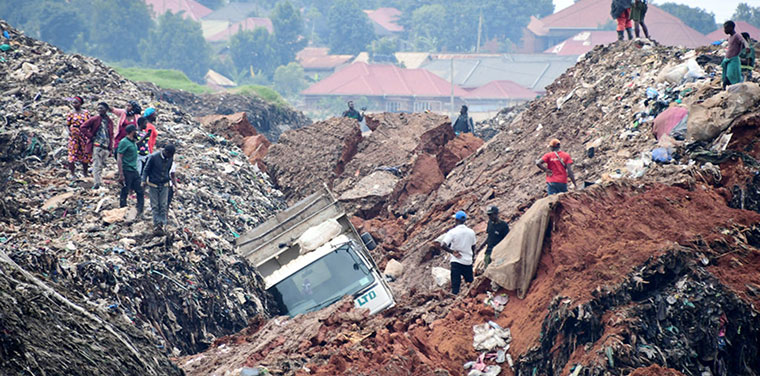
As Uganda accelerates industrialisation, environmental experts are warning that economic growth must be matched by robust waste management systems. On World Environment Day, Asiya Muhammed argues that without proper treatment facilities, stricter enforcement, and greater corporate accountability, the environmental costs of industrial expansion could undermine the very development gains it seeks to achieve.
By Asiya Muhammed
 Uganda’s industrialisation story is compelling. Starting from Kampala Industrial to Business Park at Namanve, Jinja, Mbale, Mbarara, etc, factories are producing products ranging from medicine, steel, textiles, and food products at a scale that was difficult to imagine 20 years ago. As of the 2023/24 financial year, over 625 companies had been allocated land within Uganda Investment Authority’s industrial parks, with nearly 300 fully operational and more than 122,000 jobs created.
On this World Environment Day, with the UN’s #NowForClimate campaign urging every sector to send a signal back to an Earth already in crisis, Uganda’s industrial community faces a question its growth narrative often sidesteps: where is all the industrial waste going? Every factory that opens creates a waste stream. Every litre of effluent, every drum of solvents, every tonne of manufacturing residue must go somewhere. The question is whether it is going somewhere responsible or whether the cost of Uganda’s industrial ambition is being quietly transferred to its rivers, wetlands, and the communities living closest to its parks.
Namanve is instructive precisely because it is Uganda’s flagship zone. Studies indicate that industries in the park discharged effluents into the Namanve stream without adequate treatment, with contamination indicators flowing downstream toward the inner Murchison Bay of Lake Victoria a critical fishery and drinking water source for millions. The structural problem is familiar: waste management at the park has been largely individualised, each factory handling its own disposal, leading to inconsistency and predictable failures.
Uganda has a credible legal framework. The National Environment Act No. 5 of 2019 and the National Environment (Waste Management) Regulations S.I. No. 49 of 2020 place clear obligations on waste generators, with NEMA as the principal enforcement authority. The recent court conviction of PRO Industries for polluting the Ngaju wetland shows enforcement is possible. The challenge is scaling it commensurate with industrial expansion which requires funding, personnel, and political will to act against economically significant actors.
The Hidden Cost That Business Must Price In
Irresponsible industrial waste management is not simply an environmental failure it is a deferred cost that will eventually be paid, by someone. When effluents flows to Lake Victoria the fishing communities bear the immediate loss. When wetlands near industrial parks are degraded, the flood buffering and water filtration they provide disappear, raising costs for the broader urban economy. Workers in informal waste chain process industrial by-products without protection, they at a higher health risk. The regulatory frameworks for these waste streams are still catching up.
Uganda is moving forward with industrial and infrastructure expansion. The recently announced UGX 1.4 trillion (approximately $400 million) waste-to-power project at Namanve Industrial Park and is expected to process upto1,500 tonnes of waste daily and generate 45 megawatts for the national grid, once operational. It deserves both support and scrutiny: support because it demonstrates that waste management and economic value creation can be the same investment; scrutiny because waste-to-energy through incineration is only as clean as its emission standards, flue gas treatment, and ash management. The business community and civil society should insist on transparent, independently verified environmental monitoring as a non-negotiable condition of the project’s social licence.
For Uganda’s industrial parks, responsibility starts with infrastructure designed before investors arrive, not retrofitted after problems emerge. Each park needs a centralised effluent treatment facility with mandatory participation, independently monitored and publicly disclosed. Hazardous waste streams require digital chain-of-custody from generator to NEMA-licensed facility. At the firm level, waste audits type, volume, disposal route, compliance status should be standard practice and disclosed to investors. ESG expectations from international capital markets are moving in this direction regardless; Ugandan industry would be prudent to get ahead of it rather than be caught short.
Growth That Lasts
Uganda’s industrial ambition is legitimate. The jobs at Namanve and beyond are real improvements in real lives. The argument here is not against industrialisation it is for industrialisation built to last. Growth that contributes to contamination risk in Lake Victoria’s inflows, degrades Kampala’s flood-buffering wetlands, and externalises its costs onto fishing communities is not sustainable growth. It is growth that borrows from the future.
This World Environment Day, the #NowForClimate signal Uganda’s industrial sector has the opportunity to send is clear: that economic growth and environmental responsibility are not a trade-off, but a standard to be met simultaneously. Industrial growth without matched waste management infrastructure is not a development model. It is a debt ledger with the environment as the borrower and future generations as the guarantor.
About the Author
Asiya Muhammed Kochuveettil is associated with Mc Clelland Engineers Pvt Ltd. With a background in research and a commitment to sustainable industrial practices, she brings a cross-functional perspective to compliance, environmental safety, and operational infrastructure. She is also a Member of the Royal Society of Biology (UK).
Related Posts
 Energy Ministry and Equity Bank target lower hotel energy costs through green investment initiative
 Aviation Industry Coalition Presses EU to Protect Voluntary use of Biometric Travel Technology
 Somalia Recognises IATA Safety Audits in Push for Common African Aviation Standards
 Stanbic Donates UGX40 Million in Maternal Health Equipment to Obongi Facility
 Airlink Adds Lanseria–Harare Route, Expands Regional Flights for Summer
 Uganda SGR Nears €1bn Funding Milestone as OPEC Fund Targets November Approval for €150m
Get business news delivered to you everyday
Latest News

Energy Ministry and Equity Bank target lower hotel energy costs through green investment initiative

FAA Certifies Boeing 737-10, Clearing Path for Deliveries of Largest 737 MAX Variant

Aviation Industry Coalition Presses EU to Protect Voluntary use of Biometric Travel Technology

Somalia Recognises IATA Safety Audits in Push for Common African Aviation Standards

Stanbic Donates UGX40 Million in Maternal Health Equipment to Obongi Facility

Airlink Adds Lanseria–Harare Route, Expands Regional Flights for Summer

Solar Power Linked to More Births and Better Patient Access at Rural Ugandan Clinics

China’s GPMI Interface Leapfrogs HDMI, USB With 192Gbps Speeds and 480W Power

Stanbic Seeks Northern Uganda Business Feedback as It Marks 35 Years in Country

Uganda Emerges as Africa’s Largest Organic Farming Country as Exports Reach USD225 Million