

Uganda Airlines Separates CEO from Accountable Manager in Major Leadership Reset
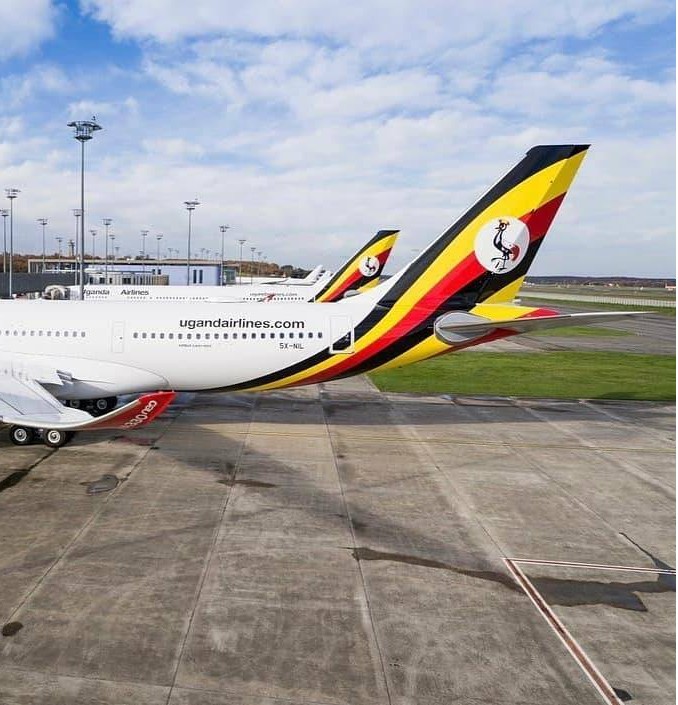
Uganda Airlines is separating the CEO’s corporate leadership role from the technical and regulatory responsibilities of the Accountable Manager, creating a new executive structure that could give shareholders greater flexibility in choosing the carrier’s next chief executive while strengthening operational accountability.
Uganda Airlines is moving to separate the corporate leadership of the national carrier from the technical and regulatory responsibilities of running an airline, in a restructuring that could give its shareholders greater latitude in choosing the next Chief Executive Officer.
The change is signalled by the carrier’s decision to recruit a Chief Operating Officer who will also serve as the airline’s Accountable Manager, effectively removing the regulatory docket from the office of the CEO.
Uganda Airlines has advertised six senior executive positions as it reshapes its management structure: Chief People and Culture Officer (CPCO), Chief Operating Officer/Accountable Manager, Chief Customer Services Officer (CCSO), Chief Corporate Planning Officer (CCPO), Chief Commercial Officer (CCO), and Chief Internal Audit/Risk Compliance Officer.
The new structure represents a significant departure from the arrangement under which the CEO also carried the Accountable Manager responsibility for the airline’s Air Operator Certificate and other operational approvals.
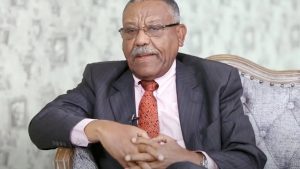
Uganda Airlines CEO Girma Wake
The distinction is important because the Accountable Manager carries ultimate executive responsibility for ensuring that an airline’s approved operations are properly resourced, safely conducted and compliant with aviation regulations.
Under the newly advertised position, the COO/Accountable Manager will oversee flight operations, maintenance and engineering, the approved maintenance organisation, safety and quality, while ensuring that the airline’s operational activities remain within the requirements of the Uganda Civil Aviation Authority and other applicable global standards.
The restructuring therefore potentially changes the profile required of the person occupying the CEO’s office. With the technical and regulatory accountability assigned to a dedicated aviation executive, the shareholders would have greater scope to appoint a CEO primarily on the basis of leadership, commercial, financial, strategic and organisational capability rather than requiring the individual to simultaneously satisfy the highly specialised requirements associated with being an airline Accountable Manager.
This could be particularly consequential as Uganda Airlines moves into a new phase of expansion following its agreement with Boeing for 10 aircraft and the opening of additional regional and international routes.
Wake’s changing role
The restructuring also provides a significant clue about the future role of veteran aviation executive Ato Girma Wake, who was brought in earlier this year to stabilise Uganda Airlines after the departure of Jennifer Bamuturaki.
Wake, the former Ethiopian Airlines chief executive, was initially appointed as a consultant/adviser and acting CEO, with the expectation that he would help address management weaknesses and work with the board during the transition to a substantive chief executive.
His continued presence at the airline, however, has taken on a different significance. Uganda Airlines has not included the CEO among the six positions currently being advertised, while the company is instead recruiting the executive team beneath that office.
That omission suggests that the board and shareholders are taking a different approach to the leadership transition than the one anticipated earlier in the year when the airline began the search for a substantive CEO.
It also points towards a potentially longer tenure for Wake, who is no longer simply a stop-gap executive awaiting the arrival of a replacement, but is positioned to play a more substantive role in the airline’s institutional reset.
The airline’s own board profile describes Wake as an aviation leader with more than four decades of executive experience and credits him with extensive experience in airline transformation, fleet modernisation, network strategy and operational performance.
For Uganda Airlines, that experience comes at a critical moment. The carrier has moved from the immediate challenge of keeping its existing fleet flying to a much larger question of how to build the institutional capacity required to operate and grow a national airline sustainably.
Building the next generation
A central element of Wake’s approach is understood to be the development of a talent pipeline rather than relying indefinitely on imported or externally recruited senior expertise.
The strategy involves bringing in fresh graduates and developing them within the airline so that they acquire not only technical and professional competence but also an understanding of the particular discipline required to run a national carrier.
That distinction matters for various reasons. An airline can acquire aircraft relatively quickly. Building the human capital, systems, institutional memory and corporate culture required to operate those aircraft efficiently and profitably takes considerably longer.
Uganda Airlines is therefore attempting to move from a model heavily dependent on individual executives towards one in which institutional capability becomes embedded across the organisation.
The six positions announced this week are central to that transition. The Chief People and Culture Officer is intended to strengthen the human-resource and organisational-development function; the Chief Customer Services Officer will focus on the passenger-facing side of the business; the Chief Commercial Officer on revenue and market development; and the Chief Corporate Planning Officer on strategy and coordination.
The creation of a dedicated Chief Internal Audit/Risk Compliance Officer also gives greater prominence to internal controls, risk management and compliance at a company that has faced sustained scrutiny over its governance and financial performance.
The COO/Accountable Manager, meanwhile, becomes the executive anchor for the airline’s safety, operational and regulatory functions.
Together, the positions suggest an organogram designed to distinguish three critical dimensions of the business: operational and regulatory control, market-facing commercial performance, and internal corporate governance and coordination.
That separation could prove more important than the titles themselves. For shareholders, it potentially creates room to select a CEO whose principal task is to lead the business and deliver value, while leaving the specialised operational command of the airline to an executive specifically recruited and accepted for that responsibility.
For Uganda Airlines however, the ultimate test will be whether the new structure reduces the concentration of responsibilities at the top and creates clearer lines of accountability.
The airline’s expansion plans will make that test increasingly important. As the national carrier grows its fleet, network and workforce, its success will depend less on the charisma or experience of individual executives and more on whether it can build a professional institution capable of surviving changes in leadership.
Turning Uganda Airlines from an organisation that depends on finding the right individual at the top into one that can consistently produce the right decisions, skills and accountability at every level, may turn out to be the most important legacy of the current restructuring.
Related Posts
 Air Tanzania Moscow Suspension Highlights rising Geopolitical Risks for African Airlines
 Boeing Holds Bullish Africa Aviation Outlook as Fleet Set to More than Double by 2045
 Inside Dr Silver Mugisha and NWSC’s Long Game to Keep Kampala’s Taps Running into the Future
 Oil Money’s First Test Will be Uganda’s Ability to Stop it Leaking Through Flawed Procurement
 Uber exits Uganda after a decade in Kampala
 Appellation: Uganda Gives its Crude a Brand as ‘Pearl Sweet’ Ahead of November First Oil
Get business news delivered to you everyday
Latest News

Air Tanzania Moscow Suspension Highlights rising Geopolitical Risks for African Airlines

Uganda Airlines Separates CEO from Accountable Manager in Major Leadership Reset

Boeing Holds Bullish Africa Aviation Outlook as Fleet Set to More than Double by 2045

Inside Dr Silver Mugisha and NWSC’s Long Game to Keep Kampala’s Taps Running into the Future

Oil Money’s First Test Will be Uganda’s Ability to Stop it Leaking Through Flawed Procurement

Uber exits Uganda after a decade in Kampala

Equity Financing Helps Vurra Secondary School turn Enrolment Pressure into Growth Opportunity

El Niño Puts More Than 162 Million Children at Risk Across Africa as UNICEF warns of worsening drought, flooding and extreme heat hazard

Family of Ugandan Boeing 737 MAX Crash Victim Christine Alalo Set for USD1.28 million Payout

Digital Banking Growth puts Cyber Fraud Firmly on Uganda’s Financial Sector Agenda