

Oil Money’s First Test Will be Uganda’s Ability to Stop it Leaking Through Flawed Procurement
Uganda’s oil revenues could finance transformative infrastructure and productive capacity, but corruption, weak procurement and poor project supervision risk draining their economic value before the benefits reach citizens.
President Yoweri Museveni is right to insist that Uganda’s oil revenues must be used to build a productive and durable economy rather than finance a temporary consumption boom.
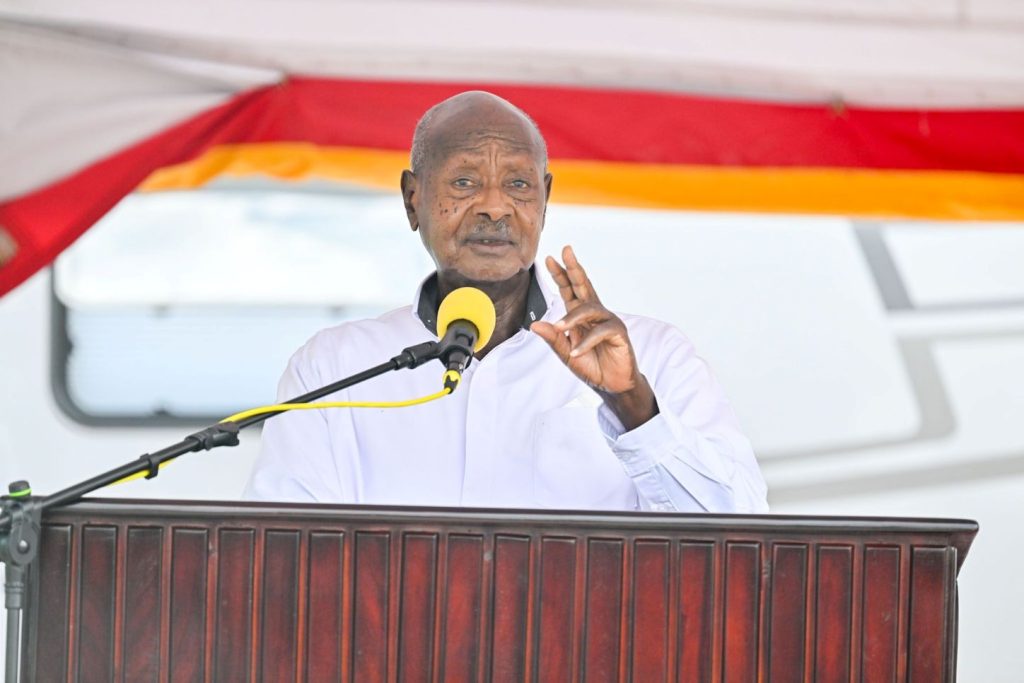
The President’s message at the naming ceremony for Uganda’s crude oil at Kingfisher was particularly important because it went beyond the first barrel. He argued that the country’s finite petroleum resources should create productive capacity in power, transport, railways, universities, industrialisation and human capital that will outlive the oil fields.
That is the right ambition, but there is a less glamorous question that Uganda must confront before the oil money begins to flow in earnest. How much of that money will actually reach the projects for which it is intended?
The greatest threat to Uganda’s oil transformation may not be a collapse in oil prices or even the depletion of the resource. It could be the familiar leakage that occurs when public money passes through weak procurement systems, inflated contracts, poor-quality works and inadequate supervision.
This is why Uganda needs to treat public procurement and project implementation as two sides of the same oil-revenue protection system.
Cleaning up procurement is essential but it is not enough. A perfectly conducted tender can still produce a poor road, bridge, hospital or power project if implementation is not properly supervised. Conversely, strong technical supervision cannot fully compensate for a procurement process that awards contracts at inflated prices or to firms without the capacity to deliver.
The country therefore needs a much tighter chain of accountability; from project selection and budgeting, through procurement and contracting, to physical implementation, payment and eventual handover.
This matters because infrastructure is likely to absorb a substantial share of the public investment Uganda hopes to make from its petroleum revenues.
A kilometre of road that costs more than it should is oil revenue lost. A poorly constructed bridge that requires premature reconstruction represents another claim on future revenue. A public building that takes years to complete while contractors receive payments is capital that has failed to generate the intended economic return.
The leakage is therefore not simply the cash allegedly lost to corruption. It is also the economic value that Uganda fails to obtain for every shilling spent.
That distinction is important because corruption is often discussed in terms of money disappearing from government accounts. But the larger economic damage can occur when corruption and weak oversight result in projects being unnecessarily expensive, delayed or badly constructed.
Uganda could therefore enter the oil era with billions of dollars of additional public resources and still fail to achieve the economic transformation those resources should finance.
The answer should be a national infrastructure vigilance system that follows projects from the drawing board to completion.
Major oil-funded projects should have clear costs, timelines, measurable outputs and publicly accountable implementing agencies. Payments should be tied rigorously to verified milestones. Independent technical inspections should be routine for major projects rather than an afterthought when problems emerge.
Uganda also needs to strengthen the capacity of institutions responsible for procurement and project oversight. The objective should not simply be to catch corruption after money has been lost, but to make it increasingly difficult for leakage to occur in the first place.
There is also a role for citizens, professional bodies, the media and Parliament in this process.
Public scrutiny should extend beyond the announcement of a new project or the signing of a contract. Ugandans should be asking a few questions. What was promised? What was budgeted? Who was contracted? What has actually been delivered? At what cost and to what standard?
Museveni’s call for an integrated petroleum strategy — linking oil to refining, energy generation, industrialisation and human capital — is sound because Uganda’s objective should be to use oil to diversify the economy rather than make it more dependent on hydrocarbons.
But diversification itself requires disciplined investment. The refinery should generate industrial opportunities. Reliable electricity should support manufacturing. Better transport and rail infrastructure should reduce the cost of moving goods. Universities and technical institutions should produce the skills required by an increasingly sophisticated economy.
None of these outcomes is automatic simply because oil revenues become available. Oil can provide the capital. It cannot provide the discipline to spend that capital well.
That discipline must come from institutions. Uganda has already spent years preparing for first oil. It has negotiated investments, built infrastructure, trained petroleum professionals and developed the regulatory framework for the sector.
The next institutional and equally important challenge is ensuring that the wealth generated by the resource is converted into assets rather than absorbed by waste and rent-seeking.
The President’s warning against repeating the mistakes of other African oil producers should therefore be taken seriously. The lesson from the continent is not merely that oil revenues can encourage excessive consumption. It is that resource wealth can magnify existing weaknesses in governance and public financial management.
Uganda’s best defence is to ensure that every major investment financed from oil revenues is subjected to clean procurement, competitive pricing, competent contracting and relentless implementation oversight.
The country does not need to create another layer of bureaucracy for its own sake. It needs to make existing accountability mechanisms work better and ensure that responsibility for project outcomes cannot be passed endlessly from one institution to another.
With first oil now approaching, this is the right moment to establish the standards by which the oil era will be judged. The ultimate measure should not be how much oil Uganda produces or how much revenue enters the Treasury.
It should be what that money builds. If oil revenues produce reliable infrastructure, productive industries, skilled citizens and a stronger private sector, Uganda will have converted a finite resource into enduring wealth. If too much of the money disappears through inflated procurement, unfinished projects and weak supervision, the country will have extracted the oil without extracting its full economic value. ultimately, oil wealth must be protected not only at the wellhead, but all the way to the completed project.
Related Posts
 Solar Power Linked to More Births and Better Patient Access at Rural Ugandan Clinics
 Uganda Emerges as Africa’s Largest Organic Farming Country as Exports Reach USD225 Million
 Uganda Coffee Roasters Tap Richard Rugaya as Executive Director, with Focus on Commercial Growth
 Why Africa’s Institutions Must Turn Knowledge and Investment into Farmer Prosperity
 Forbes ranks MTN Group third globally on best telecom employer list
 Stanbic experts offer investment insights to navigate current market uncertainty
Get business news delivered to you everyday
Latest News

Solar Power Linked to More Births and Better Patient Access at Rural Ugandan Clinics

China’s GPMI Interface Leapfrogs HDMI, USB With 192Gbps Speeds and 480W Power

Stanbic Seeks Northern Uganda Business Feedback as It Marks 35 Years in Country

Uganda Emerges as Africa’s Largest Organic Farming Country as Exports Reach USD225 Million

SITA Acquisition of Collins Airport Solutions Signals Moves to Consolidate Aviation Technology

Uganda Coffee Roasters Tap Richard Rugaya as Executive Director, with Focus on Commercial Growth

Equity Bank Reports UGX37.6 Billion in Green Loans as Uganda Seeks to Scale Climate Investment

Why Africa’s Institutions Must Turn Knowledge and Investment into Farmer Prosperity

Forbes ranks MTN Group third globally on best telecom employer list

Africa Carbon Markets Urged to Turn Potential into Investment and Delivery