

Family of Ugandan Boeing 737 MAX Crash Victim Christine Alalo Set for USD1.28 million Payout
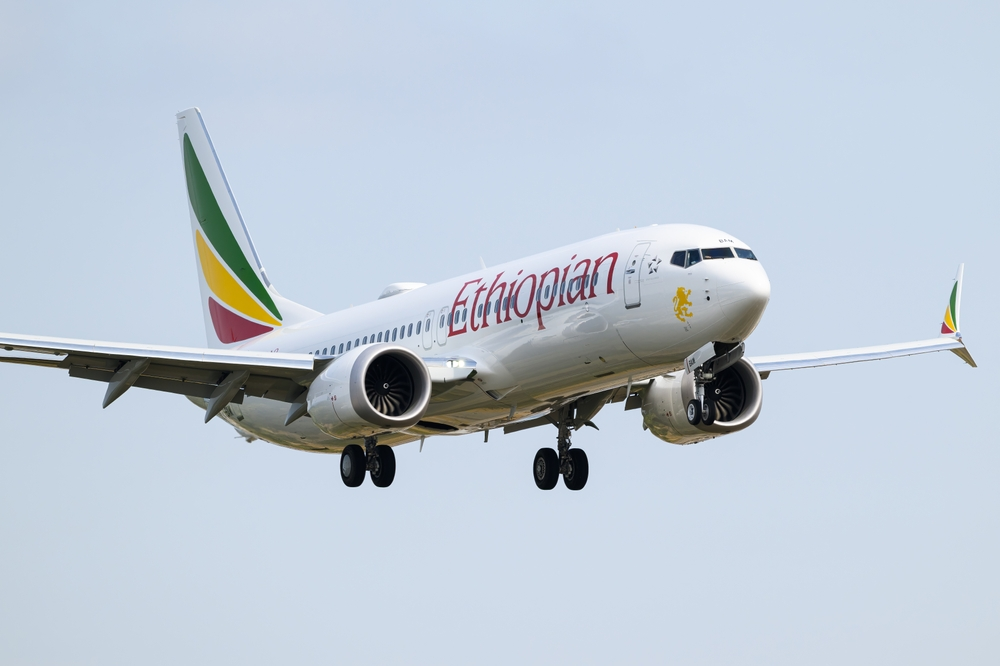
The family of Ugandan police commissioner Christine Alalo, who was killed in Ethiopian Airlines Flight 302, is set to receive an estimated USD1.28 million share of Boeing’s new USD444.5 million compensation fund for victims of the two 737 MAX crashes.
The estate of Ugandan police commissioner Christine Alalo, who was among 157 people killed in the 2019 Ethiopian Airlines Boeing 737 MAX crash, is set to benefit from a new USD444.5 million compensation fund established by Boeing for victims of the two fatal MAX accidents.
Payments from the fund have begun for beneficiaries of the 346 people killed in Ethiopian Airlines Flight 302 and Lion Air Flight 610, according to aviation publication AVweb. The fund was created under Boeing’s 2025 non-prosecution agreement with the US Department of Justice.
Alalo, a Ugandan police commissioner and acting police commissioner with the African Union Mission in Somalia (AMISOM), was the only Ugandan among the 157 people aboard Ethiopian Airlines Flight 302 when the Boeing 737 MAX 8 crashed shortly after take-off from Addis Ababa on March 10, 2019.
The flight was bound for Nairobi when it crashed near Bishoftu, killing all 149 passengers and eight crew members. Alalo was travelling in connection with her peacekeeping duties in Somalia.
Under the terms of Boeing’s agreement with the US government, each victim’s estate is entitled to an equal pro-rata share of the USD444.5 million fund. On a straight division among the 346 victims, the allocation works out at approximately USD1.285 million per victim, although the final amount payable to individual beneficiaries will depend on the administration of each estate.
The new fund is separate from an earlier USD500 million crash-victim compensation programme established under Boeing’s 2021 deferred prosecution agreement. Together, the two US Justice Department-linked victim funds amount to USD944.5 million.
For Alalo’s family, the new payment adds to a compensation process that has stretched across seven years since the Ethiopian Airlines disaster.
The Uganda Police Force had previously coordinated with Ethiopian authorities and the international disaster victim identification team over Alalo’s remains and compensation issues following the crash.
Alalo’s death was particularly significant in Uganda because of her role in regional peacekeeping. She had joined the Uganda Police Force in 2001 and served in international peace and security assignments, including with the United Nations Mission in South Sudan and AMISOM. At the time of her death, she was serving as acting police commissioner with the African Union mission in Somalia.
The compensation comes against the backdrop of a wider legal and regulatory reckoning over Boeing’s development and certification of the 737 MAX.
The two crashes — Lion Air Flight 610 in Indonesia in October 2018 and Ethiopian Airlines Flight 302 five months later — killed 346 people and triggered the worldwide grounding of the MAX fleet.
The US Justice Department’s 2025 agreement required Boeing to pay the additional USD444.5 million to crash-victim beneficiaries, alongside a USD243.6 million criminal penalty and at least USD455 million in additional investment in compliance and safety programmes.
The latest compensation programme is, however, distinct from private civil claims brought by individual families against Boeing. The 2025 agreement provides for equal distribution of the government-established fund rather than compensation based on the individual circumstances of each victim.
For Uganda, the payment brings renewed attention to Alalo’s place in one of the defining aviation disasters of the modern era.
Her death, alongside those of 156 other passengers and crew, was part of a tragedy that exposed weaknesses in the MAX’s flight-control system, led to the aircraft’s global grounding and forced sweeping changes in aircraft certification, pilot training and aviation safety oversight.
Related Posts
 Uganda Emerges as Africa’s Largest Organic Farming Country as Exports Reach USD225 Million
 Uganda Coffee Roasters Tap Richard Rugaya as Executive Director, with Focus on Commercial Growth
 Why Africa’s Institutions Must Turn Knowledge and Investment into Farmer Prosperity
 Forbes ranks MTN Group third globally on best telecom employer list
 Stanbic experts offer investment insights to navigate current market uncertainty
 Africa Carbon Markets Urged to Turn Potential into Investment and Delivery
Get business news delivered to you everyday
Latest News

Stanbic Seeks Northern Uganda Business Feedback as It Marks 35 Years in Country

Uganda Emerges as Africa’s Largest Organic Farming Country as Exports Reach USD225 Million

SITA Acquisition of Collins Airport Solutions Signals Moves to Consolidate Aviation Technology

Uganda Coffee Roasters Tap Richard Rugaya as Executive Director, with Focus on Commercial Growth

Equity Bank Reports UGX37.6 Billion in Green Loans as Uganda Seeks to Scale Climate Investment

Why Africa’s Institutions Must Turn Knowledge and Investment into Farmer Prosperity

Forbes ranks MTN Group third globally on best telecom employer list

Stanbic experts offer investment insights to navigate current market uncertainty

Bank of Uganda hikes base rate from 9.75% to 12% amidst global tensions

Corporate Buyers Could Help Unlock SAF Market Worth Millions of Tonnes by 2030