

Equity Financing Helps Vurra Secondary School turn Enrolment Pressure into Growth Opportunity
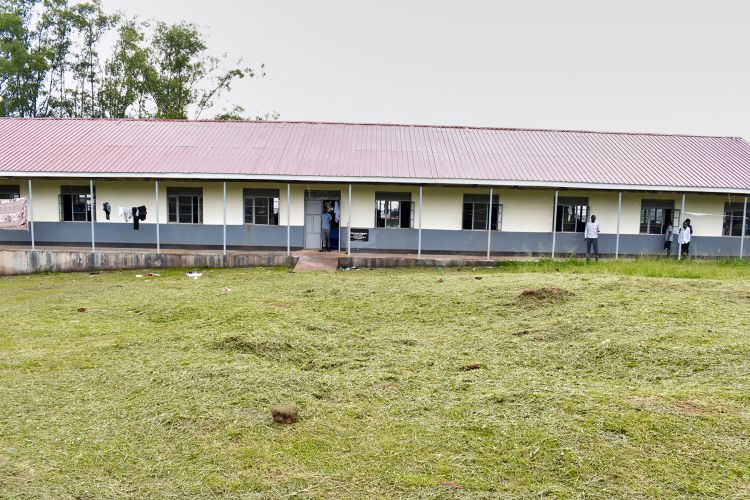 The VURRA SS School dormitory for the male students constructed with funding from Equity Bank
Equity Bank Uganda’s Shs120 million financing has helped Vurra Secondary School in Arua complete a 120-bed boys’ dormitory, giving the growing school a financing model for its next phase of expansion as enrolment heads towards 900 students.
ARUA — For Vurra Secondary School in West Nile, rising enrolment is becoming less a sign of success than a test of how quickly its infrastructure can keep up.
The Church-founded, government-aided school, established in 1981, is projecting enrolment of about 900 students next year, against a long-term target of 1,200. But without new classrooms and dormitories, the school risks reaching a point where demand for places exceeds its physical capacity.
That is where commercial financing is beginning to play a more important role in the expansion of Uganda’s education infrastructure.
The school turned to Equity Bank Uganda in late 2024 after recognising that funding major construction projects from its operating income would strain resources needed to run the institution.
The partnership enabled Vurra Secondary School to secure a UGX120 million credit facility, which helped it complete a UGX280 million, 120-bed boys’ dormitory.
“We opened an account with Equity in late 2024, around November, and by January, we were granted a savings facility of UGX120 million to put up the dormitory,” says David Dima, head teacher of Vurra Secondary School.
The completed dormitory has already relieved pressure on the school’s existing accommodation. But rather than treating the project as an end in itself, the school is using the additional capacity as a platform for its next phase of expansion.
Its immediate priority is a girls’ dormitory, with completion targeted for February 2027, ahead of the arrival of Senior Five students in March.
“The completed dormitory currently accommodates 120 students and has eased pressure on our existing facilities,” Dima says. “Now, we want to build a matching dormitory for the girls.”
The expansion reflects a broader challenge facing schools outside Uganda’s major urban centres. Growing populations are increasing demand for secondary education, while public funding alone may not be sufficient to finance the classrooms, dormitories, land and transport infrastructure required to accommodate that growth.
For Vurra, the risk is becoming particularly acute. The school says it cannot currently admit students beyond its available capacity even as demand continues to rise.
“Right now, we cannot admit more students than our current capacity, yet enrollment is increasing,” Dima says. “I want to ensure equal opportunities for both boys and girls.”
The school is therefore looking beyond the immediate dormitory project. It is acquiring additional land for future development and exploring financing options for a school bus that would improve transport and potentially widen its catchment area.
It is also considering financial support arrangements for teachers and non-teaching staff who are not on the government payroll, pointing to the wider financial pressures that accompany expansion.
For Equity Bank Uganda, the Vurra experience illustrates how structured lending can help institutions spread the cost of capital investment rather than waiting until they have accumulated enough cash to begin construction.
Managing Director Gift Shoko says financing can be structured around the cash flows of the institution, allowing a school to begin construction before it has accumulated the full cost of the project.
“In terms of the structure you want, you don’t have to wait,” Shoko says. “It can be put up immediately so that work starts now, where you only start paying after the block is complete and operational.”
The model shifts the conversation around school financing from simply finding money for construction to matching long-term infrastructure investment with the institution’s ability to generate income.
For Vurra, that could prove critical as it moves towards its 1,200-student target.
The school’s experience also highlights an emerging role for banks in Uganda’s education sector- not merely holding school accounts or processing fee payments, but providing the capital that allows institutions to expand when demand is already present.
For a rural school, the ability to build first and repay over time can make the difference between turning away prospective students and creating room for another generation of learners.
Related Posts
 Uganda Emerges as Africa’s Largest Organic Farming Country as Exports Reach USD225 Million
 Uganda Coffee Roasters Tap Richard Rugaya as Executive Director, with Focus on Commercial Growth
 Why Africa’s Institutions Must Turn Knowledge and Investment into Farmer Prosperity
 Forbes ranks MTN Group third globally on best telecom employer list
 Stanbic experts offer investment insights to navigate current market uncertainty
 Africa Carbon Markets Urged to Turn Potential into Investment and Delivery
Get business news delivered to you everyday
Latest News

Stanbic Seeks Northern Uganda Business Feedback as It Marks 35 Years in Country

Uganda Emerges as Africa’s Largest Organic Farming Country as Exports Reach USD225 Million

SITA Acquisition of Collins Airport Solutions Signals Moves to Consolidate Aviation Technology

Uganda Coffee Roasters Tap Richard Rugaya as Executive Director, with Focus on Commercial Growth

Equity Bank Reports UGX37.6 Billion in Green Loans as Uganda Seeks to Scale Climate Investment

Why Africa’s Institutions Must Turn Knowledge and Investment into Farmer Prosperity

Forbes ranks MTN Group third globally on best telecom employer list

Stanbic experts offer investment insights to navigate current market uncertainty

Bank of Uganda hikes base rate from 9.75% to 12% amidst global tensions

Corporate Buyers Could Help Unlock SAF Market Worth Millions of Tonnes by 2030