

Digital Banking Growth puts Cyber Fraud Firmly on Uganda’s Financial Sector Agenda
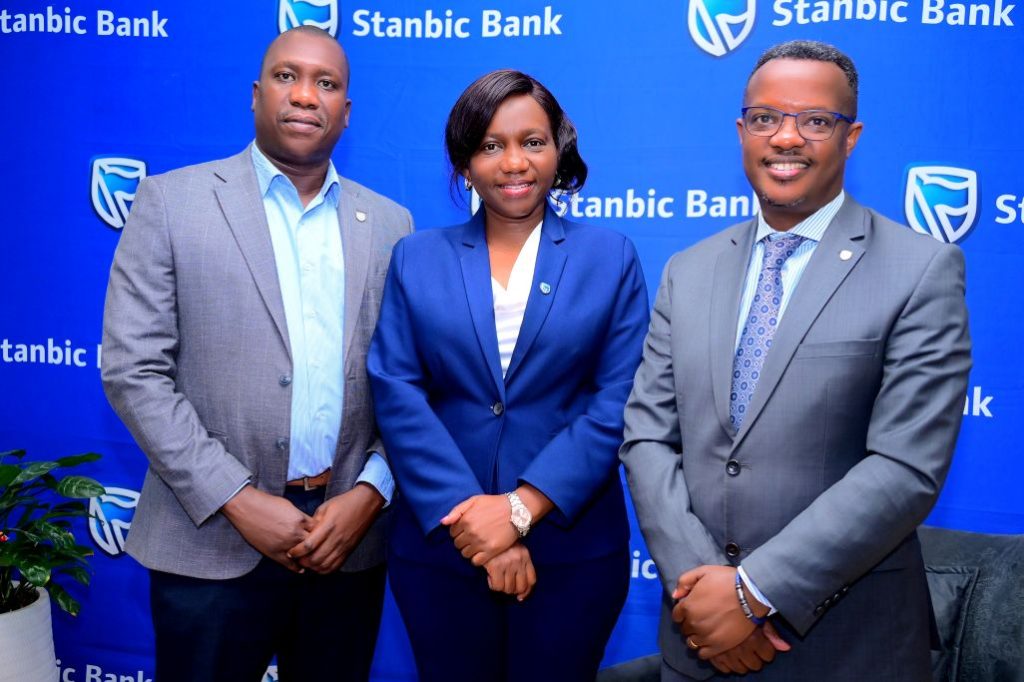
Uganda’s rapid shift to digital banking is creating new challenges for financial institutions, with cyber-enabled fraud increasingly targeting customers through phishing, social engineering and SIM-swap schemes.
Uganda’s rapid shift towards digital banking and electronic payments is creating a new front in the financial sector’s battle against fraud, with banks increasingly turning to customer awareness as a critical layer of defence against cyber-enabled financial crime.
Stanbic Bank Uganda has launched its ‘Stay Switched On’ campaign, positioning customer vigilance alongside technology and institutional controls as part of the industry’s response to increasingly sophisticated fraud schemes.
The campaign comes against a backdrop of rapid expansion in digital financial services, which has made banking more convenient and accessible but has also created new opportunities for fraudsters to exploit weaknesses in customer behaviour.
Stephen Adatu, Vice Chairperson of the Fraud and Forgery Subcommittee at the Uganda Bankers Association, said digital and cyber-related fraud now accounts for nearly one-third of fraud cases reported within the banking industry.
The figure highlights the growing importance of fraud prevention as banks migrate more services to digital channels and customers increasingly rely on mobile and online platforms for financial transactions.
For the banking industry however, the challenge is increasingly moving beyond protecting the technology infrastructure itself.
Fraudsters are targeting customers through phishing, social engineering, SIM-swap schemes and other techniques designed to manipulate people into surrendering sensitive information or authorising transactions themselves.
Stanbic Bank Head of Fraud Risk Sophia Nakazibwe said fraudsters were increasingly exploiting human behaviour rather than attempting to breach banking systems directly.
“They exploit trust, fear, urgency and even people’s willingness to help others,” she said, noting that criminals can sometimes obtain passwords, PINs and one-time passwords by manipulating customers rather than hacking into bank systems.
This makes customer behaviour an increasingly important component of the financial sector’s cybersecurity architecture.
The shift also changes the nature of the industry’s fraud-prevention challenge. While banks continue to invest in security systems, transaction monitoring and other technological safeguards, the effectiveness of those investments can be undermined when customers are persuaded to disclose confidential credentials or approve fraudulent transactions.
Stanbic Bank Head of Coverage Sam Bulenzi said protecting customers’ finances was therefore part of the bank’s wider contribution to Uganda’s economic transformation.
The bank’s argument is that financial-sector growth cannot be measured solely by the expansion of credit, digital transactions or access to banking services. The ability to protect the financial assets moving through those systems is becoming equally important.
“Fraud is an industry-wide challenge,” Adatu said, arguing that prevention should be viewed as a shared responsibility between financial institutions and their customers.
That position points to an emerging industry model in which cybersecurity is no longer solely an issue for banks’ technology and risk departments, but also a matter of customer education.
The ‘Stay Switched On’ campaign seeks to reinforce basic security practices, including keeping PINs, passwords and one-time passwords confidential, independently verifying unexpected requests for money or personal information and promptly reporting suspicious activity.
At the centre of the campaign is the Stanbic Bank Uganda Security Centre, an online resource providing guidance on common fraud risks, including phishing, SIM swaps, ATM fraud and social engineering.
The initiative reflects a wider reality facing financial institutions, as the cost and sophistication of attacking banking systems increases, criminals can achieve similar results by attacking the weakest link — the customer.
For banks, this creates a dual requirement. They must continue strengthening the security of their digital infrastructure while ensuring customers understand how seemingly innocuous calls, messages or requests can be used to compromise their accounts.
The issue is particularly significant as Uganda pushes towards greater digitalisation of its economy. More transactions conducted electronically mean greater efficiency for businesses and consumers, but also increase the potential financial impact of successful fraud.
Stanbic says its campaign is therefore intended to encourage customers to pause, verify and report before responding to unexpected financial requests.
The broader industry lesson is that digital financial inclusion and financial security must advance together. Expanding access to digital banking without corresponding investment in consumer awareness could leave new users increasingly exposed to sophisticated forms of financial crime.
Related Posts
 Stanbic Seeks Northern Uganda Business Feedback as It Marks 35 Years in Country
 Uganda Emerges as Africa’s Largest Organic Farming Country as Exports Reach USD225 Million
 SITA Acquisition of Collins Airport Solutions Signals Moves to Consolidate Aviation Technology
 Uganda Coffee Roasters Tap Richard Rugaya as Executive Director, with Focus on Commercial Growth
 Equity Bank Reports UGX37.6 Billion in Green Loans as Uganda Seeks to Scale Climate Investment
 Why Africa’s Institutions Must Turn Knowledge and Investment into Farmer Prosperity
Get business news delivered to you everyday
Latest News

Stanbic Seeks Northern Uganda Business Feedback as It Marks 35 Years in Country

Uganda Emerges as Africa’s Largest Organic Farming Country as Exports Reach USD225 Million

SITA Acquisition of Collins Airport Solutions Signals Moves to Consolidate Aviation Technology

Uganda Coffee Roasters Tap Richard Rugaya as Executive Director, with Focus on Commercial Growth

Equity Bank Reports UGX37.6 Billion in Green Loans as Uganda Seeks to Scale Climate Investment

Forbes ranks MTN Group third globally on best telecom employer list

Stanbic experts offer investment insights to navigate current market uncertainty

Africa Carbon Markets Urged to Turn Potential into Investment and Delivery

Bank of Uganda hikes base rate from 9.75% to 12% amidst global tensions

Corporate Buyers Could Help Unlock SAF Market Worth Millions of Tonnes by 2030