

Air Tanzania Moscow Suspension Highlights rising Geopolitical Risks for African Airlines
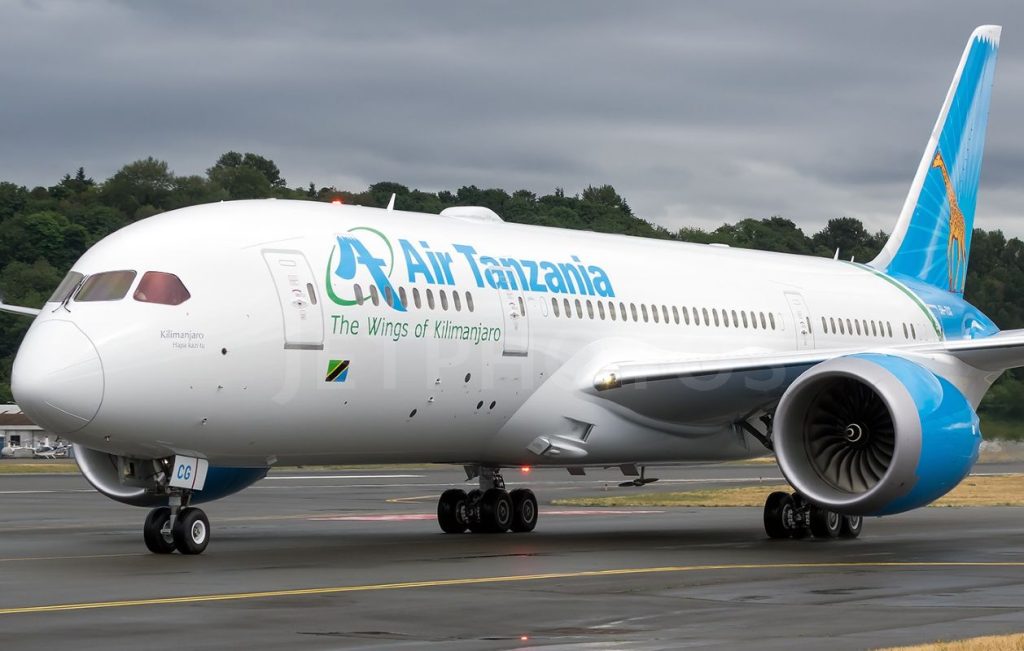
Air Tanzania’s suspension of its Dar es Salaam–Moscow service exposes the growing cost of geopolitics for African airlines, as the Ukraine conflict, EU airspace restrictions and limited alternative corridors complicate route economics.
Air Tanzania Company Limited (ATCL) has temporarily suspended its direct Dar es Salaam–Moscow service, highlighting how geopolitical tensions, airspace restrictions and aviation regulation are increasingly shaping the economics of African airlines.
The suspension of flights TC422 and TC423 takes effect on September 4, 2026, with the national carrier attributing the decision to a routine risk assessment of the operating environment along the route.
ATCL said such assessments are conducted continuously across its global network and that operational pauses are implemented whenever safety indicators warrant them.
“Safety considerations always take precedence over commercial ones,” the airline said.
The suspension comes barely two months after ATCL launched the route on July 1, 2026, making it one of the airline’s newest long-haul services. The three-times-weekly Boeing 787-8 operation linked Dar es Salaam with Moscow’s Vnukovo Airport, with the return leg routed through Zanzibar.
Industry sources say the decision illustrates the difficult choices facing ATCL as the war in Ukraine, restrictions on Tanzanian-registered aircraft in European airspace and intermittent access to alternative corridors combine to make the Moscow operation increasingly complex.
With Ukrainian airspace closed, airlines travelling between East Africa and Russia essentially have to route around the conflict either to the west or east.
For ATCL, however, the western option is complicated by the European Union’s restrictions on Tanzanian-certified carriers. That leaves the airline dependent on longer eastern routings through airspace including Iran, Pakistan and potentially Afghanistan.
“They have a difficult scenario,” an airline source said. “There are basically two routes to Russia — east or west because Ukraine is in the middle. The western route would be safer and faster, but Air Tanzania is banned from European airspace.”
The alternative eastern routing also presents its own risks.
“Iran can also close its airspace sporadically, which means the aircraft may have to go further east via Afghanistan and Pakistan, which have their own issues,” the source added.
Longer and more complex routings also have financial consequences, particularly through fuel consumption, crew costs, aircraft utilisation and insurance.
“Insurance does not like planes flying over Iran right now,” the source added.
The restrictions on Tanzanian-certified carriers stem from aviation safety oversight concerns raised by European authorities. The European Commission initially placed the carrier on the EU Air Safety List in late 2024 before expanding the restriction in June 2025 to cover all carriers certified in Tanzania.
The European Union Aviation Safety Agency (EASA) cited deficiencies in national aviation oversight, including shortages of qualified personnel and weaknesses in safety monitoring of flight operations.
The designation effectively prevents Tanzanian-registered aircraft from operating into, out of or across EU airspace, limiting ATCL’s routing options and complicating any future expansion into the European market.
The Tanzanian Civil Aviation Authority has continued technical discussions with European safety authorities aimed at addressing the identified oversight deficiencies and securing removal from the list.
However, another commentator, Malawi-based aviation consultant, Sean Mendis explained that the EU designation should not automatically be interpreted as evidence that IOSA certified ATCL itself has unsafe operating practices.
“EASA doesn’t assess airlines directly. They assess the Civil Aviation Authority and its capability to maintain oversight,” Mendis said.
“Air Tanzania’s processes may be compliant with IOSA, but the finding is that TCAA is incapable of supervising that.”
The Moscow suspension therefore demonstrates a wider challenge for African airlines. Commercial viability increasingly depends not only on passenger demand and aircraft economics, but also on access to safe and politically available airspace.
For ATCL, the immediate priority is to protect passengers while monitoring whether conditions allow the Moscow service to resume.
The airline is offering affected passengers either a full refund or rebooking to an alternative travel date or routing at no additional cost.
Passengers can contact ATCL through contactcentre@airtanzania.co.tz or +255 748 773 900, or seek assistance through their travel agents.
The carrier said it remains in consultation with aviation and regulatory authorities and will announce the resumption of the Moscow service once its operational assessment determines that the route can be safely operated.
Related Posts
 Uganda Airlines Separates CEO from Accountable Manager in Major Leadership Reset
 Boeing Holds Bullish Africa Aviation Outlook as Fleet Set to More than Double by 2045
 Inside Dr Silver Mugisha and NWSC’s Long Game to Keep Kampala’s Taps Running into the Future
 Oil Money’s First Test Will be Uganda’s Ability to Stop it Leaking Through Flawed Procurement
 Uber exits Uganda after a decade in Kampala
 Appellation: Uganda Gives its Crude a Brand as ‘Pearl Sweet’ Ahead of November First Oil
Get business news delivered to you everyday
Latest News

Air Tanzania Moscow Suspension Highlights rising Geopolitical Risks for African Airlines

Uganda Airlines Separates CEO from Accountable Manager in Major Leadership Reset

Boeing Holds Bullish Africa Aviation Outlook as Fleet Set to More than Double by 2045

Inside Dr Silver Mugisha and NWSC’s Long Game to Keep Kampala’s Taps Running into the Future

Oil Money’s First Test Will be Uganda’s Ability to Stop it Leaking Through Flawed Procurement

Uber exits Uganda after a decade in Kampala

Equity Financing Helps Vurra Secondary School turn Enrolment Pressure into Growth Opportunity

El Niño Puts More Than 162 Million Children at Risk Across Africa as UNICEF warns of worsening drought, flooding and extreme heat hazard

Family of Ugandan Boeing 737 MAX Crash Victim Christine Alalo Set for USD1.28 million Payout

Digital Banking Growth puts Cyber Fraud Firmly on Uganda’s Financial Sector Agenda