

IMF boss tells policymakers to prepare for unthinkable
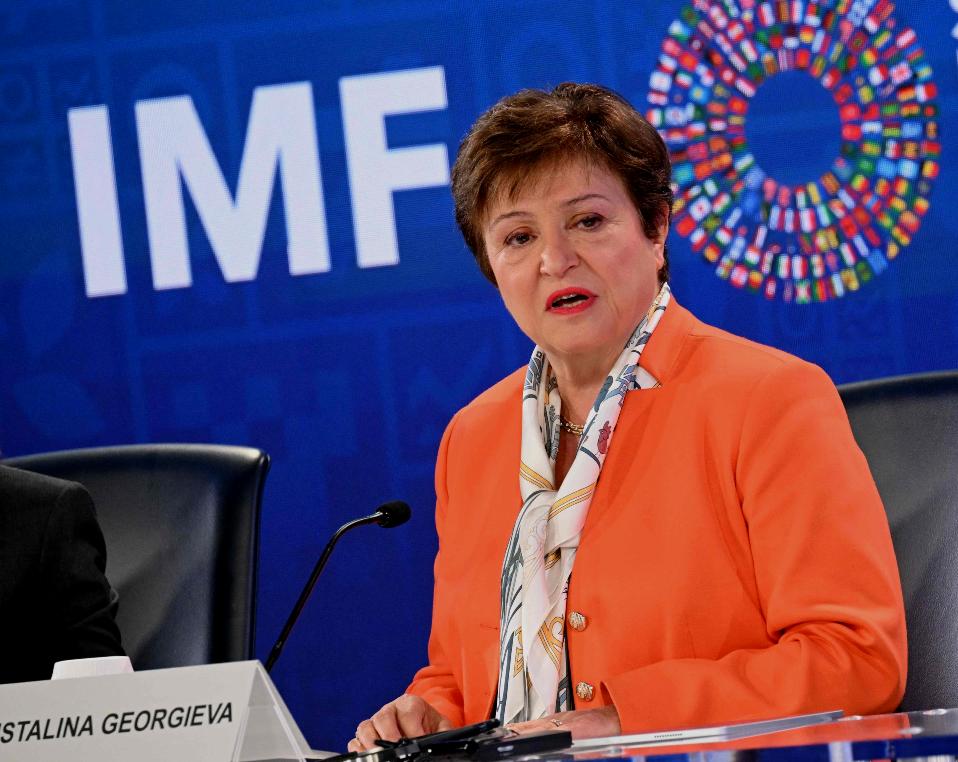 Georgieva said if the new conflict proves prolonged, it has clear and obvious potential to affect market sentiment, growth, and inflation, placing new demands on policymakers.
The US dollar is strengthening against other currencies, as investors seek a safe haven to park their assets, amidst the prevailing Middle East conflict and spiking crude oil prices which topped $100 on Monday before falling back.
This poses a macroeconomic risk for many African nations, including Uganda, because of being net importers of critical goods notably fuel which are globally priced in dollars. When the dollar strengthens, local currencies depreciate which also tends to trigger inflationary pressures by driving up the domestic cost of living. Speaking in Tokyo, the International Monetary Fund Managing Director Kristalina Georgieva, has advised policymakers to prepare for the unthinkable.
Giving the keynote address at Japan’s Ministry of Finance’s ‘Future of the Global Economy amid a Fluid International Economic and Monetary Order’ Symposium she said, “Energy security has shot up the list of concerns. If the new conflict proves prolonged, it has clear and obvious potential to affect market sentiment, growth, and inflation, placing new demands on policymakers.
And if, as we all hope, the conflict ends soon, then be sure that, before long, some new shock will come. My advice to policymakers everywhere in this new global environment: think of the unthinkable and prepare for it.”
In early February, commenting on the Uganda’s inflation outlook for the near term, Michael Atingi-Ego, the central bank Governor said, “External factors that could exert higher-than-anticipated inflationary pressures include a persistently depreciated exchange rate, escalating geopolitical tensions that could disrupt global supply chains, and adverse weather conditions that could reduce agricultural output and raise food prices.”
In confronting the unthinkable, Georgieva said, “Yes, but how? By focusing on what you can control. Three pieces of advice–one, invest in strong institutions and policy frameworks to underpin strong economies and private sector-led growth. Two, use policy space when needed and be sure to replenish it. Three—above all—be agile.”
She said, “One core role for public authorities is to provide a guiding hand—ensuring forward-leaning, economy-wide responses to transformative forces; regulating wisely, not unduly; and providing the institutional bedrock for the private sector to flourish. As most emerging market economies have learned in recent years, it pays off—in better growth and inflation outcomes—to have independent central banks, fiscal rules, and other policy frameworks.”
Acknowledging that the private sector tends to be more agile than governments Georgieva said, “We see this in the way trade policy shocks and the forces of geopolitics more broadly are combining to deliver a private sector-led global reconfiguration of trade. But governments also need to show greater agility in an uncertain and fluid world—seeing not only challenges, but also opportunities. One obvious example: regional integration.”
She said central banks have mandates that set their broad direction—be it an inflation target or a currency peg—but, beyond that, must always be attentive to the data in deciding how to use their policy space.
Related Posts
 Bank of Uganda hikes base rate from 9.75% to 12% amidst global tensions
 COMESA Competition Watchdog Calls for Stronger Skills-Sets to Police Complex Regional Markets
 PPDA Roots for Procurement as Driver of Local Wealth Creation
 BoU plans Diaspora Bond, National Switch to unlock UGX9.3 trillion Diaspora Wealth
 Making Smallholder Agriculture Visible to Finance
 Uganda joins continental push for debt justice as public debt soars to UGX130 trillion
Get business news delivered to you everyday
Latest News

Energy Ministry and Equity Bank target lower hotel energy costs through green investment initiative

FAA Certifies Boeing 737-10, Clearing Path for Deliveries of Largest 737 MAX Variant

Aviation Industry Coalition Presses EU to Protect Voluntary use of Biometric Travel Technology

Somalia Recognises IATA Safety Audits in Push for Common African Aviation Standards

Stanbic Donates UGX40 Million in Maternal Health Equipment to Obongi Facility

Airlink Adds Lanseria–Harare Route, Expands Regional Flights for Summer

Uganda SGR Nears €1bn Funding Milestone as OPEC Fund Targets November Approval for €150m

Solar Power Linked to More Births and Better Patient Access at Rural Ugandan Clinics

China’s GPMI Interface Leapfrogs HDMI, USB With 192Gbps Speeds and 480W Power

Stanbic Seeks Northern Uganda Business Feedback as It Marks 35 Years in Country