

Death of Félicien Kabuga in The Hague ends one of genocide justice’s longest pursuits
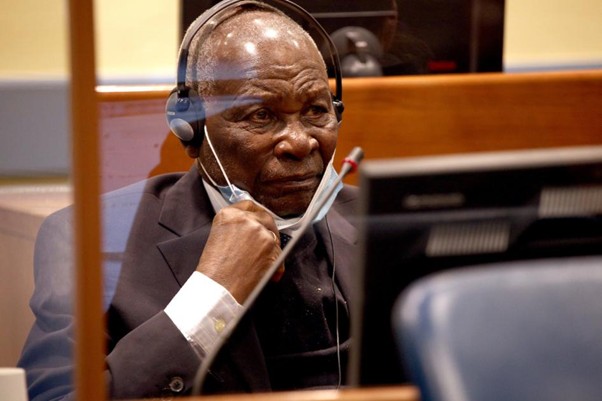
The passing of genocide financier Félicien Kabuga while in UN custody in The Hague closes a defining chapter in the international pursuit of accountability for the 1994 Genocide against the Tutsi, while exposing the limitations of delayed global justice.
The death of genocide mastermind Félicien Kabuga in The Hague has brought a dramatic and symbolic end to one of the longest-running manhunts in modern international criminal justice.
The United Nations International Residual Mechanism for Criminal Tribunals (IRMCT) confirmed on Friday that Kabuga died while hospitalized in The Hague, where he had been under UN detention following his arrest in France in 2020 after more than two decades on the run.
In a statement issued from Arusha and The Hague, the UN tribunal said Dutch authorities had commenced standard investigations into the circumstances surrounding his death, while Mechanism President Judge Graciela Gatti Santana ordered a full inquiry led by Judge Alphons Orie.
Kabuga, a wealthy Rwandan businessman once regarded as one of the world’s most wanted fugitives, had been charged with genocide, conspiracy to commit genocide, incitement to genocide and crimes against humanity linked to the 1994 Genocide against the Tutsi in Rwanda.
Prosecutors accused him of financing extremist militias, facilitating hate propaganda and supplying resources used during the massacres that killed more than 800,000 people in approximately 100 days.
For decades, Kabuga’s name occupied a near-mythical place in international justice circles.
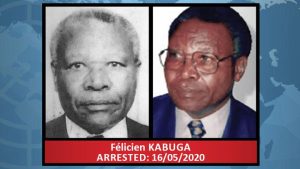 An arrest warrant was first issued by the former International Criminal Tribunal for Rwanda (ICTR), but Kabuga managed to evade capture across several countries for over 25 years before French authorities arrested him near Paris in May 2020.
His capture was hailed globally as a breakthrough moment for accountability over the Rwanda genocide — particularly because many believed age and time might permanently shield senior suspects from prosecution.
Yet the legal process that followed revealed the growing challenges confronting international war crimes tribunals.
Kabuga’s trial formally began in September 2022, but proceedings soon became overshadowed by concerns about his health and mental fitness. In 2023, judges indefinitely stayed the case after finding he was no longer fit to stand trial because of severe cognitive decline.
At the time of his death, he remained in detention while awaiting provisional release to a country willing to receive him.
That unresolved status leaves behind a deeply complicated legacy.
For survivors of the genocide, Kabuga’s death may represent the final disappearance of one of the men they viewed as central to organizing and enabling the killings. But it also means one of the most anticipated genocide trials of recent decades will never reach a verdict.
The development therefore carries implications far beyond Rwanda.
Kabuga’s case had increasingly become a measure of whether international justice institutions established after the atrocities of the 1990s could still deliver meaningful accountability decades later. Instead, his death before judgment highlights a recurring dilemma: justice mechanisms often move more slowly than history itself.
The case also revives broader questions about the effectiveness and future of international criminal tribunals.
Supporters argue that Kabuga’s eventual arrest demonstrated that genocide suspects can never fully escape accountability, regardless of how much time passes. Critics, however, contend that delayed prosecutions risk depriving victims of closure while consuming enormous institutional resources.
For Rwanda, the symbolism is especially powerful. The genocide remains the defining event in the country’s modern political identity, shaping everything from governance and national reconciliation to regional security policy and diplomatic relations across Africa and beyond.
Kabuga’s alleged role was particularly significant because prosecutors portrayed him not as a battlefield commander, but as part of the financial and ideological machinery that enabled mass violence. His prosecution was expected to deepen historical understanding of how economic elites, media structures and political networks helped fuel genocide.
Now, that judicial process ends without a final courtroom reckoning.
Still, Kabuga’s death is unlikely to diminish the historical consensus surrounding the atrocities of 1994 or the global legal precedents established in their aftermath.
The institutions created after Rwanda and the Balkans transformed international law, expanding the principle that individuals — including financiers, propagandists and political actors — can be held personally accountable for crimes against humanity and genocide.
Even so, the conclusion of Kabuga’s case without a verdict may reinforce calls for faster, more adaptive systems of international justice capable of handling aging suspects and prolonged conflicts more effectively.
More than three decades after the genocide, the world is once again reminded that while history can pursue fugitives for decades, time itself often remains the ultimate adversary of justice.
Related Posts
 Uganda Targets Higher Milk Yields From Indigenous Ankole Cow Without Exotic Crossbreeding
 Airbus A350F Freighter Takes Flight as Cargo Market Shifts Toward Newer, More Efficient Aircraft
 Uganda Architects to Celebrate 60 Years as Profession Confronts a Technology-driven Future
 Africa Moves to Implement ‘Correct the Map’ Resolution as Equal Earth Cartographers Pledge Support
 Oyo Nyimba: The King Who Made Tooro Feel Close to the World
 In Karamoja, an 80-day Sorghum Variety Offers a Different Response to Drought
Get business news delivered to you everyday
Latest News

Uganda Targets Higher Milk Yields From Indigenous Ankole Cow Without Exotic Crossbreeding

Airbus A350F Freighter Takes Flight as Cargo Market Shifts Toward Newer, More Efficient Aircraft

Uganda Architects to Celebrate 60 Years as Profession Confronts a Technology-driven Future

Africa Moves to Implement ‘Correct the Map’ Resolution as Equal Earth Cartographers Pledge Support

Oyo Nyimba: The King Who Made Tooro Feel Close to the World

UNBS Seizes 17,770 Litres of Illicit Alcohol as Kenya Deaths Raise Regional Concern

Why Unlocking Africa’s Next Mining Powerhouse Requires Strong Financial Partnerships

Relief as UAE Eases Ebola-era Entry Curbs on Ugandans, Reopening Key Aviation Corridor

Equity Turns Schools into Climate Restoration Hubs as Lender Launches 200,000-tree Uganda drive

13 Feared Killed as Tracep Aviation L-410 Crashes in DRC