

Kiira Motors earns triple global ISO certification in major milestone for Uganda’s industrial ambitions
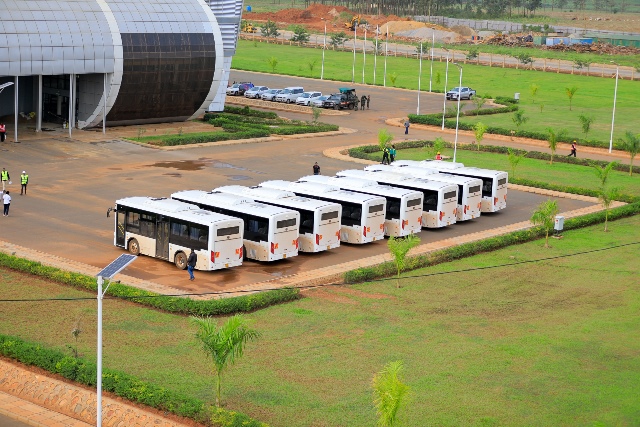
Uganda’s automotive ambitions received a major credibility boost after the Kiira Vehicle Plant secured Integrated Management System certification, positioning the Jinja-based facility among globally audited vehicle manufacturers and strengthening the country’s push into electric mobility and industrial value addition.
 Uganda’s drive to build a homegrown automotive industry has reached a significant milestone after the Kiira Vehicle Plant secured Integrated Management System (IMS) certification, a development being hailed as a breakthrough for African manufacturing and electric mobility.
The certification, attained on April 29, 2026, confirms that the Jinja-based facility complies with three internationally recognised operational standards covering quality management, environmental sustainability and occupational safety.
The certification was granted by LMS Assessments Limited and covers ISO 9001:2015 for quality management systems, ISO 14001:2015 for environmental management systems, and ISO 45001:2018 for occupational health and safety management systems.
For Uganda’s emerging automotive sector, the achievement represents more than a technical compliance exercise with analysts saying, it strengthens Kiira Motors Corporation’s credibility as a fully-fledged vehicle manufacturer rather than a simple vehicle assembler.
The certification scope authorises the corporation to “develop, make and sell sustainable mobility solutions, including vehicles, charging infrastructure and mobility services,” effectively recognising the company as an Original Equipment Manufacturer (OEM) with the capacity to engineer, manufacture and commercialise mobility technologies.
“Achieving IMS Certification marks Kiira Motors Corporation’s readiness for world class production and industrialisation,” said Kiira Motors Corporation Founding CEO, Paul Isaac Musasizi. “It affirms our commitment to value addition, technological sovereignty, and sustainable African green mobility, reflecting our resolve to build Africa’s future through collaboration, collective growth, and shared innovation powered by vision and partnership,”
The development comes as African governments increasingly seek to reduce dependence on imported second-hand internal combustion engine vehicles while accelerating the transition toward electric mobility and industrial value addition.
Located in the Jinja Industrial and Business Park, the Kiira Vehicle Plant occupies approximately 100 acres and has been positioned as Africa’s largest specialised bus manufacturing facility.
The plant currently operates more than 139 production stations covering body fabrication and assembly, paint systems, chassis integration, trim installation, quality inspection and vehicle testing.
Its initial installed production capacity stands at 2,500 vehicles annually, although Kiira Motors says the facility can scale to 10,000 units a year without major structural expansion. Long-term plans target production of as many as 150,000 vehicles annually to meet regional demand.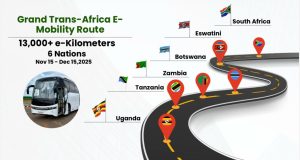
The company’s production strategy has focused heavily on commercial mass transit vehicles, particularly the Kayoola EVS electric city bus and the Kayoola Coach platform for long-distance transport.
Under ISO 9001:2015 certification, the company is required to maintain tightly documented quality control procedures across procurement, production, logistics and vehicle integration processes.
Industry observers say this certification is especially important within the framework of the African Continental Free Trade Area (AfCFTA), where compliance with internationally recognised manufacturing standards could determine export competitiveness.
The certification is expected to help reassure institutional buyers, municipalities and transport fleet operators across Africa that vehicles manufactured in Uganda meet internationally accepted production and safety benchmarks.
The environmental management certification under ISO 14001:2015 also places emphasis on reducing the ecological footprint of vehicle manufacturing, an increasingly sensitive issue globally as electric vehicle production expands.
Kiira Motors says the Jinja facility integrates sustainability measures directly into its infrastructure, including a 1.5-megawatt rooftop solar installation that supplies part of the plant’s operational electricity demand.
According to company data, the solar system accounted for about seven percent of the plant’s energy consumption during the second half of 2025 and helped avoid nearly 13 tonnes of carbon dioxide equivalent emissions.
The plant also operates a wastewater treatment facility capable of processing one million litres per day, aimed at ensuring compliance with environmental regulations and protecting ecosystems around Jinja and the River Nile basin.
 The ISO 45001:2018 certification addresses workplace safety in an industry characterised by heavy machinery, automated systems and high-voltage battery technologies.
Kiira Motors says the certification strengthens safeguards for its workforce of more than 400 employees, many of them young Ugandan engineers and technicians.
The certification arrives at a time when Uganda is attempting to deepen domestic industrial capacity by linking automotive production with broader supply chain localisation.
Kiira Motors has previously stated ambitions to source as much as 65 percent of vehicle components locally by 2030, a strategy expected to stimulate demand in Uganda’s steel, fabrication, battery and engineering industries.
President Yoweri Museveni has repeatedly linked the country’s automotive ambitions to Uganda’s mineral and metallurgical resources, particularly iron ore deposits in western Uganda that could support domestic steel production.
The company’s broader electric mobility ambitions have also gained momentum through the rollout of E-Bus Xpress, an electric mass transit service launched in Kampala in May 2026 after earlier pilot operations in Jinja, eastern Uganda.
The service currently operates using Kayoola EVS buses on the Ntinda–City Square route and features cashless fare payments integrated through mobile platforms.
Kiira Motors says the buses are designed for African urban conditions, with passenger capacity of up to 90 people and a driving range of approximately 300 kilometres on a single charge.
The company is simultaneously expanding electric vehicle charging infrastructure, including deployment of fast-charging stations and collaboration with government plans to establish a nationwide e-mobility ecosystem.
Uganda aims to deploy approximately 1,500 electric buses across 14 urban centres by 2030, supported by hundreds of charging stations.
Kiira Motors’ growing visibility was further amplified by the “Pearl to Cape Electric Expedition 2025,” during which a Kayoola E-Coach completed a 13,784-kilometre transcontinental journey across six African countries.
The expedition was intended to demonstrate the endurance and viability of African-engineered electric mobility systems under varied climatic and infrastructural conditions.
The bus completed the route while avoiding more than six tonnes of carbon emissions compared to a conventional diesel-powered coach.
Another major institutional breakthrough came in 2023 when Uganda received the World Manufacturers’ Identifier code “BU” from the Society of Automotive Engineers International.
The designation allows Uganda-issued Vehicle Identification Numbers (VINs) to be globally recognised, an important requirement for participation in international automotive trade and regulatory systems.
For Kiira Motors, the latest certification now provides an internationally audited operational framework as it prepares to ramp-up production and position Uganda as a regional electric mobility hub.
The milestone also signals a broader shift in Africa’s perennial narrative of industrial dependence on imported automotive technology toward locally engineered manufacturing ecosystems anchored in sustainability, quality assurance and technological sovereignty.
Related Posts
 Uganda Coffee Roasters Tap Richard Rugaya as Executive Director, with Focus on Commercial Growth
 Why Africa’s Institutions Must Turn Knowledge and Investment into Farmer Prosperity
 Forbes ranks MTN Group third globally on best telecom employer list
 Stanbic experts offer investment insights to navigate current market uncertainty
 Africa Carbon Markets Urged to Turn Potential into Investment and Delivery
 Corporate Buyers Could Help Unlock SAF Market Worth Millions of Tonnes by 2030
Get business news delivered to you everyday
Latest News

Uganda Coffee Roasters Tap Richard Rugaya as Executive Director, with Focus on Commercial Growth

Equity Bank Reports UGX37.6 Billion in Green Loans as Uganda Seeks to Scale Climate Investment

Why Africa’s Institutions Must Turn Knowledge and Investment into Farmer Prosperity

Forbes ranks MTN Group third globally on best telecom employer list

Stanbic experts offer investment insights to navigate current market uncertainty

Africa Carbon Markets Urged to Turn Potential into Investment and Delivery

Bank of Uganda hikes base rate from 9.75% to 12% amidst global tensions

Airbus sees USD420bn Global Aviation Services Boom: Can Africa Capture its Share?

Nile Breweries Celebrates 75 Years of Growing with Uganda

Nawangwe Urges Architects to Document Uganda’s Built Heritage