

Uganda courts trade, investment at China’s Canton Fair
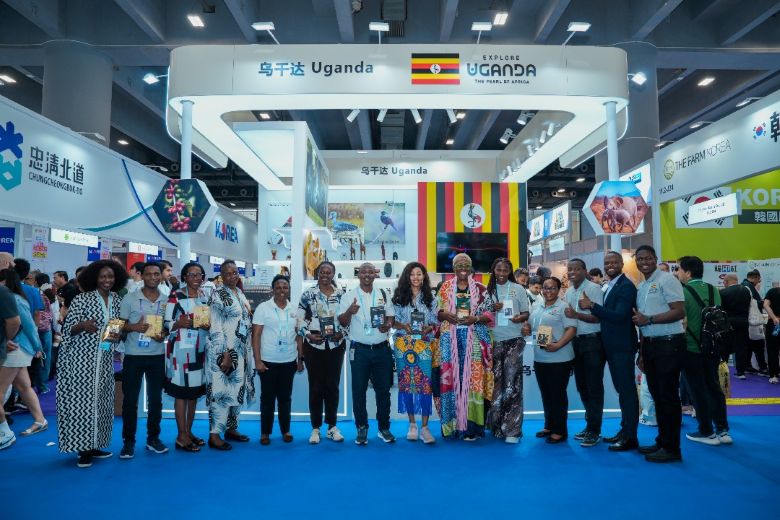
Uganda has stepped up its export and investment push in Asia, securing early deals and investor interest at China’s Canton Fair as it seeks to rebalance trade and scale value-added exports.
Uganda has intensified its push into Asian markets, using its participation at the 139th China Import and Export Fair to showcase export-ready products, attract investment and deepen commercial ties with China and global partners.
Held in Guangzhou from May 1 to 5, the Canton Fair—one of the world’s largest trade exhibitions—brought together thousands of buyers, manufacturers and investors, offering Uganda a high-visibility platform to position itself beyond a raw materials exporter.
Uganda’s delegation, led by Juju Nsababera, focused on promoting value-added products and forging partnerships aligned with the country’s export growth and industrialisation agenda.
Exhibitors from sectors including coffee, shea butter and artisanal crafts—among them Seedstar Specialty Coffee, Elyon Organics, Senela Organics, RhinoSeeds Africa and Megkari Coffee—reported strong interest from international buyers.
Within the first days of the exhibition, several Ugandan products, including coffee, tea and shea butter-based goods, secured confirmed orders and direct sales, signalling growing global demand for the country’s agricultural and artisanal exports.
“The world now knows Uganda coffee. Visitors were tasting, engaging and wanting to learn more. This has opened the door to the global market,” said a representative from Seedstar Specialty Coffee.
Officials say the strong reception reflects a shift in how Uganda is positioning itself—moving up the value chain with a focus on quality, branding and compliance with international standards.
Ambassador Nsababera emphasised that participation in global trade platforms is critical to unlocking new markets and sustaining export growth, particularly in a highly competitive environment.
“Uganda is ready to engage not merely as a source of raw materials, but as a supplier of value-added, high-quality products,” she said, pointing to the importance of consistency, packaging and market readiness.
China’s vast consumer base—estimated at over 1.4 billion people—offers significant opportunities for Ugandan exporters, particularly in niche, high-quality segments such as specialty coffee and organic products.
Uganda’s pavilion, positioned near a main entrance at the fair, attracted strong foot traffic and generated not only trade interest but also enquiries into tourism, with visitors seeking information on leisure and eco-tourism opportunities.
The engagement comes amid expanding trade relations between Uganda and China, one of its largest trading partners. Bilateral trade currently stands at about $1.46 billion annually, although the balance remains heavily tilted in China’s favour.
Uganda exports roughly $90 million worth of goods—mainly coffee, timber, oil seeds and minerals—while imports from China, including machinery, electronics and industrial inputs, exceed $1.3 billion.
Government officials say participation in global trade fairs is a key lever in efforts to boost exports, promote value addition and gradually rebalance the trade relationship.
Beyond trade, the Canton Fair also opened new pathways for investment, with interest recorded from international firms in sectors such as energy, mineral development, agro-processing and manufacturing.
Several exploratory meetings and early-stage partnership discussions were initiated with potential investors from Asia, Europe and the Middle East, pointing to broader opportunities beyond immediate sales.
Since its inception, the Canton Fair has connected businesses from more than 200 countries and regions, with cumulative export transactions exceeding $1.5 trillion—cementing its role as a gateway to both Chinese and global markets.
Officials say Uganda’s participation is in line with its economic diplomacy strategy, which prioritises export promotion, industrialisation and foreign direct investment as key drivers of long-term growth.
With early deals secured and investor conversations underway, authorities are betting that sustained engagement in such platforms will translate into stronger trade partnerships, higher export earnings and tangible investment flows into the country.
Related Posts
 Uganda Emerges as Africa’s Largest Organic Farming Country as Exports Reach USD225 Million
 SITA Acquisition of Collins Airport Solutions Signals Moves to Consolidate Aviation Technology
 Uganda Coffee Roasters Tap Richard Rugaya as Executive Director, with Focus on Commercial Growth
 Equity Bank Reports UGX37.6 Billion in Green Loans as Uganda Seeks to Scale Climate Investment
 Why Africa’s Institutions Must Turn Knowledge and Investment into Farmer Prosperity
 Stanbic experts offer investment insights to navigate current market uncertainty
Get business news delivered to you everyday
Latest News

Uganda Emerges as Africa’s Largest Organic Farming Country as Exports Reach USD225 Million

SITA Acquisition of Collins Airport Solutions Signals Moves to Consolidate Aviation Technology

Uganda Coffee Roasters Tap Richard Rugaya as Executive Director, with Focus on Commercial Growth

Equity Bank Reports UGX37.6 Billion in Green Loans as Uganda Seeks to Scale Climate Investment

Why Africa’s Institutions Must Turn Knowledge and Investment into Farmer Prosperity

Forbes ranks MTN Group third globally on best telecom employer list

Africa Carbon Markets Urged to Turn Potential into Investment and Delivery

Bank of Uganda hikes base rate from 9.75% to 12% amidst global tensions

Corporate Buyers Could Help Unlock SAF Market Worth Millions of Tonnes by 2030

Airbus sees USD420bn Global Aviation Services Boom: Can Africa Capture its Share?