

Uganda launches electric bus service in Kampala, targets nationwide rollout by 2030
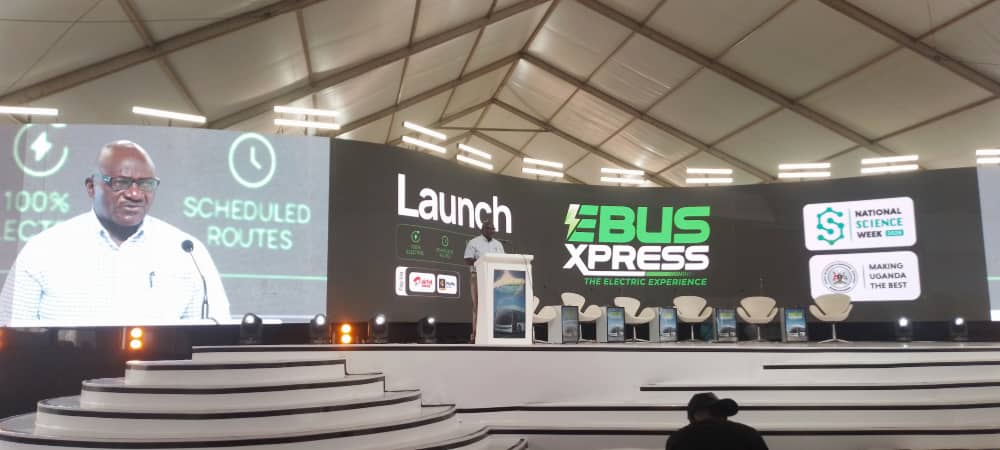
Uganda has launched its first electric bus circuit in Kampala under a concession to E-Bus Xpress, marking a major step toward cleaner urban transport and a nationwide rollout targeting 14 cities by 2030.
Uganda has officially launched an electric commuter bus service in Kampala, signalling a shift toward clean urban mobility and positioning the country within a growing regional transition to electric public transport.
The service, unveiled on May 3 by Works and Transport Minister Edward Katumba Wamala, introduces the first of five planned circuits in the Greater Kampala Metropolitan Area (GKMA), with operations beginning along a bi-directional route linking Ntinda to City Square via Kampala Road.
Operated by E-Bus Xpress, a subsidiary of Kiira Motors Corporation, the system debuts with an initial fleet of eight electric buses and a target waiting interval of 15 minutes at boading points. The service also incorporates a fully cashless payment system, reflecting a broader push toward digitised urban transport.
The rollout follows a pilot phase in Jinja launched in December 2024 and marks Kampala’s entry into an electric mobility shift already underway in cities such as Nairobi, Kigali, Dar es Salaam and Addis Ababa.
Speaking at the launch, Katumba Wamala described the initiative as a cornerstone of Uganda’s broader economic and infrastructure strategy, linking modern transport systems to productivity, environmental sustainability and cost efficiency.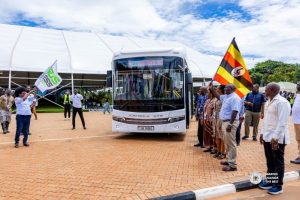
He said the transition to electric mobility is intended to reduce reliance on imported fuel while stabilising commuter costs through the use of domestically generated electricity.
“Every electric mile driven is capital saved from fuel imports,” he said, adding that predictable fares would shield commuters from volatility in global oil markets.
The government has set an ambitious target to scale the system nationwide by June 2030, deploying 1,500 electric buses across 14 urban centres supported by a network of 260 fast-charging stations.
At the centre of the rollout are the Kayoola electric buses, manufactured locally by Kiira Motors, a move the government says supports industrialisation while advancing energy sovereignty.
Beyond transport, authorities are positioning the initiative as an economic catalyst. The project is expected to create opportunities in areas such as service centres, park-and-ride infrastructure and mobile money operations, alongside a franchise-based model aimed at integrating informal and formal transport systems.
The Kampala launch comes as Uganda accelerates implementation of its National Development Plan IV (NDP IV), which targets rapid economic expansion and improved urban efficiency as part of a long-term strategy to grow the economy.
Officials argue that modernising public transport will be critical to easing congestion in Kampala while improving productivity and quality of life in one of East Africa’s fastest-growing cities.
The E-Bus Xpress system is also expected to contribute to emissions reduction in the transport sector, aligning with broader regional and global efforts to decarbonise mobility.
With the first circuit now operational, attention shifts to scaling the model across the capital and replicating it in other cities—testing both the commercial viability of electric mass transit and the government’s capacity to deliver large-scale urban transport reform.
If successfully implemented, the programme could redefine Uganda’s public transport landscape, moving it toward a more structured, technology-driven and environmentally sustainable system.
Related Posts
 Uganda Coffee Roasters Tap Richard Rugaya as Executive Director, with Focus on Commercial Growth
 Why Africa’s Institutions Must Turn Knowledge and Investment into Farmer Prosperity
 Forbes ranks MTN Group third globally on best telecom employer list
 Stanbic experts offer investment insights to navigate current market uncertainty
 Africa Carbon Markets Urged to Turn Potential into Investment and Delivery
 Corporate Buyers Could Help Unlock SAF Market Worth Millions of Tonnes by 2030
Get business news delivered to you everyday
Latest News

SITA Acquisition of Collins Airport Solutions Signals Moves to Consolidate Aviation Technology

Uganda Coffee Roasters Tap Richard Rugaya as Executive Director, with Focus on Commercial Growth

Equity Bank Reports UGX37.6 Billion in Green Loans as Uganda Seeks to Scale Climate Investment

Why Africa’s Institutions Must Turn Knowledge and Investment into Farmer Prosperity

Forbes ranks MTN Group third globally on best telecom employer list

Stanbic experts offer investment insights to navigate current market uncertainty

Africa Carbon Markets Urged to Turn Potential into Investment and Delivery

Bank of Uganda hikes base rate from 9.75% to 12% amidst global tensions

Airbus sees USD420bn Global Aviation Services Boom: Can Africa Capture its Share?

Nile Breweries Celebrates 75 Years of Growing with Uganda