

80percent of the world’s blocked airline funds are in Africa as industry struggles to break even
African airlines are struggling to stay profitable as governments block $774 million in revenues and impose high taxes, undermining growth despite strong demand and some of the world’s highest airfares.
African governments are holding nearly 80 percent of blocked airline revenues globally, leaving the region’s carriers trapped in a holding pattern of minimal survival, deepening losses, and limited capacity to grow—despite charging some of the highest airfares in the world.
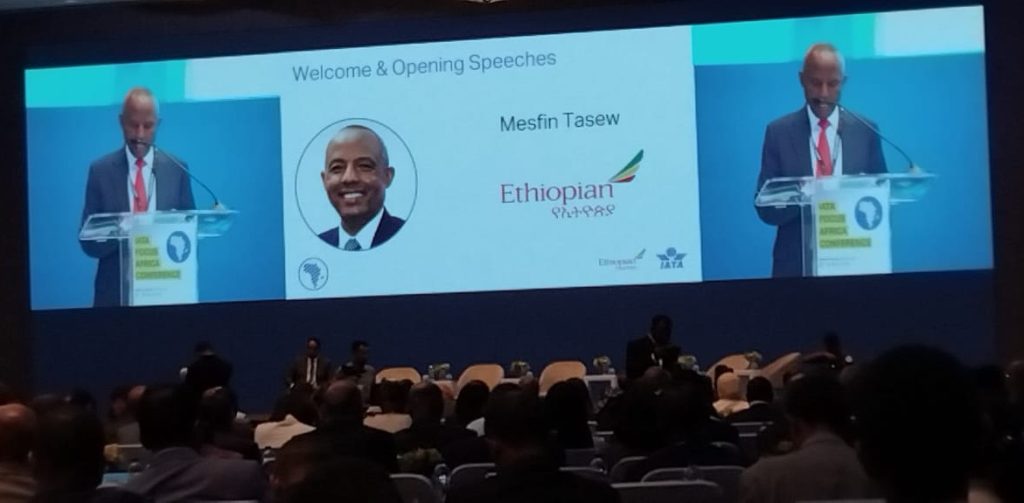
The long-running issue returned to the spotlight this week as the International Air Transport Association (IATA) told stakeholders at the fourth Focus Africa Conference in Addis Ababa that governments across the continent were blocking the release of USD774 million in airline revenues as of the end of March 2026.
Algeria accounts for the largest share at USD258 million, followed by countries using the Central African franc (XAF) zone at USD105 million, Mozambique at USD82 million, Eritrea at USD78 million, and Angola at USD73 million.
“In Algeria, and all locations where airlines are denied access to their revenues, governments must engage with the industry to find a sustainable solution or risk the consequences on connectivity,” said Kamil Alawadhi, IATA’s Vice President for Africa and the Middle East region.
Alawadhi warned that the impact of blocked funds goes beyond balance sheets, striking at the fragile economics of African aviation. Even under normal conditions, airlines on the continent are projected to earn justUSD$1.3 per passenger—one of the thinnest margins globally.
That margin can quickly disappear if revenues are not repatriated on time and are eroded by currency depreciation.
The result is an industry that, despite enormous growth potential, remains structurally constrained.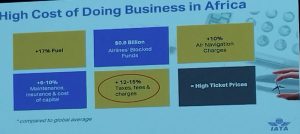
Speaking at the same forum, Mesfin Tassew, Chief Executive of Ethiopian Airlines group and host of the conference, said many of the challenges facing African aviation are longstanding but have been intensified by recent global disruptions.
These include high operating costs, limited aircraft maintenance capacity, shortages of skilled aviation professionals, and gaps in airport and air navigation infrastructure.
More recently, the industry has also been hit by a global shortage of aircraft and spare parts, conflicts in the Gulf region, and rising jet fuel prices.
“In many cases, however, the primary challenge of African aviation is a misunderstanding of the role of the investment, absence of a harmonised enabling policy and regulatory framework, as well as limited governance and leadership capacity across the industry,” Mesfin said.
Beyond blocked funds, Africa’s aviation potential is further held back by weak intra-African connectivity, restrictive visa regimes, and high taxes and charges that make flying unaffordable for many.
According to IATA, nearly half of all intra-African travel still requires visas prior to departure, limiting mobility, tourism, and regional integration. Where visa restrictions have been eased, countries have recorded stronger tourism flows and more resilient air routes.
At the same time, the cost of doing aviation business in Africa remains about 15 percent higher than the global average, largely due to government-imposed taxes and charges.
Some of these charges directly affect ticket prices and travel decisions. In Tanzania, for example, a $45 one-way passenger data charge is among the highest globally, while similar fees in Angola, DR Congo, Nigeria, Ghana, and Kenya exceed international norms.
IATA warned that such costs distort ticket pricing and undermine the competitiveness of African destinations.
Yet, amid the challenges, there are signs of progress.

L-R: IATA Senior Vice President, Operations, Safety and Security Nick Careen, Ethiopian Group CEO Mesfin Tassew and Kamil Alawadhi, IATA VP for Africa and the Middle East, taking questions from a section of the African air transport and aviation press at Ethiopian Skylight Hotel, Addis Ababa on April 29.
Aviation safety across the continent has improved significantly, with the accident rate falling from 12.13 to 7.86 per million sectors between 2024 and 2025. However, this remains well above the global average of 1.32 and still the highest among all regions.
To sustain improvements, IATA is urging governments and industry players to increase compliance with international safety standards, improve the publication of accident investigation reports, and expand the use of global safety audit programmes.
Looking ahead, the association is calling for a coordinated strategy to unlock the sector’s potential, built around four key pillars: safety, cost competitiveness, ease of doing business, and sustainability.
Central to this is the need to ensure airlines can freely repatriate their revenues in line with international agreements. Failure to do so, IATA says, risks reducing connectivity as airlines scale back operations or withdraw from affected markets.
The association is also pushing for the implementation of a December 2025 decision by the Economic Community of West African States (ECOWAS) to eliminate aviation taxes and reduce selected charges by 25 percent.
On sustainability, IATA says Africa holds significant untapped potential, particularly in the production of Sustainable Aviation Fuel (SAF).
Sub-Saharan Africa could supply up to 106 million tonnes of SAF feedstock by 2050 from agricultural residues, forestry waste, and municipal solid waste, creating jobs and strengthening energy security in the process.
It also pointed to opportunities under the global carbon offsetting scheme for aviation, where African countries could generate climate finance by supplying eligible emission units.
As discussions continue in Addis Ababa, industry leaders are increasingly framing Africa’s aviation challenge not as one of demand, but of policy alignment.
With a rapidly growing population and rising demand for connectivity, the continent’s skies remain one of the world’s biggest untapped aviation markets.
But until governments ease financial restrictions, lower costs, and remove regulatory bottlenecks, airlines may remain grounded—financially—despite strong passenger demand.
Related Posts
 Uganda Emerges as Africa’s Largest Organic Farming Country as Exports Reach USD225 Million
 Uganda Coffee Roasters Tap Richard Rugaya as Executive Director, with Focus on Commercial Growth
 Why Africa’s Institutions Must Turn Knowledge and Investment into Farmer Prosperity
 Forbes ranks MTN Group third globally on best telecom employer list
 Stanbic experts offer investment insights to navigate current market uncertainty
 Africa Carbon Markets Urged to Turn Potential into Investment and Delivery
Get business news delivered to you everyday
Latest News

Uganda Emerges as Africa’s Largest Organic Farming Country as Exports Reach USD225 Million

SITA Acquisition of Collins Airport Solutions Signals Moves to Consolidate Aviation Technology

Uganda Coffee Roasters Tap Richard Rugaya as Executive Director, with Focus on Commercial Growth

Equity Bank Reports UGX37.6 Billion in Green Loans as Uganda Seeks to Scale Climate Investment

Why Africa’s Institutions Must Turn Knowledge and Investment into Farmer Prosperity

Forbes ranks MTN Group third globally on best telecom employer list

Stanbic experts offer investment insights to navigate current market uncertainty

Bank of Uganda hikes base rate from 9.75% to 12% amidst global tensions

Corporate Buyers Could Help Unlock SAF Market Worth Millions of Tonnes by 2030

Airbus sees USD420bn Global Aviation Services Boom: Can Africa Capture its Share?