

Turning Waste to Wealth: Uganda’s African Catfish farmers embrace Black Soldier Fly innovation to beat climate change and rising feed costs

When the messages began to stream in barely a week after the close of ASARECA’s four-day training on Black Soldier Fly (BSF) mass rearing in Kampala, they carried the energy of a movement just taking flight.
“Good morning colleagues. The first harvest of eggs from our demo has made 12.03 grams,” one group leader reported excitedly.
Another asked, “Hello Dr. Amulen, the eggs you gave us in the kit have hatched. When are we getting the pupae?”
For Uganda’s catfish farmers, these were not just updates but signs of renewal in a sector long reeling from rising feed costs and erratic supply chains. With feed accounting for as much as two-thirds of the cost of raising fish, aquaculture’s profitability has been under siege. But the humble Black Soldier Fly may be about to change that.
Under a new initiative led by the Association for Strengthening Agricultural Research in Eastern and Central Africa (ASARECA) and the National Agricultural Research Organisation (NARO), farmers from nine agroecological zones across Uganda have been trained to rear BSF larvae as a sustainable and cost-effective protein source for fish feed.
For years, fish farmers relied on silverfish (mukene) and soybean meal to meet their feed needs. But those inputs have become increasingly expensive, competing directly with human food demand. Dr. Dorothy Amulen, founder of the Centre for Insect Research and Development (CIRD), says the BSF alternative can cut feed costs by up to 35 percent—a transformative figure in an industry where margins are tightening.
“It’s a climate-smart solution,” she says. “The larvae feed on organic waste, convert it into high-value protein, and reduce environmental pollution. What we are doing is creating a circular economy within the farm ecosystem.”
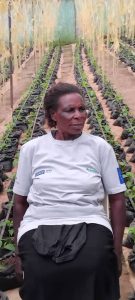
JUVIC Co-founder Vicky Nyakatura
For Vicky Nyakatura, co-founder of JUVIC Continental in Nyenje, Mukono District, the innovation could not have come at a better time. Her integrated enterprise combines poultry, aquaculture, livestock, and greenhouse farming. Yet despite its diversity, feed costs have remained a constant strain.
“With support from ASARECA, we’ve now set up a small BSF unit,” she explains. “The flies feed on organic chicken droppings, the larvae feed the catfish and poultry, and the processed waste becomes organic fertilizer for our vegetables. Nothing is wasted.”
Dr. Amulen estimates that JUVIC’s unit will produce about 500 kilograms of larvae per week—worth roughly UGX 1.5 million. The savings are not just financial; the improved nutritional quality of BSF-based feed accelerates animal growth.
“Catfish that would ordinarily take eight months to reach market size now mature in six,” she notes. “The same applies to poultry. Faster growth means quicker returns and stronger cash flow for farmers.”
To the untrained eye, the Black Soldier Fly may look like any other insect, but its ecological and economic potential is extraordinary. The adult fly is non-pest and non-invasive. Its larvae, however, are voracious consumers of organic matter—food scraps, crop residues, and animal waste.
Through this natural process, the larvae divert organic material from landfills and transform it into two valuable products: protein for animal feed and organic fertiliser (known as frass).
“It’s waste to wealth,” says Dr. Joshua Okonya, ASARECA’s Program Officer for Technology Adoption and Innovation. “These larvae are a cornerstone of the circular economy—addressing waste management, reducing feed costs, and supporting climate resilience all at once.”
The Kampala workshop, held from October 21–24, 2025, brought together lead fish farmers, agro-input dealers, and extension workers from the Lake Victoria Crescent Aquaculture Innovation Platform covering Mukono and Wakiso districts. The training offered hands-on experience in BSF breeding, fish feed formulation, and construction of production units.
Participants also visited CIRD’s demonstration site in Kawanda, where they observed how BSF units can be integrated into existing farm systems.
“This is a vital part of our mission to transform agriculture for improved livelihoods across Eastern and Central Africa,” said Dr. Okonya. “The challenge of climate change and food security demands innovative, community-focused solutions—and BSF farming is one of them.”
The activity forms part of ASARECA’s Comprehensive Africa Agriculture Development Programme (CAADP-XP4) and the AIRTEA Project, both funded by the European Union through the IFAD-managed DeSIRA Initiative and the ACP Innovation Fund.
Officiating at the training, Maxwell Onapa, Commissioner for Entomology at the Ministry of Agriculture, Animal Industry and Fisheries (MAAIF), commended ASARECA for driving what he called “the next big leap in sustainable feed production.”
“This is what makes the integration of BSF into our animal feed systems important,” he said. “It’s a timely intervention that speaks directly to our need for affordable, locally sourced protein.”
ASARECA says the training contributes to regional efforts to scale up gender-responsive and climate-smart innovations. Special emphasis was placed on including women and youth farmers—groups often left behind in high-technology agricultural ventures. Participants received BSF starter kits to establish community-level production units, setting the stage for localized, self-sustaining feed production systems.
By building technical skills and innovation capacity among smallholders, the initiative aligns with ASARECA’s broader mandate to coordinate agricultural research and technol ogy adoption across 15 member states in Eastern and Central Africa.
Nearly sixty participants left the workshop with both the skills, equipment and enthusiasm to champion BSF technology in their communities. For many, the potential benefits extend beyond lower feed costs.
“BSF farming is not just about fish feed,” noted one participant from Wakiso. “It’s about learning to see waste differently—to see opportunity in what we used to throw away.”
ASARECA envisions a cascading effect. As local BSF production units multiply, they will create new micro-enterprises in insect farming, feed processing, and organic fertilizer distribution. That, in turn, could strengthen the region’s aquaculture value chain and improve resilience to external shocks—from climate stress to global feed price fluctuations.
The shift to BSF-based feeds aligns with Uganda’s ambitions to expand aquaculture as a reliable source of protein and income. With natural fish stocks in decline, farmed catfish and tilapia now play a critical role in national food security. But sustainability has remained elusive amid high input costs and environmental pressures.
By turning organic waste into high-value feed, the BSF model not only reduces dependence on imported ingredients but also tackles waste management—a growing urban problem.
“It’s a simple but powerful concept,” Dr. Amulen says. “If we can turn waste into feed, and feed into food, we complete a sustainable cycle that benefits farmers, consumers, and the environment alike.”
As the last day of the workshop drew to a close, farmers departed not just with starter kits, but with a renewed sense of purpose. In their hands, the future of Uganda’s aquaculture sector looked a little more self-reliant—and a lot more circular.
Within days, their group chats buzzed with updates: hatchlings, pupae, feed experiments, and small victories that hinted at a much larger transformation ahead.
As climate change intensifies and feed costs continue to rise, Uganda’s aquaculture sector faces the dual challenge of survival and adaptation. The embrace of the Black Soldier Fly—once an overlooked insect—signals a new era of circular agriculture, one where resilience, innovation, and environmental stewardship converge.
In the words of Dr. Amulen: “The Black Soldier Fly may be small, but its impact on Africa’s food systems is enormous. It’s the bridge between waste and productivity, between climate adaptation and economic opportunity.”
Related Posts
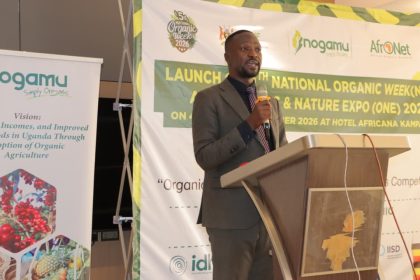 Uganda Emerges as Africa’s Largest Organic Farming Country as Exports Reach USD225 Million
 SITA Acquisition of Collins Airport Solutions Signals Moves to Consolidate Aviation Technology
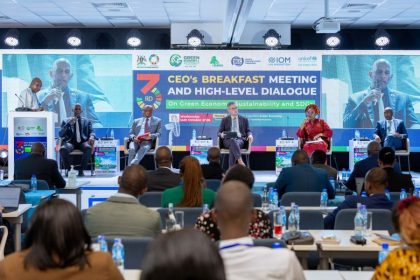 Equity Bank Reports UGX37.6 Billion in Green Loans as Uganda Seeks to Scale Climate Investment
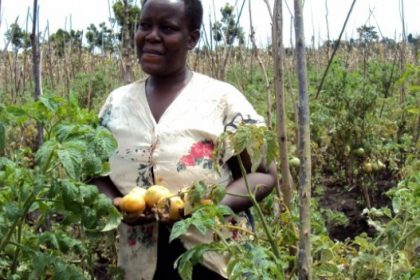 Why Africa’s Institutions Must Turn Knowledge and Investment into Farmer Prosperity
 Africa Carbon Markets Urged to Turn Potential into Investment and Delivery
 Corporate Buyers Could Help Unlock SAF Market Worth Millions of Tonnes by 2030
Get business news delivered to you everyday
Latest News

Stanbic Seeks Northern Uganda Business Feedback as It Marks 35 Years in Country

Uganda Emerges as Africa’s Largest Organic Farming Country as Exports Reach USD225 Million

SITA Acquisition of Collins Airport Solutions Signals Moves to Consolidate Aviation Technology

Uganda Coffee Roasters Tap Richard Rugaya as Executive Director, with Focus on Commercial Growth

Equity Bank Reports UGX37.6 Billion in Green Loans as Uganda Seeks to Scale Climate Investment

Why Africa’s Institutions Must Turn Knowledge and Investment into Farmer Prosperity

Forbes ranks MTN Group third globally on best telecom employer list

Stanbic experts offer investment insights to navigate current market uncertainty

Africa Carbon Markets Urged to Turn Potential into Investment and Delivery

Bank of Uganda hikes base rate from 9.75% to 12% amidst global tensions