
Freedom of expression in decline globally as new data flags rising risks to media

Global freedom of expression is declining as media controls tighten, journalist safety worsens and self-censorship rises, even as digital access and new media models expand.
Freedom of expression is weakening across the world, with new data pointing to a steady erosion of media freedoms, rising self-censorship and growing pressure on journalists.
Findings from the latest World Trends Report by UNESCO show that the global environment for free speech has deteriorated over the past decade, raising concerns about accountability, democratic governance and access to information.
The report indicates that the Global Freedom of Expression Index has declined by 10 percent since 2012, reflecting tightening controls on media and shrinking space for dissent.
Governments and powerful actors have expanded their influence over traditional and digital media, with control over newspapers, television, radio and online platforms rising by 48 percent.
At the same time, self-censorship among journalists has surged by 63 percent, suggesting that pressure is not only external but increasingly internalised within newsrooms.
The decline extends beyond journalism. Academic and artistic freedom has also been contracting steadily, underscoring a broader narrowing of spaces for independent thought and expression.
Journalists under threat
The data paints a stark picture of the risks facing media workers.
Between January 2022 and September 2025, 310 journalists were killed, including 24 women. More than half of those deaths — 162 — occurred in conflict zones, highlighting the dangers of reporting in fragile environments.
In 2025 alone, 91 journalists were killed, marking the highest annual toll since 2018.
Beyond killings, journalists face a wide range of threats, including legal harassment, digital surveillance and forced displacement. Environmental reporters are particularly vulnerable, with 70 percent reporting attacks linked to their work.
UNESCO stresses that strong institutional safeguards — including independent judiciaries and pluralistic legislatures — remain critical to protecting freedom of expression.
The report also highlights the growing influence of digital platforms and artificial intelligence on the information ecosystem.
While adoption is rising — with over 40 percent of respondents using AI tools for content creation — concerns are mounting over misuse.
According to a Ipsos survey conducted with UNESCO, 87 percent of respondents expressed concern about disinformation during elections.
Hate speech remains widespread, with 67 percent reporting exposure. The impact is uneven, disproportionately affecting LGBTQI individuals and ethnic or racial minorities.
Despite the overall decline, the report identifies pockets of progress.
Between 2022 and 2025, around 1.5 billion people gained access to social media and messaging platforms, expanding the reach of information. Nearly half of countries now legally recognise community media, signalling gradual policy shifts toward inclusivity.
New business models, including paid subscriptions, are emerging within the media sector, alongside growth in investigative and collaborative journalism.
With five years remaining to meet the United Nations Sustainable Development Goals, the findings underscore a widening gap between global commitments and current realities.
The trajectory shows that while access to information is expanding, the conditions that sustain free expression are under increasing strain.
For policymakers, media institutions and civil society, the challenge is no longer simply expanding access — but safeguarding the freedoms that give that access meaning.
Related Posts
 Uganda Emerges as Africa’s Largest Organic Farming Country as Exports Reach USD225 Million
 Uganda Coffee Roasters Tap Richard Rugaya as Executive Director, with Focus on Commercial Growth
 Why Africa’s Institutions Must Turn Knowledge and Investment into Farmer Prosperity
 Forbes ranks MTN Group third globally on best telecom employer list
 Stanbic experts offer investment insights to navigate current market uncertainty
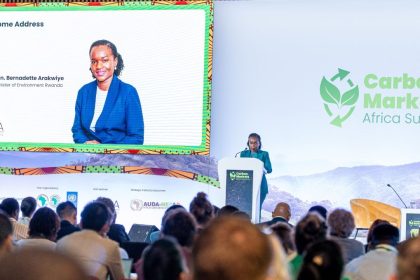 Africa Carbon Markets Urged to Turn Potential into Investment and Delivery
Get business news delivered to you everyday
Latest News

Stanbic Seeks Northern Uganda Business Feedback as It Marks 35 Years in Country

Uganda Emerges as Africa’s Largest Organic Farming Country as Exports Reach USD225 Million

SITA Acquisition of Collins Airport Solutions Signals Moves to Consolidate Aviation Technology

Uganda Coffee Roasters Tap Richard Rugaya as Executive Director, with Focus on Commercial Growth

Equity Bank Reports UGX37.6 Billion in Green Loans as Uganda Seeks to Scale Climate Investment

Why Africa’s Institutions Must Turn Knowledge and Investment into Farmer Prosperity

Forbes ranks MTN Group third globally on best telecom employer list

Stanbic experts offer investment insights to navigate current market uncertainty

Bank of Uganda hikes base rate from 9.75% to 12% amidst global tensions

Corporate Buyers Could Help Unlock SAF Market Worth Millions of Tonnes by 2030