

Uganda races to avert future power shortages with new 400MW dam project
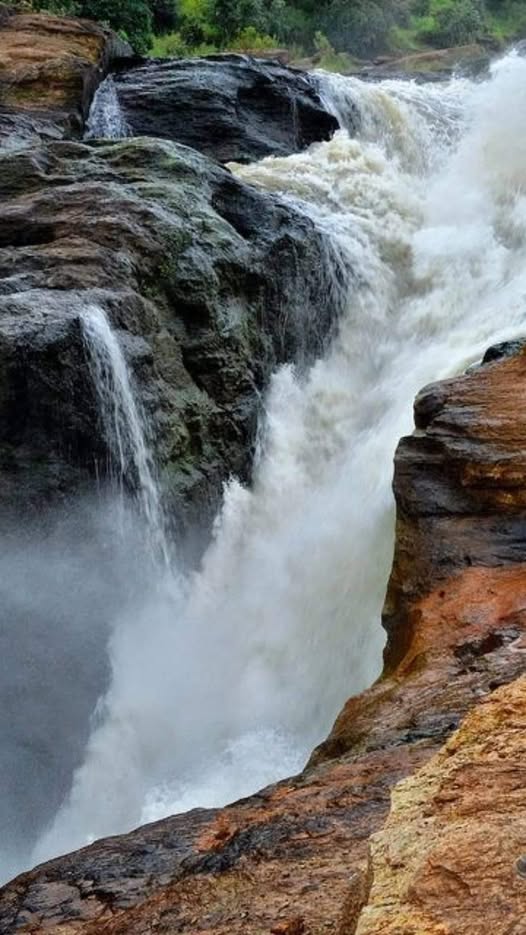
Uganda has launched studies for the 400MW Kiba Hydropower Project as government moves to avert a future electricity shortfall driven by surging industrial demand and rising regional export commitments.
Uganda has launched feasibility and environmental studies for the 400MW Kiba Hydropower Project as government moves to avoid a return to the crippling electricity shortages that once constrained the country’s economic growth.
The proposed hydropower station will be situated at the confluence of the Kiba River and the Victoria Nile, roughly 35 kilometres upstream of the boundary of Murchison Falls National Park, placing the project close to one of Uganda’s most ecologically sensitive river systems.
Energy officials say rapidly rising industrial demand, expanding regional export obligations and surging interest from energy-intensive industries such as data centres are tightening Uganda’s electricity supply margins and increasing pressure for new generation capacity.
Speaking earlier this week during a stakeholder meeting at Amber House, Energy Minister Ruth Nankabirwa said the commencement of the Kiba feasibility study marks a critical step in securing Uganda’s future energy needs and supporting long-term industrialisation.
The move reflects growing concern within government about avoiding a repeat of the severe power shortages and rationing that characterised the late 1990s and early 2000s, when Uganda was forced to rely heavily on expensive thermal generation to stabilise supply.
Although Uganda’s installed generation capacity currently stands at about 2,094MW, officials say dependable firm capacity is closer to 1,450MW because of hydrological variability, transmission constraints and intermittency from solar generation.
According to data from Uganda Electricity Transmission Company Limited, peak system demand reached 1,337MW in February 2026, leaving only a narrow reserve margin.
Nankabirwa said electricity demand growth reached nearly 20 percent for domestic consumption in 2025 and 21 percent across the wider national grid, driven largely by energy-intensive industrial users including steel and cement manufacturers.
Officials also disclosed that proposed data centre investments alone have submitted electricity requests amounting to 887MW, adding significant pressure to future supply planning.
Uganda is simultaneously expanding its regional electricity trade commitments.
The country exported nearly 270MW of electricity to Kenya, Rwanda and Tanzania in February, while Kenya has already requested an increase in imports to 300MW by 2027.
Government projections indicate Uganda could face a 40MW electricity deficit during the 2025/26 financial year, rising to more than 217MW by 2027/28 if new generation projects are not accelerated.
Officials warn that failure to close the gap could force the country back into costly emergency interventions including thermal generation and load shedding.
The Ministry of Energy estimates the financial exposure from power shortages could exceed UGX 416 billion in unrealised economic output, while additional thermal generation purchases could cost up to UGX 1 trillion and ultimately increase electricity tariffs for consumers.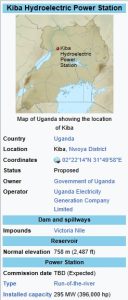
Nankabirwa said while solar investments remain important, they cannot fully substitute stable baseload hydropower generation needed to sustain industrial growth.
“The country must move decisively to secure firm generation capacity that can support long-term industrialisation and economic transformation,” she said.
The Kiba project has been prioritised under National Development Plan IV and the ruling National Resistance Movement manifesto as part of Uganda’s broader energy expansion strategy.
Government is also establishing a multi-sector technical committee involving the finance, water and environment ministries alongside agencies including National Environment Management Authority, Uganda Wildlife Authority, Uganda Electricity Generation Company Limited and UETCL to oversee implementation.
The committee will simultaneously coordinate the development of the Kiba, Ayago Hydropower Project and Oriang Hydropower Project projects in an effort to fast-track approvals and reduce delays.
Energy ministry Permanent Secretary Irene Bateebe directed the consultants to prioritise biodiversity protection and underground engineering alternatives during the study phase because of the project’s environmentally sensitive location along the Nile corridor near Murchison Falls National Park.
The feasibility study is being conducted by a joint venture of Italian and Iranian engineering firms, which officials say will assess the project’s technical, economic and environmental viability before implementation.
Current plans envision a 400MW run-of-river hydropower station capable of generating approximately 2,686GWh annually with power evacuated through a 400kV transmission system.
Engineers are also examining underground powerhouse configurations and alternative transmission routes to minimise environmental disruption within protected wildlife areas.
The Kiba project traces its origins to a broader hydropower master plan funded by the Japan International Cooperation Agency and completed in 2011, which identified Kiba, Ayago and Oriang as key future hydropower sites after the development of Karuma Hydroelectric Power Station and Isimba Hydroelectric Power Station.
Officials say the latest study has been compressed from 18 months to 14 months in a bid to accelerate delivery timelines amid growing urgency over Uganda’s future electricity needs.
Related Posts
 Relief as UAE Eases Ebola-era Entry Curbs on Ugandans, Reopening Key Aviation Corridor
 13 Feared Killed as Tracep Aviation L-410 Crashes in DRC
 IATA Warns Cargo Screening Alone Cannot Contain Undeclared Dangerous Goods Risk
 Rwenzori Marathon: A Case of What’s Possible in Diversifying Uganda’s Tourism Offering
 Entebbe-Based Jet Fresh Cargo Takes Ugandan Air Freight into Global Awards Contest
 Uganda Set for First National ESG Conference as Sustainable Finance Gains Ground
Get business news delivered to you everyday
Latest News

Why Unlocking Africa’s Next Mining Powerhouse Requires Strong Financial Partnerships

Relief as UAE Eases Ebola-era Entry Curbs on Ugandans, Reopening Key Aviation Corridor

Equity Turns Schools into Climate Restoration Hubs as Lender Launches 200,000-tree Uganda drive

13 Feared Killed as Tracep Aviation L-410 Crashes in DRC

IATA Warns Cargo Screening Alone Cannot Contain Undeclared Dangerous Goods Risk

Rwenzori Marathon: A Case of What’s Possible in Diversifying Uganda’s Tourism Offering

Entebbe-Based Jet Fresh Cargo Takes Ugandan Air Freight into Global Awards Contest

Afreximbank Issues USD29m Guarantee to Expand EAC Customs Bond

Uganda puts UGX1.4tn Treasury Bonds on Auction

DHL Launches Direct Bahrain-Johannesburg Freighter Service