

Equity mentorship program pushes youth toward values-driven leadership
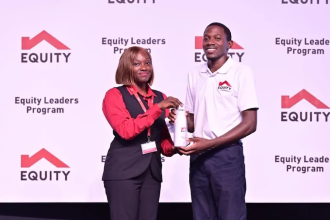
Participants in the Equity Leaders Program were challenged to embrace discipline, integrity and purposeful leadership as they prepare for careers in business, finance and public service.
Young Ugandan scholars participating in the Equity Leaders Program have been urged to embrace discipline, integrity and purposeful leadership as they prepare for careers in an increasingly uncertain and fast-changing world.
The programme, taking place at Africa Bible University, brought together 100 young leaders for intensive mentorship and career development sessions led by senior executives, finance professionals and governance experts.
Speakers drawn from banking, marketing, finance, risk management and corporate leadership challenged participants to focus not only on academic excellence, but also on ethics, resilience and self-leadership.
Professor Matthew Miller opened the sessions with a reflection on leadership resilience, describing modern life as “permanent white water” where leaders must constantly navigate uncertainty and disruption.
Drawing from leadership scholar Peter Vaill’s theory, Miller said today’s leaders no longer move through predictable cycles of stability and crisis, but instead operate in environments of continuous change.
“You may overcome your Goliaths, but you will also battle your Philistines, challenges that stay with you for life,” he told participants, urging them to build inner resilience and emotional stability.
Jimmy Kisomba, Head of Enterprise Controls, emphasised the importance of ethics, compliance and internal controls in both professional and personal life.
Using the analogy of vehicle brakes, Kisomba explained that controls are essential for managing risk and preventing operational failures.
“You cannot drive a car without brakes. Brakes control movement. Controls do the same in organisations,” he said.
He warned students against shortcuts and unethical behaviour, noting that intelligence without character could become dangerous.
Kisomba, himself a former participant in the programme, reflected on his own journey from scholar to corporate executive.
“Fifteen years ago, I was seated where you are. Today, I am here speaking to you,” he said.
Clare Tumwesigye, Head of Marketing and Corporate Communications, highlighted the growing importance of communication and reputation management in the digital era.
“Marketing is about perception. It is about building trust,” she said.
Regional Trade Desk Manager Lindah Nagudi urged participants to practise self-leadership and intentional decision-making.
“Your future is crafted by the choices you make today,” she said.
During finance and professional development sessions, students were encouraged to remain adaptable, develop self-awareness and avoid blindly following peer pressure.
“You do not have to follow the crowd,” participants were told.
Claver Serumaga, Executive Director at Equity Bank, used football as a metaphor for organisational success, describing how different departments must work together to achieve results.
In his analogy, defenders represented audit, risk and compliance functions, midfielders represented HR and operations, while strikers symbolised sales and commercial teams.
“If one department fails, the whole team collapses,” Serumaga said.
He stressed that organisational success depends less on individual brilliance and more on systems, discipline and coordination.
“Talent may open the door, but discipline keeps you in the room,” he added.
Across the sessions, speakers consistently challenged participants to build ethical foundations, professional competence and clarity of purpose early in life rather than waiting for future opportunities.
As the programme continues, organisers say the goal is not only to develop academically successful students, but also to nurture a generation of leaders capable of creating meaningful social and economic impact across Africa.
Related Posts
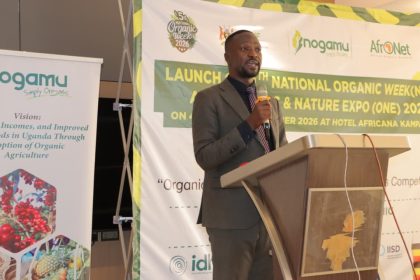 Uganda Emerges as Africa’s Largest Organic Farming Country as Exports Reach USD225 Million
 Uganda Coffee Roasters Tap Richard Rugaya as Executive Director, with Focus on Commercial Growth
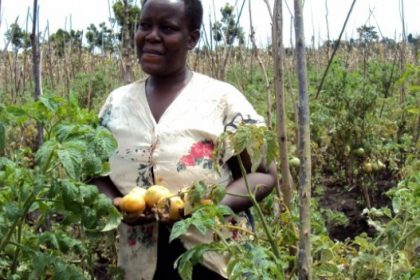 Why Africa’s Institutions Must Turn Knowledge and Investment into Farmer Prosperity
 Forbes ranks MTN Group third globally on best telecom employer list
 Stanbic experts offer investment insights to navigate current market uncertainty
 Africa Carbon Markets Urged to Turn Potential into Investment and Delivery
Get business news delivered to you everyday
Latest News

Uganda Emerges as Africa’s Largest Organic Farming Country as Exports Reach USD225 Million

SITA Acquisition of Collins Airport Solutions Signals Moves to Consolidate Aviation Technology

Uganda Coffee Roasters Tap Richard Rugaya as Executive Director, with Focus on Commercial Growth

Equity Bank Reports UGX37.6 Billion in Green Loans as Uganda Seeks to Scale Climate Investment

Why Africa’s Institutions Must Turn Knowledge and Investment into Farmer Prosperity

Forbes ranks MTN Group third globally on best telecom employer list

Stanbic experts offer investment insights to navigate current market uncertainty

Bank of Uganda hikes base rate from 9.75% to 12% amidst global tensions

Corporate Buyers Could Help Unlock SAF Market Worth Millions of Tonnes by 2030

Airbus sees USD420bn Global Aviation Services Boom: Can Africa Capture its Share?