

Uganda study shows how treating depression can strengthen HIV care
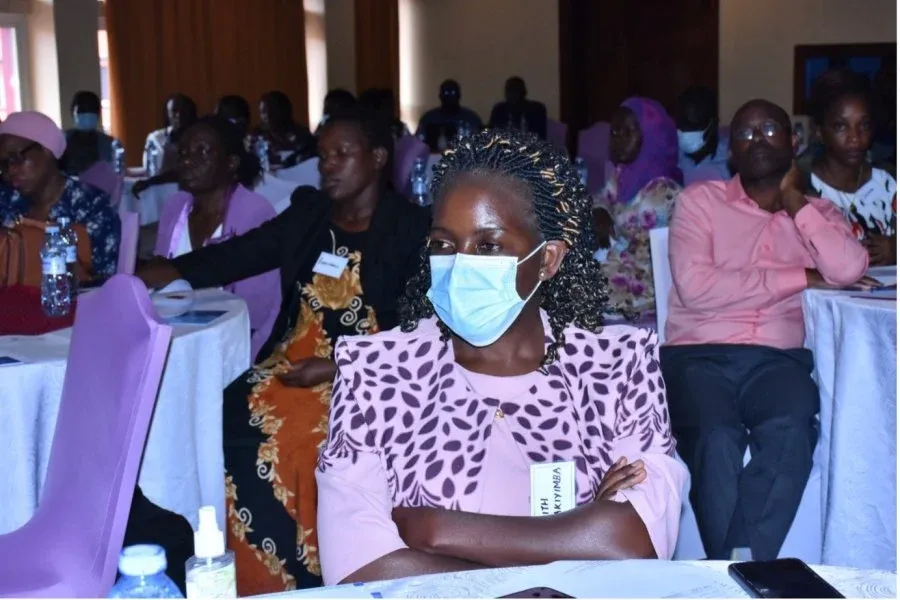
A landmark Ugandan study published in The Lancet HIV shows that integrating depression treatment into routine HIV care significantly improves mental health outcomes for people living with HIV. Using trained lay counsellors and existing clinic staff, the scalable model offers a practical roadmap for strengthening HIV services in low-resource health systems across Africa.
For decades, HIV treatment has focused—necessarily—on suppressing a virus. But a landmark study from Uganda is now showing that treating the mind may be just as important as treating the body.
New research published in The Lancet HIV demonstrates that integrating structured depression care directly into routine HIV services can significantly and sustainably improve mental health outcomes for people living with HIV, even in resource-constrained health systems. The study offers one of the clearest roadmaps yet for how mental health care can be delivered at scale within existing public health services across Africa.
The hidden burden within HIV care
Depression is one of the most common—but least addressed—conditions affecting people living with HIV. In Africa, an estimated 15 per cent of adults with HIV experience depression, a condition closely linked to poorer quality of life, reduced adherence to antiretroviral therapy, faster disease progression and higher mortality.
Yet mental health services are rarely part of routine HIV care. Specialist psychiatrists and psychologists are few, clinics are overstretched, and mental health is often treated as a separate issue, if it is treated at all.
The Ugandan study challenges that separation. The research was led by Uganda’s Ministry of Health in collaboration with the Medical Research Council (UK) and the London School of Hygiene & Tropical Medicine. It was conducted across 40 public HIV clinics in central and southwestern Uganda using a cluster-randomised controlled trial design—one of the strongest forms of clinical evidence.
Researchers evaluated an intervention known as HIV+D, a collaborative “stepped-care” model designed specifically for low-resource settings. Rather than relying on scarce specialists, the model uses task-sharing: distributing mental health care across trained lay counsellors, HIV clinicians and, when necessary, specialist mental health workers.
Under HIV+D, adults attending HIV clinics were screened for depression and offered a structured package of care. This included psychoeducation, behavioural activation therapy, antidepressant medication prescribed by HIV clinicians, and referral to a mental health specialist for patients who did not respond or who presented with severe psychiatric symptoms.
The comparison group received enhanced usual HIV care, which included standard clinical attention but without integrated, structured depression treatment.
Clear and lasting benefits
The results were striking. Participants receiving HIV+D showed substantially greater reductions in depression severity than those in the control group. Improvements were evident as early as three months after treatment began and were sustained at 12 months—an important indicator that the benefits were not short-lived.
The intervention was particularly effective for individuals who had severe depression at the start of the study, a group that is often hardest to treat and most vulnerable to dropping out of HIV care.
Crucially, the programme proved feasible in routine clinic settings. More than 90 per cent of participants who required behavioural activation therapy completed the recommended number of sessions—suggesting that the approach can work within the constraints of busy public facilities.
Why task-sharing matters
At the heart of the study is a simple insight; mental health care does not always require specialists.
“This study shows that effective and safe depression care can be delivered directly within HIV clinics using a task-sharing approach,” said Professor Eugene Kinyanda, the study’s lead author and Head of the Mental Health Focus Area at the MRC/UVRI & LSHTM Uganda Research Unit.
In the HIV+D model, non-specialist health workers provide first-line counselling and behavioural therapy. HIV clinicians—already embedded in the system—prescribe antidepressant medication. Specialist mental health professionals are reserved for complex cases and emergencies.
“This approach is well aligned with the realities of Uganda’s public health system and similar settings,” Professor Kinyanda noted.
While the study focused on depression, its implications extend well beyond mental health. Depression undermines HIV treatment adherence, clinic attendance and self-care. By reducing depression, integrated care has the potential to improve viral suppression rates, reduce long-term complications and enhance overall quality of life for people living with HIV.
Dr Leticia Kyohangirwe, a co-author and study coordinator, emphasised the practical value of the findings. “The strength of this intervention lies not only in its effectiveness but in its practicality. It shows that meaningful mental health care can be delivered now within existing HIV systems.”
The findings strongly support long-standing calls by the World Health Organization and UNAIDS to integrate mental health into HIV services. They also align with Uganda’s National HIV and AIDS Strategic Plan, which prioritises the management of co-morbidities as part of comprehensive HIV care.
For policymakers, the study moves the debate from principle to practice. “This study moves the conversation from why mental health should be integrated into HIV care to how it can be done,” said Professor Moffat Nyirenda, Director of the MRC/UVRI & LSHTM Uganda Research Unit. “It offers a practical roadmap for closing one of the most persistent gaps in HIV care.”
Because HIV+D relies on existing staff, simple therapies and stepped referrals, researchers say it is both cost-effective and scalable. The model could be adapted across sub-Saharan Africa and other low- and middle-income regions facing similar shortages of mental health professionals.
Published open access and funded by the Wellcome Trust, the study — “Assessing the effectiveness of a depression-integrated model in adult HIV care in Uganda (the HIV+D trial)”— adds to growing evidence that addressing mental health is not an optional extra in HIV care, but a core component of effective treatment.
In doing so, it reframes HIV clinics not just as places where a virus is managed, but as spaces where whole lives can be stabilised, supported and sustained.
Related Posts
 Airbus sees USD420bn Global Aviation Services Boom: Can Africa Capture its Share?
 IATA says Aviation Safety’s Next Gains Will Depend on People, Technology and Standards
 Uganda Architects to Celebrate 60 Years as Profession Confronts a Technology-driven Future
 28 Ethiopian Students Graduate from Ethiopian Airlines-Boeing STEM Programme
 Kigali to Host Carbon Markets Africa Summit as Climate Finance Opportunity Grows
 2,626 Students complete Boeing-FASESA programme as Space sector Expands across Africa
Get business news delivered to you everyday
Latest News

Uganda Coffee Roasters Tap Richard Rugaya as Executive Director, with Focus on Commercial Growth

Equity Bank Reports UGX37.6 Billion in Green Loans as Uganda Seeks to Scale Climate Investment

Why Africa’s Institutions Must Turn Knowledge and Investment into Farmer Prosperity

Forbes ranks MTN Group third globally on best telecom employer list

Stanbic experts offer investment insights to navigate current market uncertainty

Africa Carbon Markets Urged to Turn Potential into Investment and Delivery

Bank of Uganda hikes base rate from 9.75% to 12% amidst global tensions

Corporate Buyers Could Help Unlock SAF Market Worth Millions of Tonnes by 2030

Airbus sees USD420bn Global Aviation Services Boom: Can Africa Capture its Share?

Nile Breweries Celebrates 75 Years of Growing with Uganda