

Subdued inflation as First Oil nears keeps central bank rate at 9.75%
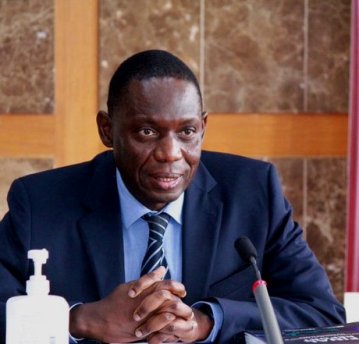 Atingi-Ego said the MPC outlook is underpinned by accelerated public investment, oil-related and infrastructure developments, government initiatives, continued improvement in the global economic environment, prudent monetary policy and increased private sector activity.
The Monetary Policy Committee (MPC) of the Bank of Uganda has once again decided to leave the base lending rate at 9.75% with an eye towards production of First Oil later in the year and continued subdued inflation as economic growth is expected to reach eight percent in the medium term.
According to a MPC statement, the prevailing policy stance remains appropriate to support economic activity while ensuring that inflation stabilizes around the target (5 pc) over the medium to long term, amid persistent global economic uncertainty. Uganda is due to begin commercial oil production after mid-year.
Michael Atingi-Ego, the BoU Governor and MPC Chair said, “Over the medium term, economic growth is expected to strengthen further, rising to an average of around eight percent. This outlook is underpinned by accelerated public investment, oil-related and infrastructure developments, government initiatives, continued improvement in the global economic environment, prudent monetary policy and increased private sector activity.”
The MPC said inflation has remained below the medium-term target of five percent, reflecting the impact of prudent monetary policy complemented by coordination with fiscal policy, a stable exchange rate, declining global inflation, and favourable food and energy prices. Over the 12 months to January 2026, annual headline inflation averaged 3.5 pc, while core inflation average 3.8 pc.
However, notwithstanding the favourable outlook, risks to the growth projection are tilted to the downside. These include evolving geopolitical tensions, which could dampen global growth, disrupt trade routes and supply chains and exert upward pressure on commodity prices, particularly oil.
On the upside, stronger-than-anticipated investment in the extractive sector, a more robust global recovery, and easing trade tensions could result in higher-than-projected economic growth.
Related Posts
 Bank of Uganda hikes base rate from 9.75% to 12% amidst global tensions
 Stanbic Business Forum told Uganda’s Schools Need to Outlive Their Founders
 COMESA Competition Watchdog Calls for Stronger Skills-Sets to Police Complex Regional Markets
 CMA Opens Dangote Refinery IPO to Uganda’s Wealthy investors as SBG Securities Uganda Limited Becomes Sole Intermediary
 UDB Commissions Titivated Headquarter Tower as Development Lender Scales up Transformation Role
 Equity Bank Urges Diaspora Ugandans to Turn Remittances into Investments
Get business news delivered to you everyday
Latest News

Stanbic Seeks Northern Uganda Business Feedback as It Marks 35 Years in Country

Uganda Emerges as Africa’s Largest Organic Farming Country as Exports Reach USD225 Million

SITA Acquisition of Collins Airport Solutions Signals Moves to Consolidate Aviation Technology

Uganda Coffee Roasters Tap Richard Rugaya as Executive Director, with Focus on Commercial Growth

Equity Bank Reports UGX37.6 Billion in Green Loans as Uganda Seeks to Scale Climate Investment

Why Africa’s Institutions Must Turn Knowledge and Investment into Farmer Prosperity

Forbes ranks MTN Group third globally on best telecom employer list

Stanbic experts offer investment insights to navigate current market uncertainty

Africa Carbon Markets Urged to Turn Potential into Investment and Delivery

Bank of Uganda hikes base rate from 9.75% to 12% amidst global tensions