

When classroom dreams meet real-world leadership: how Equity is shaping Uganda’s next generation of changemakers
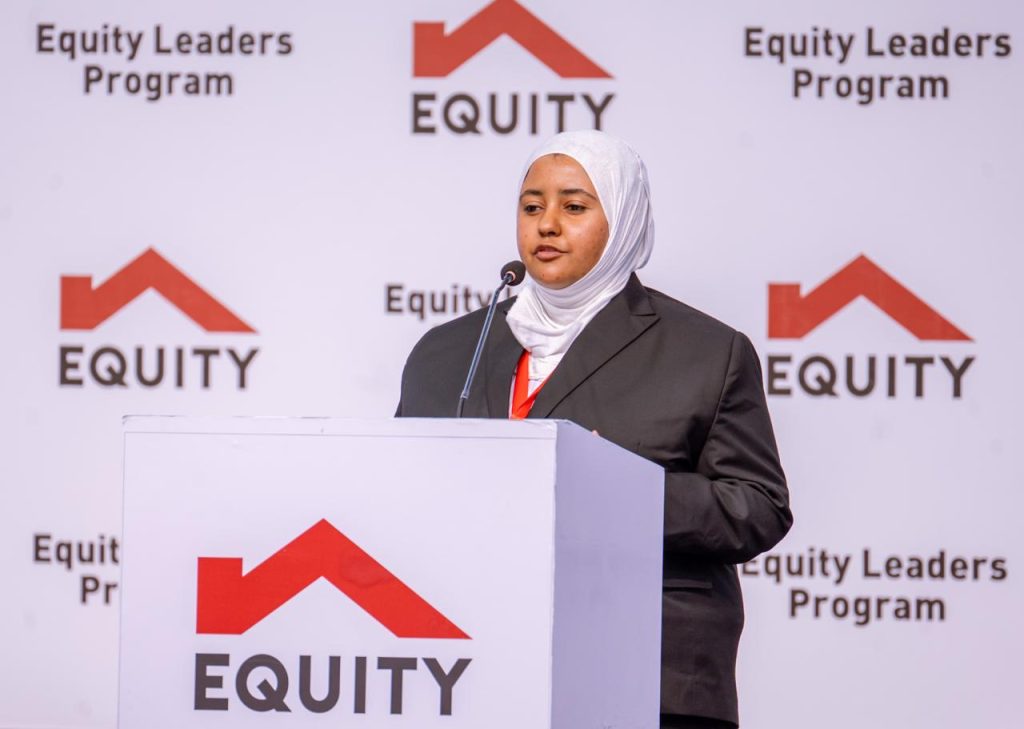
From mentorship and corporate exposure to personal transformation, the Equity Leaders Program is helping ambitious young Ugandans like Fatmah Yusuf Gram turn academic excellence into leadership, purpose and national impact.
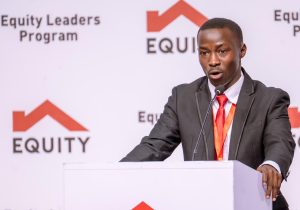
Saul Sebuufu
Across Uganda, thousands of students carry ambitious dreams despite growing up in difficult circumstances. What often separates potential from progress is not talent, but access to opportunity.
This is the gap the Equity Leaders Program (ELP), a flagship initiative under the Equity Group Foundation, continues to address—by turning academic excellence into leadership development, mentorship and real-world exposure.
For many young Ugandans, education is more than the pursuit of academic success. It is a pathway to opportunity, leadership and transformation. For scholars like Fatmah Yusuf Gram from Fort Portal, that pathway became clearer through structured mentorship and professional exposure that reshaped how she viewed both herself and the world around her.
Before joining the programme, Fatmah viewed banking and leadership through a narrow lens.
“I thought banking was simply about loans, money transfers and keeping money safe,” she says. “But through this program, I discovered that Equity is much more than a bank.”
That shift reflects a broader transformation taking place among high-achieving students across the country. Through ELP, scholars are immersed in structured mentorship and practical leadership experiences that expose them to departments such as finance, operations, human resources, risk management and strategy. For many, it is their first real encounter with how major institutions function—and how leadership decisions are made.
It is also often their first exposure to leadership not as status or authority, but as service, discipline, collaboration and vision.
A message that particularly resonated with Fatmah came from Gift Shoko, who urged scholars not to allow their circumstances to define their future.
“Do not allow the circumstances around you to define who you are,” he told participants.
For many young Ugandans navigating economic uncertainty and limited access to mentorship and professional networks, such words carry deep significance. Uganda’s youthful population is full of ambition, yet many talented students still struggle to access structured guidance and opportunity.
Another lesson came from Tony Otoa, who challenged students to look beyond societal labels and assumptions.
“They think they know you,” he reminded them, reinforcing the programme’s emphasis on identity, self-awareness, discipline and intentional growth.
Beyond academic achievement, ELP has increasingly become a platform for mindset transformation. Many students join with strong grades but limited exposure to professional environments. They leave with greater confidence, clearer ambition and a stronger sense of purpose.
For Fatmah, success is no longer defined by personal achievement alone, but by impact—by the ability to uplift others.
Across the programme, this shift is visible in its growing inclusion of young women, reflecting a deliberate commitment to expanding leadership opportunities and ensuring more female scholars progress into leadership roles across sectors.
Nationwide, thousands of high-performing students have passed through the initiative, forming a growing network of young leaders equipped with skills, confidence and perspective to drive change within their communities.
Yet Fatmah’s story is only one thread in a wider national tapestry.
For Sebuufu Saul Bisenji, from Zigoti Village in Mityana District, the programme represented something even more personal: a turning point in a life shaped by hardship.
Raised in a farming household struggling to meet basic needs, Saul’s education was marked by uncertainty. At times, he worked in school gardens and contributed agricultural produce to help cover school requirements. The future often felt fragile, but he refused to let circumstance define his trajectory.
“I always tell people that I left home to change my destiny,” he said.
As the eldest of seven sisters, Saul carried both personal ambition and family responsibility. His breakthrough came after achieving 20 points in the Uganda Advanced Certificate of Education (UACE), earning selection into the ELP cohort drawn from thousands of applicants nationwide.
The call confirming his selection was life-changing. He recalls travelling through heavy rain on a boda boda to collect his admission documents, arriving soaked but overwhelmed with excitement.
“Being selected is not simply a reward for excellence. It is a responsibility to become better and do better,” he said.
For him, and many others in the programme, ELP is not just an academic opportunity. It is a bridge between struggle and possibility.
As Uganda continues to grapple with questions of youth employment, access to opportunity and inclusive growth, programmes like ELP are quietly reshaping the pipeline of leadership—one scholar at a time.
The Equity Leaders Program is ultimately proving that when young people are given access, mentorship and belief, they do not just rise. They multiply that opportunity into impact for others.
Related Posts
 SITA Acquisition of Collins Airport Solutions Signals Moves to Consolidate Aviation Technology
 Uganda Coffee Roasters Tap Richard Rugaya as Executive Director, with Focus on Commercial Growth
 Equity Bank Reports UGX37.6 Billion in Green Loans as Uganda Seeks to Scale Climate Investment
 Nile Breweries Celebrates 75 Years of Growing with Uganda
 Stanbic installs solar power system at Mbale School for the Deaf
 Airbus-Kratos Valkyrie Unmanned Combat Aircraft Completes First Flight Ahead of 2029 Combat Target
Get business news delivered to you everyday
Latest News

Uganda Emerges as Africa’s Largest Organic Farming Country as Exports Reach USD225 Million

SITA Acquisition of Collins Airport Solutions Signals Moves to Consolidate Aviation Technology

Uganda Coffee Roasters Tap Richard Rugaya as Executive Director, with Focus on Commercial Growth

Equity Bank Reports UGX37.6 Billion in Green Loans as Uganda Seeks to Scale Climate Investment

Why Africa’s Institutions Must Turn Knowledge and Investment into Farmer Prosperity

Forbes ranks MTN Group third globally on best telecom employer list

Stanbic experts offer investment insights to navigate current market uncertainty

Africa Carbon Markets Urged to Turn Potential into Investment and Delivery

Bank of Uganda hikes base rate from 9.75% to 12% amidst global tensions

Corporate Buyers Could Help Unlock SAF Market Worth Millions of Tonnes by 2030