

Museveni promises longer tourist visas as Uganda pushes for bigger slice of Africa’s travel market
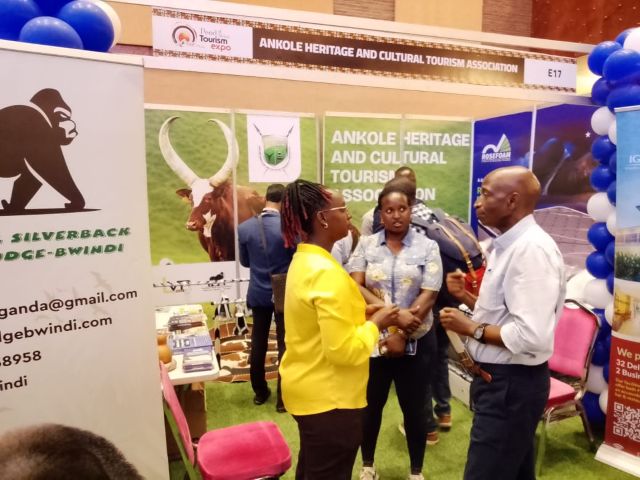
President Yoweri Museveni has pledged longer-duration tourist visas as Uganda positions itself for a bigger share of Africa’s tourism market during the 10th edition of the Pearl of Africa Tourism Expo (POATE 2026).
President Yoweri Museveni has pledged to extend the duration of Uganda’s tourist visas as the country seeks to position itself as a more competitive and accessible destination for international travellers and investors.
Speaking Thursday while flagging off the 10th edition of the Pearl of Africa Tourism Expo (POATE 2026) at Speke Resort Munyonyo, Museveni said Uganda’s current short-stay visa arrangements were inconsistent with the country’s ambition to grow tourism into a major economic driver.
“Some countries give Ugandans three-year visas, so why should Uganda give very short stay visas?” Museveni told delegates attending the three-day expo. “In the new government, we are going to extend visas for tourists.”
The remarks were among the clearest signals yet that Uganda is considering a more liberal tourism access regime as competition intensifies among African destinations seeking to attract high-spending travellers, conference tourism and long-stay visitors.
Organised by the Uganda Tourism Board, POATE 2026 has drawn international buyers, tourism investors, exhibitors, airlines, tour operators and regional delegations from Kenya, Tanzania, Rwanda and Burundi.
Over the last decade, the expo has evolved from a tourism showcase into one of East Africa’s most important business networking platforms for hospitality, conservation, aviation, travel technology and tourism infrastructure partnerships.
This year’s edition comes at a critical moment for Uganda’s tourism sector, which is recovering strongly after the global pandemic disruptions and seeking to capitalise on rising international interest in eco-tourism, cultural experiences and meetings, incentives, conferences and exhibitions (MICE) travel.
Tourism remains one of Uganda’s leading foreign exchange earners, generating an estimated $1.28 billion annually while supporting thousands of jobs across hospitality, transport, conservation and entertainment.
Museveni used the event to market Uganda’s unique geographical and cultural attributes, describing the country as one of the world’s rare climatic zones where an equatorial location combines with high altitude to create moderate weather conditions throughout the year.
“There are only a few places on earth with this type of climate,” he said, comparing Uganda to Ecuador and other rare high-altitude equatorial regions.
The President also argued that Uganda’s cultural heritage had remained comparatively authentic because of the country’s late exposure to outside influence.
“If you are looking for the original Africans who have remained very much isolated, here they are,” he said. “The first non-Black person we saw here was in 1841.”
Permanent Secretary in the Ministry of Tourism, Wildlife and Antiquities Doreen Katusiime attributed the sector’s recovery to peace, improved security and infrastructure investment that has expanded access to tourism sites across the country.
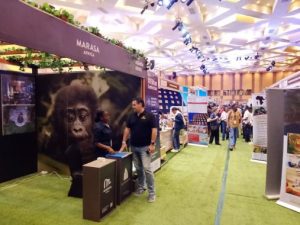 She said international events hosted by Uganda, including the Non-Aligned Movement Summit and the G77 + China Summit, had boosted Uganda’s global visibility ahead of the upcoming 2027 Africa Cup of Nations.
UTB chief executive Juliana Kagwa, said POATE had become a flagship platform for marketing Uganda as a preferred destination and connecting local operators with international buyers.
Meanwhile, UTB Board Chairperson Pearl Kakooza said a recent 12 percent increase in the tourism budget had strengthened confidence in the sector’s expansion prospects, noting that visitor arrivals from Europe were already increasing.
Industry leaders say Uganda has also made progress in encouraging longer visitor stays, with the average tourist now spending about 8.1 days in the country, a trend expected to support higher tourism earnings and wider economic spillovers across the hospitality and services sectors.
Related Posts
 Independence Marathon Turns to Blood Storage Gap in Maternal Health Drive
 Fine Spinners Injects Fresh USD5m Into Technology as Uganda Textile Maker Targets African, European Markets
 Equity Trade Mission Puts Uganda’s Manufacturing Capacity to Regional Test
 Uganda Seeks to Calm Coffee, Cocoa Markets as Global Prices Fluctuate on Positive Sentiment
 Uganda Green Entrepreneurs Set for Paris Visit as Stanbic-France Partnership Graduates 106
 Entebbe Airport Passenger Traffic Recovers in August but Remains Below 2025 Levels
Get business news delivered to you everyday
Latest News

Independence Marathon Turns to Blood Storage Gap in Maternal Health Drive

Fine Spinners Injects Fresh USD5m Into Technology as Uganda Textile Maker Targets African, European Markets

Equity Trade Mission Puts Uganda’s Manufacturing Capacity to Regional Test

Uganda Seeks to Calm Coffee, Cocoa Markets as Global Prices Fluctuate on Positive Sentiment

Uganda Green Entrepreneurs Set for Paris Visit as Stanbic-France Partnership Graduates 106

Nile Breweries, Next Media Renew Road Safety Push with Focus on Boda Boda Riders

Equity Bank Explores Value-Chain Financing to Support Zigoti Coffee Expansion

Uganda Breaks Ground on USD310m Kampala Fuel Terminal, Targets September 2028 Completion

Uganda Will Not Close Its 2.4-Million-Unit Housing Deficit with Ribbon-Cuttings in Kira

Nairobi’s 2029 World Athletics Win Draws Doping Scrutiny in UK Media