

Empowering local communities is the key to global biodiversity restoration
By Diana Nalwanga
 Every year on May 22, the world commemorates the United Nations International Day for Biological Diversity, a moment dedicated to raising awareness about the accelerating loss of species and ecosystems across the planet.
The day serves as a global call to action, reminding humanity that protecting biodiversity is not simply an environmental concern, but a necessity for food security, clean water, public health, and climate stability.
This year’s theme, “Acting locally for global impact,” underscores a powerful reality: ambitious global conservation frameworks such as the Kunming-Montreal Global Biodiversity Framework will only succeed if they are implemented at the grassroots level. Lasting environmental change is not forged in conference halls alone; it is achieved in communities where people actively restore and protect the ecosystems around them.
For the last 27 years, the Environmental Conservation Trust of Uganda (ECOTRUST) has embodied this principle. By channeling international climate finance directly to Ugandan smallholder farmers, the organization has demonstrated that empowering local communities remains one of the most effective pathways to protecting biodiversity while improving livelihoods.
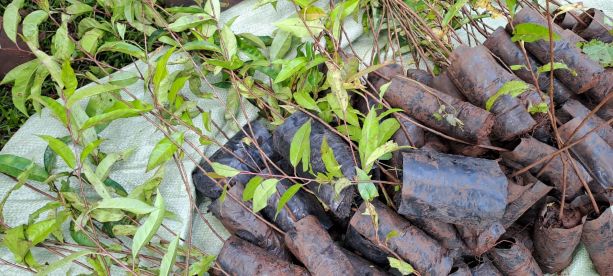
At the heart of this effort is ECOTRUST’s Trees for Global Benefits (TGB) program, which operationalizes the core message of this year’s biodiversity theme. By aggregating thousands of small-scale restoration efforts undertaken by individual households, the program transforms localized action into measurable landscape-level impact.
Through its performance-based payment model, conservation financing has been decentralized, enabling rural families to directly benefit from restoring degraded ecosystems while strengthening household incomes.
To date, more than 51,000 households across 26 districts in Uganda have benefited from the initiative. By integrating indigenous trees into family farming systems, participating farmers have restored over 34,000 hectares of land, creating a growing woodland network projected to sequester approximately 7.518 million tonnes of atmospheric carbon dioxide.
Yet biodiversity protection cannot be sustained without socioeconomic resilience. Communities struggling with poverty, food insecurity, and water scarcity are unlikely to prioritize conservation unless environmental protection is directly linked to economic opportunity.
Recognizing this reality, ECOTRUST supports communities to establish sustainable enterprises such as beekeeping and shea nut production, allowing households to generate reliable incomes while conserving fragile ecosystems.
These interventions provide tangible evidence of how local action delivers global environmental outcomes.
In the Murchison-Semliki landscape, for example, ECOTRUST works with private landowners to restore fragmented forest corridors, reconnecting isolated habitats and securing migratory pathways for endangered chimpanzees while reducing human-wildlife conflict along agricultural frontiers.
Further north, the organization’s newly launched Transformative Approach to Sustainable Landscapes and Livelihoods (TASLL) project is extending this community-centered conservation model into the climate-vulnerable Agoro-Agu region.
Supported by the UK Foreign, Commonwealth and Development Office, the initiative seeks to conserve 65,000 hectares of natural forest through the planting of six million mixed native trees. Importantly, the project integrates marginalized groups within the Palabek Refugee Settlement, ensuring that biodiversity conservation also advances social inclusion and community resilience.
To sustain and scale these efforts, ECOTRUST is also helping reshape environmental markets beyond traditional carbon financing.
During this year’s Uganda Water and Environment Week, the organization unveiled its Nature Credit Solutions framework, an innovative model designed to reward communities for safeguarding watersheds, restoring ecosystems, and developing nature-positive enterprises such as sustainable wild beekeeping.
ECOTRUST’s 27-year journey offers an important lesson for governments, financiers, conservation actors, and development partners alike: when local communities are trusted, empowered, and economically included in environmental stewardship, the benefits extend far beyond national borders.
Ultimately, global biodiversity restoration will not be achieved through policy declarations alone. It will be secured through millions of localized actions led by communities whose daily lives remain deeply connected to the health of nature itself.
Dr. Diana Nalwanga is the Head of Biodiversity at the Environmental Conservation Trust of Uganda (ECOTRUST)
Related Posts
 Uganda Emerges as Africa’s Largest Organic Farming Country as Exports Reach USD225 Million
 Uganda Coffee Roasters Tap Richard Rugaya as Executive Director, with Focus on Commercial Growth
 Why Africa’s Institutions Must Turn Knowledge and Investment into Farmer Prosperity
 Forbes ranks MTN Group third globally on best telecom employer list
 Stanbic experts offer investment insights to navigate current market uncertainty
 Africa Carbon Markets Urged to Turn Potential into Investment and Delivery
Get business news delivered to you everyday
Latest News

Uganda Emerges as Africa’s Largest Organic Farming Country as Exports Reach USD225 Million

SITA Acquisition of Collins Airport Solutions Signals Moves to Consolidate Aviation Technology

Uganda Coffee Roasters Tap Richard Rugaya as Executive Director, with Focus on Commercial Growth

Equity Bank Reports UGX37.6 Billion in Green Loans as Uganda Seeks to Scale Climate Investment

Why Africa’s Institutions Must Turn Knowledge and Investment into Farmer Prosperity

Forbes ranks MTN Group third globally on best telecom employer list

Stanbic experts offer investment insights to navigate current market uncertainty

Bank of Uganda hikes base rate from 9.75% to 12% amidst global tensions

Corporate Buyers Could Help Unlock SAF Market Worth Millions of Tonnes by 2030

Airbus sees USD420bn Global Aviation Services Boom: Can Africa Capture its Share?