

PELUM, Parliamentary Alliance rally support for school feeding amid Uganda nutrition crisis
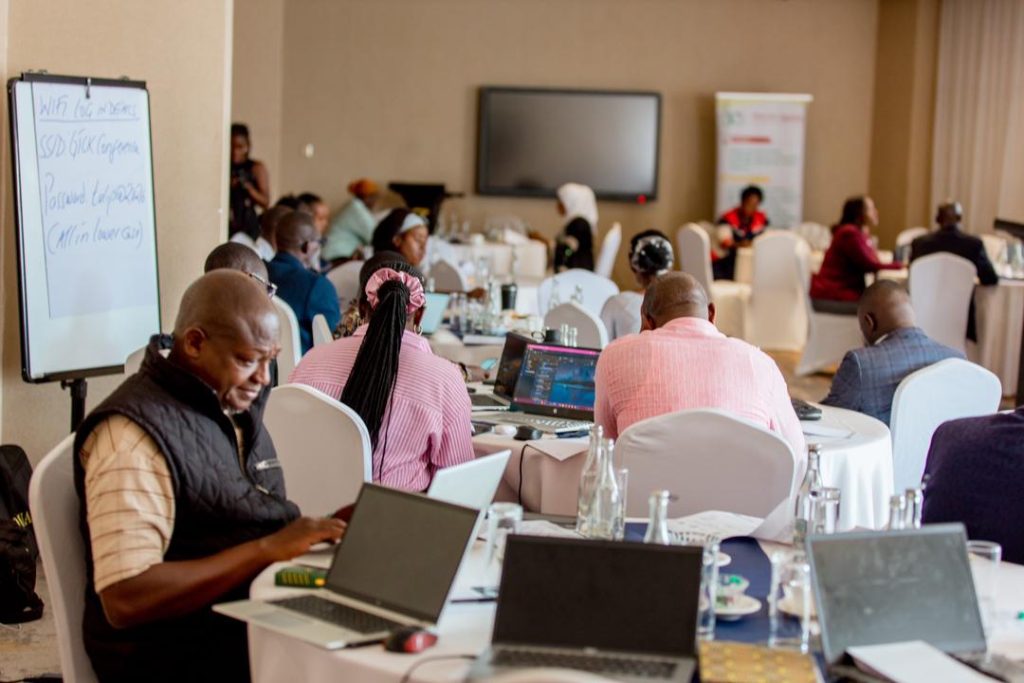
As Uganda marks Parliamentary Nutrition Week 2026, stakeholders are warning that malnutrition is evolving into a national development crisis, with millions of children attending school hungry despite the country’s agricultural potential. Civil society groups are now pushing for agroecology-driven school feeding programmes to tackle stunting, poor learning outcomes and food insecurity.
As stakeholders gathered in Kampala on May 22 to launch the fifth edition of the Uganda Parliamentary Nutrition Week 2026, civil society organisations warned that millions of Ugandan children continue to suffer the lifelong consequences of poor nutrition despite the country’s reputation as one of East Africa’s food baskets.
The week-long campaign, organised by the Participatory Ecological Land Use Management network (PELUM Uganda) together with the Uganda Parliamentary Alliance on Food and Nutrition Security, is being held under the theme “Nourishing Minds, Empowering the Future.” The initiative will culminate in World Nutrition Day celebrations on May 28.
At the centre of this year’s campaign is the Busoga sub-region, which continues to register alarming levels of stunting, micronutrient deficiencies and food insecurity despite its agricultural potential.
According to PELUM Uganda, chronic malnutrition remains one of the biggest barriers to human capital development in the region. Children suffering from stunting and poor diets are more likely to perform poorly in school, miss classes and struggle with cognitive development, ultimately affecting productivity later in life.
The concern is particularly acute among school-going children.
Stakeholders say thousands of learners across Uganda attend classes daily without adequate meals, severely affecting concentration, retention and academic performance. Nationally, about 67 percent of children in Universal Primary Education schools reportedly study on empty stomachs.
“Out of more than 8.2 million learners enrolled in UPE schools, only about 48,000 benefit from government-supported feeding programmes, most of which rely heavily on donor support,” said Apio Mercy, an advocacy officer with PELUM Uganda.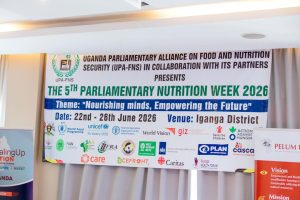
Nutrition advocates argue that Uganda can no longer afford to treat school feeding as an optional social intervention.
Agnes Kirabo, the executive director of the Food Rights Alliance, observed that while stakeholders had successfully pushed for “Food Security for All” to be included as a strategic output in the fourth National Development Plan (NDP IV), implementation remains slow, with about 26 percent of Ugandan children still stunted.
Stakeholders under the Parliamentary Alliance on Food and Nutrition Security are now pushing for an expansion of school feeding programmes beyond the current 48,000 learners benefiting. Besides improving nutrition, they argue, the programmes would also improve learning outcomes through more consistent attendance and better concentration in class.
Global studies show that every dollar invested in school feeding programmes can generate up to nine dollars in economic returns through improved health outcomes, educational attainment and future productivity.
For a country with one of the world’s youngest populations, experts warn that failing to adequately nourish children could undermine Uganda’s demographic dividend.
The challenge, however, goes beyond simply providing meals.
Civil society organisations are increasingly pushing for a shift toward home-grown school feeding programmes powered by agroecology — an agricultural model that promotes environmentally sustainable farming while improving dietary diversity and food security.
Under this approach, schools source food directly from local smallholder farmers using agroecological farming methods. This creates stable local markets while ensuring children receive fresher and more nutritious meals.
PELUM Uganda argues that agroecology presents an opportunity to simultaneously tackle hunger, climate vulnerability, rural poverty and declining soil fertility.
Unlike conventional farming systems that rely heavily on monoculture farming and synthetic chemical inputs, agroecology encourages biodiversity, organic soil improvement, water conservation and the use of indigenous farming knowledge.
Supporters say this model is particularly relevant for regions like Busoga, where indigenous foods such as millet, sorghum, pumpkins, cowpeas and traditional vegetables remain underutilised despite their high nutritional value and resilience to changing climate conditions.
“Food security does not automatically mean nutrition security,” nutrition campaigners noted during the launch.
Uganda may produce large quantities of food, but many households still lack access to balanced and nutrient-rich diets.
The consequences are already visible.
Children and mothers continue to suffer from micronutrient deficiencies, particularly anaemia, while cases of acute malnutrition remain prevalent in vulnerable regions.
Nutrition experts also warn that poor diets are contributing to rising non-communicable diseases associated with unhealthy food consumption patterns.
Meanwhile, concerns over food safety in schools have added another layer to the debate.
Recent incidents of food poisoning in schools across Uganda have exposed weaknesses in food handling and storage systems within educational institutions.
In 2023, more than 100 pupils at Golden Learning Centre in Mityana were hospitalised following suspected food poisoning, while Nakanyonyi Secondary School in Mukono temporarily closed after an outbreak linked to contaminated food.
Similar incidents have also been reported in Karamoja.
These cases have reinforced calls for stronger nutrition and food safety frameworks as Uganda expands school feeding programmes.
Still, some initiatives are already demonstrating what is possible.
In Karamoja, the World Food Programme’s “Karamoja Feeds Karamoja” initiative has partnered with the government to support school feeding programmes benefiting more than 250,000 children across 320 schools.
The programme has also boosted local procurement from smallholder farmers, injecting millions of dollars into local economies while improving access to meals for learners.
Stakeholders say such models should now be expanded nationwide.
PELUM Uganda and its partners are urging the government to prioritise financing for a national home-grown school feeding programme and fast-track the long-awaited Food and Nutrition Bill alongside the National Agroecology Strategy.
Advocates argue that Uganda’s nutrition crisis requires a more coordinated response linking agriculture, health, education and local governance.
Part of the proposed solution includes promoting school gardens, agroecology clubs and nutrition education programmes that equip children and communities with practical knowledge about sustainable farming and healthy diets.
There are also growing calls for parents to contribute agroecologically produced food items rather than ultra-processed foods to support school feeding initiatives.
For Busoga, campaigners believe the answer may partly lie in rediscovering traditional foods that have long sustained communities but have gradually been abandoned in favour of less nutritious alternatives.
Promoting indigenous foods, they argue, would not only improve dietary diversity but also preserve cultural heritage while strengthening resilience against climate and economic shocks.
As Uganda marks another Parliamentary Nutrition Week, stakeholders insist that the country stands at a critical crossroads.
The debate is no longer simply about feeding children. It is about protecting Uganda’s future workforce, strengthening education outcomes and building resilient food systems capable of supporting future generations.
Without decisive action, nutrition experts warn, the country risks raising millions of children whose potential is permanently diminished long before they reach adulthood.
Related Posts
 Independence Marathon Turns to Blood Storage Gap in Maternal Health Drive
 Fine Spinners Injects Fresh USD5m Into Technology as Uganda Textile Maker Targets African, European Markets
 Equity Trade Mission Puts Uganda’s Manufacturing Capacity to Regional Test
 Uganda Seeks to Calm Coffee, Cocoa Markets as Global Prices Fluctuate on Positive Sentiment
 Uganda Green Entrepreneurs Set for Paris Visit as Stanbic-France Partnership Graduates 106
 Entebbe Airport Passenger Traffic Recovers in August but Remains Below 2025 Levels
Get business news delivered to you everyday
Latest News

Independence Marathon Turns to Blood Storage Gap in Maternal Health Drive

Fine Spinners Injects Fresh USD5m Into Technology as Uganda Textile Maker Targets African, European Markets

Equity Trade Mission Puts Uganda’s Manufacturing Capacity to Regional Test

Uganda Seeks to Calm Coffee, Cocoa Markets as Global Prices Fluctuate on Positive Sentiment

Uganda Green Entrepreneurs Set for Paris Visit as Stanbic-France Partnership Graduates 106

Nile Breweries, Next Media Renew Road Safety Push with Focus on Boda Boda Riders

Equity Bank Explores Value-Chain Financing to Support Zigoti Coffee Expansion

Uganda Breaks Ground on USD310m Kampala Fuel Terminal, Targets September 2028 Completion

Uganda Will Not Close Its 2.4-Million-Unit Housing Deficit with Ribbon-Cuttings in Kira

Nairobi’s 2029 World Athletics Win Draws Doping Scrutiny in UK Media