

SITA calls for closer transport collaboration to fix intermodal travel gaps
A new white paper by SITA calls on airlines, airports, rail, maritime and urban transport operators to collaborate more closely to fix breakdown points in intermodal travel, arguing that better data sharing and coordinated disruption management can reduce passenger stress, improve operational efficiency and protect industry revenues.
Aviation technology provider SITA is urging airlines, airports and other transport operators to work more closely together to address the weak points where travel journeys break down, warning that poor coordination across transport modes is quietly eroding passenger confidence and industry revenues.
In a new white paper titled Navigating the Seams of Seamless Travel, SITA argues that practical collaboration—especially through shared data and coordinated operational responses—is the most effective way to improve the increasingly complex journeys passengers make across air, rail, maritime and urban transport networks.
The report notes that while global travel networks are expanding rapidly, journeys still frequently falter at transfer points where passengers switch from one mode of transport to another. At these handover points, information is often lost between operators, responsibilities become unclear, and passengers are left to manage missed connections or conflicting travel rules on their own.
These gaps, according to SITA, create operational blind spots across the wider transport system while also reducing efficiency and revenue for transport providers.
The white paper warns that the risks associated with fragmented transfer points are likely to increase as demand for intermodal travel grows in the coming decades.
Disconnected systems can create cascading disruptions when delays occur, particularly when operators lack visibility of passenger movements across different parts of the journey. Limited data sharing between organizations often prevents coordinated responses at the moments when passengers need them most.
SITA argues that solving these problems does not require major new infrastructure investments or additional standalone platforms. Instead, the solution lies in connecting existing systems and enabling operators to share real-time visibility of passenger flows and operational conditions.
When transport providers align their responses and offer a single trusted, real-time view of the journey, passengers gain confidence while operators are able to make faster and more informed decisions.
“Today, the journey breaks down at the handovers, and that is where value is lost for both passengers and operators,” said Benoit Verbaere, Director of Adjacent Markets at SITA.
“Passengers are forced to act as their own coordinators, stitching together tickets, timetables and rules just to reach their destination. When operators work together to provide one trusted, real-time view of the journey, stress is reduced and confidence, loyalty and value return to the system,” he said.
A central theme of the report is the need to improve how transport operators handle disruptions such as delays or missed connections.
Rather than leaving passengers uncertain about their options, SITA argues that coordinated operators should be able to offer clear alternatives in real time. These options could include continuing the original journey, accepting automatic rebooking, or switching transport modes—provided responsibilities among operators are defined in advance.
“Passengers remember how disruption is handled,” Verbaere said.
“When they feel informed and supported, they come back. Intermodal collaboration is not about building another platform. It is about creating trust, governance and shared ways of working so operators can act together when it matters.”
Athens pilot demonstrates model
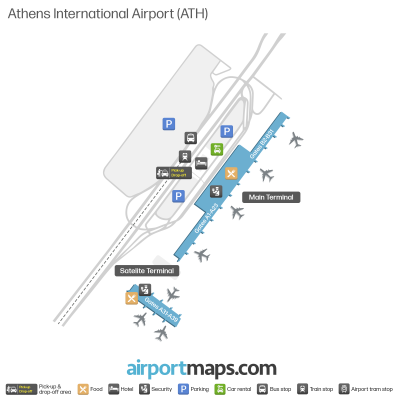
The white paper highlights the TravelWise initiative in Athens as an example of how coordinated data sharing can improve travel management.
Previously, disruption management among the airport, airline, port authority and rail operator relied largely on phone calls and manual processes. Under the TravelWise system, an Intermodal Data Collaboration Platform now integrates flight, train, ship, weather and local event data into a single operational view.
Through dashboards and application programming interfaces (APIs), transport partners can respond more quickly when connections are at risk and provide passengers with clearer travel alternatives.
Rather than recommending large-scale transformation programmes, the white paper proposes a phased approach focused on high-traffic corridors and major event transport networks.
Industry stakeholders are encouraged to begin by identifying specific breakdown points within journeys, bringing relevant operators together and using governed data sharing to coordinate responses.
According to SITA, this gradual approach allows the industry to test solutions through focused pilot projects before expanding them more widely.
By turning fragmented handovers into coordinated action, the company argues, the transport sector can reduce disruption, improve operational performance and rebuild passenger confidence in increasingly complex travel networks.
Related Posts
 Uganda Breaks Ground on USD310m Kampala Fuel Terminal, Targets September 2028 Completion
 Africa’s Electric Mobility Opportunity Will be Built Beyond the Vehicle
 Air Tanzania Moscow Suspension Highlights rising Geopolitical Risks for African Airlines
 Boeing Holds Bullish Africa Aviation Outlook as Fleet Set to More than Double by 2045
 Inside Dr Silver Mugisha and NWSC’s Long Game to Keep Kampala’s Taps Running into the Future
 MTN’s R6bn Share Buyback Highlights Cost of Iran Exit – Analysts
Get business news delivered to you everyday
Latest News

Equity Wraps up Uganda Leg of Regional Trade Mission as Value Addition Drive Gains Traction

JPMorgan Abandons Oil Price Baseline as Iran Conflict Deepens Market Uncertainty

Frankfurt Airport Malaria Outbreak Raises Questions Over Aviation-Related Health Risks

What Maps Communicate: UN Resolution Challenges World Maps that Make Africa Look Smaller

Independence Marathon Turns to Blood Storage Gap in Maternal Health Drive

Fine Spinners Injects Fresh USD5m Into Technology as Uganda Textile Maker Targets African, European Markets

Equity Trade Mission Puts Uganda’s Manufacturing Capacity to Regional Test

Uganda Seeks to Calm Coffee, Cocoa Markets as Global Prices Fluctuate on Positive Sentiment

Uganda Green Entrepreneurs Set for Paris Visit as Stanbic-France Partnership Graduates 106

Entebbe Airport Passenger Traffic Recovers in August but Remains Below 2025 Levels