

Prof. Kanyeihamba dies at 85, leaving behind a legacy of law, dissent, and eccentric genius
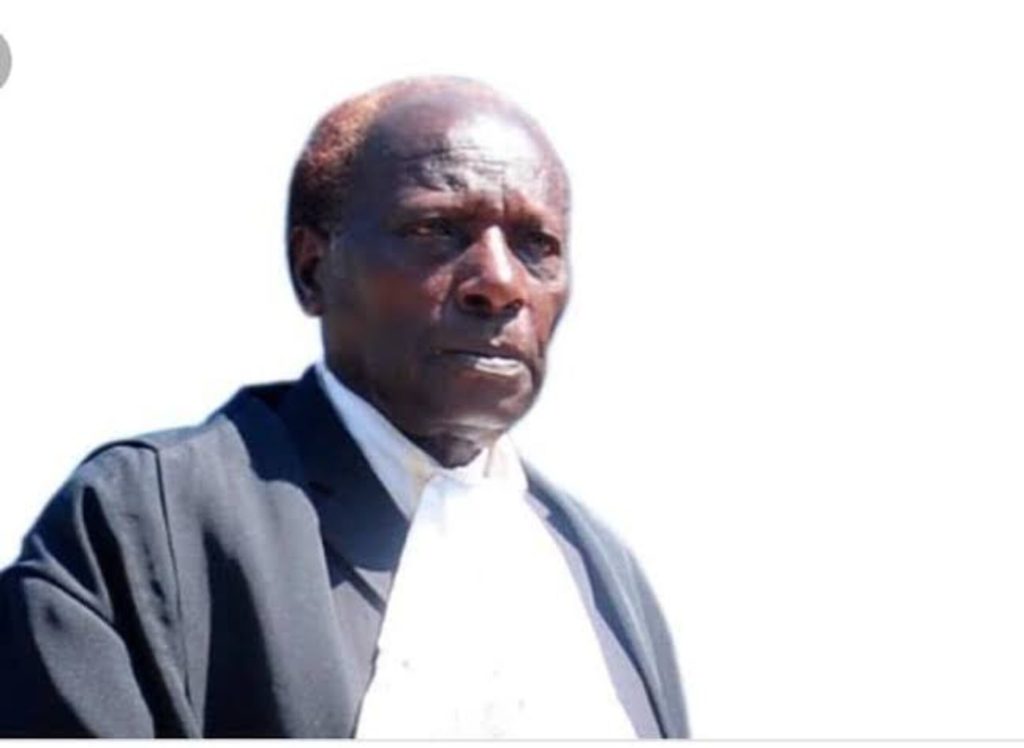
Prof. George Wilson Kanyeihamba, one of Uganda’s most accomplished legal minds and a formidable voice for constitutionalism, has died at the age of 85. He passed on quietly, but his legacy remains anything but.
In his later years, the retired Supreme Court Justice and decorated legal scholar was known as much for his eccentricity as for his intellect. Some dismissed him as cantankerous, others saw him as uncompromising. Both may have been right. But none could credibly accuse him of betrayal—least of all to the ideals he held dear.
A towering figure in Uganda’s legal and academic circles, Kanyeihamba was instrumental in framing the 1995 Constitution and served with distinction on the Supreme Court bench, where he authored some of the most cited dissenting opinions in the country’s jurisprudence. He also served as Attorney General, Minister of Justice and Constitutional Affairs, and Uganda’s representative to the African Commission on Human and Peoples’ Rights.
Throughout his career, Prof. Kanyeihamba made a name for himself as a principled defender of the rule of law, human rights, and judicial independence—often at great personal cost. His refusal to conform or remain silent in the face of injustice made him both revered and resented in equal measure.
Yet for all his legal gravitas, he was also, in the eyes of many who interacted with him, a curious blend of brilliance and oddity. Journalists tell stories of unannounced visits to newsrooms, early morning dictionary-carrying lectures on English usage, and high-minded quarrels about editorial decisions that left many exasperated but never bored.
“Years ago, he drove from his country home to Daily Monitor to correct me on my misuse of the word ‘kudos’,” recalls a former editor. “It was a Sunday and I wasn’t even on duty, but by Tuesday, 6am, he was waiting for me with five dictionaries to prove his point. That was the last time I ever used that word.”
Another recalls him showing up at New Vision with an unopened bottle of wine—a gift he had bought for a senior police official who had stood him up for dinner the night before. He wanted a story written about the incident. “When I tried to talk him out of it, he accused me of being too scared to speak truth to power,” the journalist says.
Some of these stories bordered on the surreal. One described an encounter where Kanyeihamba, furious that New Vision had refused to publish his opinion, berated a Daily Monitor journalist for failing to intervene. “He ranted for nearly an hour, then walked to his bedroom mid-conversation, leaving me alone in his living room,” the reporter recalled.
But these quirks did not diminish the respect he commanded. They were seen instead as manifestations of a man who never quite fit into the increasingly cynical world around him. To some, there was “a loose wire”; to others, he was simply one of the last true believers in a republic losing its way.
In the face of a judiciary and public sector often accused of compromise and complicity, Kanyeihamba remained unwavering—if not always diplomatic. He spoke, wrote, dissented, and often raged. But he never sold out.
Most notably, he was one of three Supreme Court justices who, in 2006, ruled that the re-election of President Yoweri Museveni had been so compromised it should be annulled.
His critics saw a stubborn idealist. His admirers saw a conscience the nation could not afford to lose. Either way, George W. Kanyeihamba departs with something few public figures today can claim: a clean conscience.
He is survived by family, colleagues, and generations of lawyers, students, and citizens whom he challenged to think deeper, stand taller, and never forget the ideals of justice.
Related Posts
 Uganda’s Oil Refinery Still Makes Sense in a USD500 Billion Economy
 Hon. John Musila and the Duty of MPs to Respect Institutional Accountability
 Oil Money’s First Test Will be Uganda’s Ability to Stop it Leaking Through Flawed Procurement
 54 years after the Asian expulsion, Uganda needs a new economic narrative
 Death of Félicien Kabuga in The Hague ends one of genocide justice’s longest pursuits
 Afreximbank’s rift with Fitch raises questions about independence and risk
Get business news delivered to you everyday
Latest News
Somalia Recognises IATA Safety Audits in Push for Common African Aviation Standards

Stanbic Donates UGX40 Million in Maternal Health Equipment to Obongi Facility

Airlink Adds Lanseria–Harare Route, Expands Regional Flights for Summer

Uganda SGR Nears €1bn Funding Milestone as OPEC Fund Targets November Approval for €150m

Solar Power Linked to More Births and Better Patient Access at Rural Ugandan Clinics

China’s GPMI Interface Leapfrogs HDMI, USB With 192Gbps Speeds and 480W Power

Stanbic Seeks Northern Uganda Business Feedback as It Marks 35 Years in Country

Uganda Emerges as Africa’s Largest Organic Farming Country as Exports Reach USD225 Million

SITA Acquisition of Collins Airport Solutions Signals Moves to Consolidate Aviation Technology

Uganda Coffee Roasters Tap Richard Rugaya as Executive Director, with Focus on Commercial Growth