

Science meets trade as East Africa moves to harmonise Crop Pest Inspections across borders
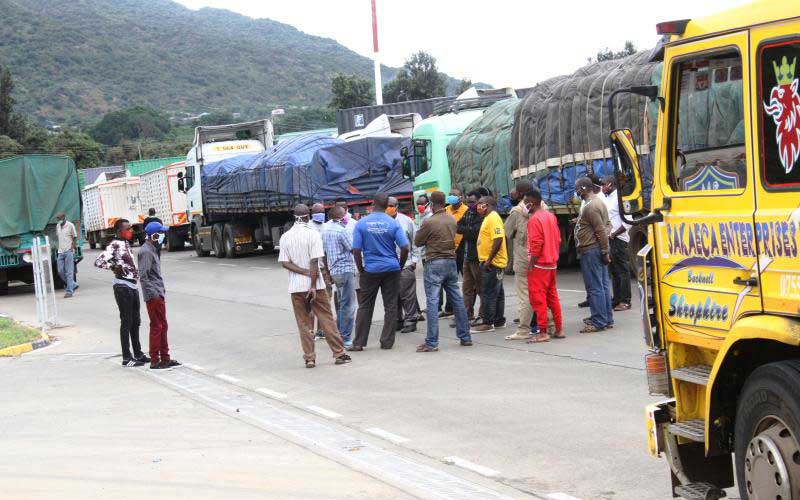
The East African Community has moved to adopt Harmonised Pest Risk Assessment frameworks & Standard Operating Procedures for key agricultural crops, in a bid to reduce border delays, improve transparency and simplify regional trade. Scientists, regulators and policymakers say the reforms could make East Africa’s agricultural markets safer, more predictable and better integrated.
The East African Community’s push to harmonise pest inspection procedures for major agricultural commodities may appear highly technical, but behind the scientific terminology lies a potentially significant shift in how agricultural trade is conducted across the region.
From May 26–29, a multidisciplinary Technical Working Group convened in Kampala for an intensive technical write-shop to finalize new Pest Risk Analysis (PRA) frameworks and Standard Operating Procedures (SOPs) for soybeans, groundnuts, pineapples and avocados. If adopted later this month, the measures could help eliminate inconsistent phytosanitary inspections at border points—one of the most persistent barriers to intra-East African trade.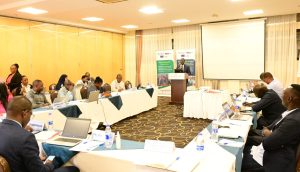
The initiative comes at a time when East African governments are seeking to deepen regional integration while simultaneously protecting their agricultural sectors from destructive pests and diseases that can spread through cross-border trade.
According to David Wafula, the East African Community’s Comprehensive Africa Agriculture Development Programme (CAADP) Coordinator, the challenge is finding the right balance between facilitating commerce and safeguarding agricultural production.
“Sixty-five percent of all trade in the EAC comprises agricultural commodities that are highly consumed and traded within the region,” Wafula said on the sidelines of the write-shop.
“The goal is to come up with harmonised Pest Risk Analysis procedures that can be used for inspections at borders, particularly at one-stop border posts, so that plant inspectors can apply the same tools when clearing consignments from one country to another.”
His remarks highlight a fundamental problem that has long frustrated traders. While the EAC operates as a common market, plant health inspections often vary from one country to another, resulting in delays, repeated inspections and uncertainty for exporters. The consequences can be particularly severe for perishable products.
At major border crossings such as Namanga between Kenya and Tanzania, trucks carrying agricultural products can spend hours, and sometimes an entire day, awaiting clearance.
 Wafula believes harmonisation could dramatically reduce those delays.
“At the Namanga border between Tanzania and Kenya, about 350 trucks cross daily. Because there are currently no harmonised inspection procedures, a truck can remain at the border for an entire day. With harmonised procedures, we expect this to come down to around two hours,” he said.
For exporters of avocados and pineapples, such improvements could mean lower transport costs, reduced spoilage and greater competitiveness in regional markets.
The EAC’s phytosanitary framework is rooted in the recognition that increased movement of agricultural commodities also creates opportunities for pests and diseases to spread across borders.
“As much as we want to facilitate free trade, we do not want situations where harmful pests are moved from one country to another,” Wafula explained. “We want trade that is safe and that protects our agricultural economies and environments.”
That emphasis on science-based regulation has shaped the work of the EAC Technical Working Group on Pest Risk Analysis, which brings together specialists from multiple disciplines.
Ephrance Tumuboine, Uganda’s Assistant Commissioner for Phytosanitary and Quarantine Services and chairperson of the regional technical working group, says the exercise has required expertise far beyond routine border inspections.
“This Technical Working Group is looking at different pests and diseases. Some are viruses, some are insects and others are fungi,” she said.
“We have experts in entomology, plant pathology and virology working together. When we validate the information, we bring together these specialists as well as policy experts because after the technical work is completed, it must be translated into policy that can be implemented.”
The significance of that scientific approach extends beyond border posts. Tumuboine argues that farmers themselves stand to benefit from clearer guidance on pest prevention and management.
“When we analyse risks and identify what can be done to prevent them, farmers benefit because they know they need to plant clean, pest-free materials. That helps maximise production,” she said.
The harmonisation effort is also expected to improve transparency in agricultural trade by reducing discretionary decision-making at border points.
“Once requirements are harmonised and made available online, exporters will know exactly what is expected before the consignment reaches the border,” Tumuboine noted.
“This reduces unnecessary interaction with inspectors and eliminates opportunities for exploitation. You have smoother trade flows, improved food security and better livelihoods.”
The initiative is closely aligned with international trade rules governing plant health measures.
Dr Joab Tugume, a Senior Agricultural Inspector in Uganda’s National Plant Protection Organisation and a member of the EAC technical working group, says the objective is not to create new barriers but to ensure that restrictions are scientifically justified.
“This is about safe trade within the EAC,” Tugume said. “According to the World Trade Organisation and the International Plant Protection Convention, you cannot regulate a pest that already exists in your country because that would become a technical barrier to trade.”
That principle has important implications for intra-regional commerce. Countries participating in the exercise were required to identify which pests already exist within their territories and which constitute genuine quarantine threats.
“Once this initiative is implemented, we can safely trade within the East African region because there will be less unnecessary regulation,” Tugume explained.
“You may find that after the analysis, a country that was regulating three or five pests is left regulating only one or none. That means trade becomes much smoother among partner states.”
The process of developing the harmonised PRA and SOPs has benefited from support by the Association for Strengthening Agricultural Research in Eastern and Central Africa (ASARECA), which helped provide scientific evidence and facilitate regional consensus.
Julian Barungi, ASARECA’s Programme Officer for Policy, sees the exercise as laying the foundation for more predictable agricultural trade.
“The harmonisation of the PRA frameworks and SOPs will create an enabling environment for managing pests while guiding the enforcement of phytosanitary standards in cross-border trade,” Barungi said.
“These procedures will become the reference tools used by inspectors at border points to ensure trade is safe while preventing economic losses and environmental damage caused by harmful pests.”
Beyond the EAC, the reforms could also strengthen the region’s readiness for wider continental trade under the African Continental Free Trade Area.
“We want to encourage intra-EAC trade without the risk of phytosanitary issues,” Barungi added. “If our commodities can move smoothly within the region, they will also be better positioned to access wider continental markets.”
For ASARECA Executive Director Sylvester Dickson Baguma, the completion of the harmonised frameworks represents a milestone in the evolution of regional agricultural trade policy.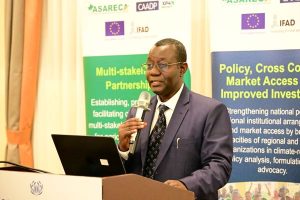
“By establishing unified and practical inspection guidelines, we are helping reduce phytosanitary trade barriers, prevent the spread of transboundary pests and diseases, and facilitate seamless cross-border trade,” Baguma said.
His assessment captures the broader significance of the initiative.
At one level, the exercise is about pests, inspections and border procedures. At another, it reflects a deeper effort to build trust among EAC partner states through common standards grounded in science rather than administrative discretion.
For a region where agriculture remains the backbone of livelihoods and intra-regional commerce, that could prove just as important as the faster border crossings the new rules promise to deliver.
Related Posts
 Uganda Returnees Look to Rebuild Livelihoods as Government Pledges UGX2bn
 ERAM Award puts Uganda’s Animal-Health Manufacturing Ambitions in Focus
 Agroecology Week Targets Stronger links Between Farmers, Policy and Markets
 Energy Ministry and Equity Bank target lower hotel energy costs through green investment initiative
 FAA Certifies Boeing 737-10, Clearing Path for Deliveries of Largest 737 MAX Variant
 Aviation Industry Coalition Presses EU to Protect Voluntary use of Biometric Travel Technology
Get business news delivered to you everyday
Latest News

Uganda Returnees Look to Rebuild Livelihoods as Government Pledges UGX2bn

Beyond Gold Exports, Uganda’s Next Test Is Economic Transformation

ERAM Award puts Uganda’s Animal-Health Manufacturing Ambitions in Focus

Why Community-Led Climate Action Is Essential to Building Climate Resilience

Agroecology Week Targets Stronger links Between Farmers, Policy and Markets

Stanbic Commits UGX20m to Virunga Gorilla Marathon’s Conservation Drive

Energy Ministry and Equity Bank target lower hotel energy costs through green investment initiative

FAA Certifies Boeing 737-10, Clearing Path for Deliveries of Largest 737 MAX Variant

Somalia Recognises IATA Safety Audits in Push for Common African Aviation Standards

Stanbic Donates UGX40 Million in Maternal Health Equipment to Obongi Facility