

One panel at a time, solar energy is powering an education revolution in Mbale
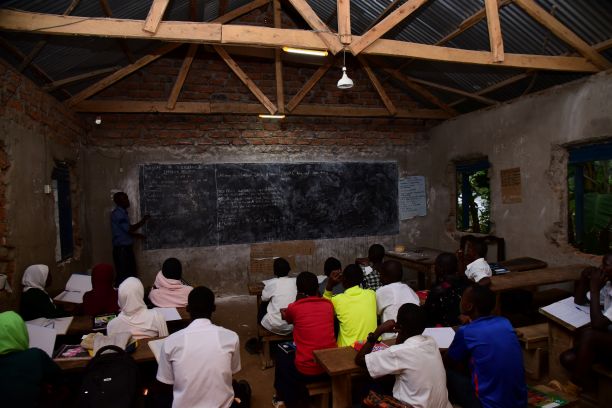
A rural primary school in Mbale District is demonstrating how solar energy can transform education outcomes. By replacing unreliable electricity with solar power, Good Journey Nursery and Primary School has extended study hours, increased enrollment, created jobs and renewed hope for hundreds of learners in Kilulu B village.
Nestled among the rolling hills of Mbale District, Kilulu B village is experiencing a transformation that many rural communities across Uganda continue to aspire to. The catalyst is neither a major infrastructure project nor a government programme. Instead, it is a simple source of power that rises every morning above the eastern horizon.
At Good Journey Nursery and Primary School, solar energy is helping rewrite the future for hundreds of children by extending learning hours, improving educational outcomes and creating new opportunities for the community.
For years, the school struggled with one challenge familiar to many rural institutions across Uganda – access to reliable electricity.
Founded in 2016 by education advocates Mr. Malenje Simon and Ms. Grace Kayegi, Good Journey Nursery and Primary School was established to provide affordable education to children from low-income families, including orphans and vulnerable learners. While demand for the school steadily grew, persistent power outages threatened its ability to deliver quality education.
Electricity interruptions occurred several times each week, often lasting more than six hours. The consequences extended far beyond dark classrooms.
Evening revision sessions had to be cancelled. Early morning preparation classes became unpredictable. Primary Seven candidates preparing for the Primary Leaving Examinations (PLE) lost valuable study time at the most critical stage of their academic journey.
“The unstable electricity affected not only study schedules but also enrollment,” explains Kayegi. “Learners often had to return home early, limiting their learning hours. Our candidates suffered most because they did not get enough time to read.”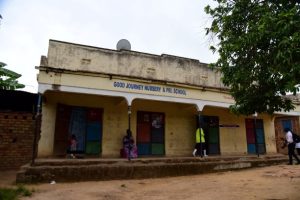
The challenge also delayed plans to establish a boarding section, as school administrators were reluctant to accommodate learners overnight without dependable lighting and adequate security.
As examination season approached in 2025, the situation became increasingly urgent.
Traditional alternatives such as candles and kerosene lamps offered only temporary relief. They were expensive to maintain, posed fire hazards and exposed learners to harmful smoke. For a school operating on limited resources, these options were neither safe nor sustainable.
Seeking a long-term solution, Malenje invested in solar energy through Sun King, a leading provider of off-grid solar products in Uganda. The school acquired a Home Plus Pro solar system equipped with high-efficiency lighting and battery storage capable of powering classrooms throughout the night.
The timing proved crucial.
Installed just weeks before national examinations, the system immediately changed the learning environment. For the first time, learners could study consistently during evening prep sessions and begin their day with uninterrupted early morning lessons.
The investment was made possible through the Results-Based Financing (RBF) Programme, a partnership involving Equity Bank Uganda, Energizing Development (EnDev) Uganda and GIZ. The initiative provides incentives to solar suppliers, reducing costs for consumers and enabling schools, households and small businesses to access quality renewable energy technologies.
Such interventions are becoming increasingly important as Uganda seeks to bridge the gap between communities connected to the national grid and those that remain underserved.
According to sector experts, access to reliable electricity remains one of the biggest barriers to improving educational outcomes in rural areas. While school construction and teacher recruitment often receive significant attention, dependable power is equally essential for modern learning.
At Good Journey, the impact became visible within a year.
Enrollment rose from 250 pupils to 310 and continues to increase. School revenues grew providing resources for expansion. Additional teachers have been recruited to accommodate growing numbers of learners, creating employment opportunities within the community.
Most importantly, students now enjoy extended study hours that were previously impossible.
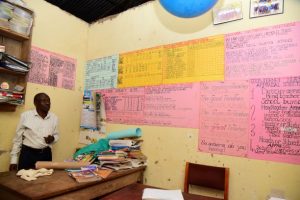 “With stable lighting, our candidates now have more time to concentrate on their studies,” says Malenje. “Better performance in national examinations attracts more learners, which allows us to hire more teachers and create jobs. As village chairman, I am proud that children who might otherwise be idle now have a chance at a better future.”
Reliable lighting has improved safety around the school premises and increased confidence among parents. The institution’s growing reputation is helping position education as a viable pathway out of poverty for many families in Kilulu B and surrounding villages.
The experience also highlights the broader role renewable energy can play in rural development.
Across Uganda, thousands of schools face similar challenges with unreliable grid electricity or no electricity at all. Solar power offers an increasingly affordable alternative capable of supporting educational institutions, health centres and small enterprises in areas where conventional infrastructure remains limited.
For communities like Kilulu B, renewable energy is not merely an environmental solution. It is an economic and social development tool.
Encouraged by the success of the initial installation, Malenje is already planning the next phase. His vision includes expanding solar coverage to power the entire school compound, including teachers’ accommodation and a future boarding section.
He also hopes to introduce a solar-powered water pumping system that would provide clean water to both the school and neighbouring households.
If realised, those ambitions could transform Good Journey Nursery and Primary School into a fully fledged educational hub serving a much wider population.
The story unfolding in Kilulu B demonstrates how access to reliable energy can trigger a chain reaction of positive outcomes. Longer study hours lead to better academic performance. Better results attract more learners. Increased enrollment generates revenue, supports job creation and strengthens local development.
In a country where rural schools often struggle against infrastructure deficits, the experience of Good Journey offers a glimpse of what is possible when technology is matched with community determination.
As darkness falls over the Mbale highlands each evening, the lights shining from the school’s classrooms now represent more than electricity. They symbolize opportunity, resilience and the promise of a brighter future for hundreds of young Ugandans.
Related Posts
 Equity Wraps up Uganda Leg of Regional Trade Mission as Value Addition Drive Gains Traction
 Independence Marathon Turns to Blood Storage Gap in Maternal Health Drive
 Fine Spinners Injects Fresh USD5m Into Technology as Uganda Textile Maker Targets African, European Markets
 Equity Trade Mission Puts Uganda’s Manufacturing Capacity to Regional Test
 Uganda Green Entrepreneurs Set for Paris Visit as Stanbic-France Partnership Graduates 106
 Entebbe Airport Passenger Traffic Recovers in August but Remains Below 2025 Levels
Get business news delivered to you everyday
Latest News

Equity Wraps up Uganda Leg of Regional Trade Mission as Value Addition Drive Gains Traction

JPMorgan Abandons Oil Price Baseline as Iran Conflict Deepens Market Uncertainty

Frankfurt Airport Malaria Outbreak Raises Questions Over Aviation-Related Health Risks

What Maps Communicate: UN Resolution Challenges World Maps that Make Africa Look Smaller

Independence Marathon Turns to Blood Storage Gap in Maternal Health Drive

Fine Spinners Injects Fresh USD5m Into Technology as Uganda Textile Maker Targets African, European Markets

Equity Trade Mission Puts Uganda’s Manufacturing Capacity to Regional Test

Uganda Seeks to Calm Coffee, Cocoa Markets as Global Prices Fluctuate on Positive Sentiment

Uganda Green Entrepreneurs Set for Paris Visit as Stanbic-France Partnership Graduates 106

Nile Breweries, Next Media Renew Road Safety Push with Focus on Boda Boda Riders