

From Survival to Styling Success: Equity seminar ignites new confidence among salon entrepreneurs
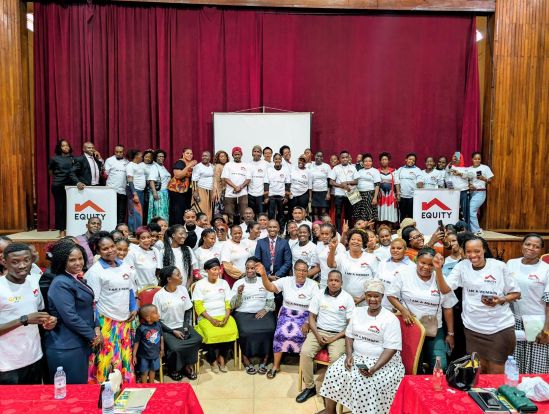
A financial literacy seminar backed by Equity Bank is equipping Uganda’s salon entrepreneurs with tools to formalise, access credit and scale beyond survival.
Two years ago, Jessica Muteteri’s salon was fighting for breath.
Rent arrears mounted. Utility bills gathered like storm clouds. Staff wages pressed in “like a chokehold,” she says. What had once felt like the glow of independence dimmed into the grind of surviving day to day.
The turning point came through a friend’s introduction to Equity Bank Uganda. Muteteri secured a Shs5 million loan, repayable within twelve months. It was modest capital by corporate standards, but for her business, it was oxygen.
“That money transformed my business and redefined my entrepreneurial journey,” she reflects.
So when a text message invited her to a seminar titled Grow Your Salon Business with Equity Bank, hesitation never entered the picture. She confirmed immediately, then rallied fellow salon owners from Galilaya Arcade and neighbouring beauty businesses across Kampala to attend with her.
The seminar, organised by the bank’s Commercial Department through its Micro segment unit, filled the Pope Paul Memorial Centre with more than 200 salon operators—stylists, barbers, beauticians and trainers united by one goal: growth.
The mood was part workshop, part awakening. Conversations crackled. Pens moved quickly across notebooks. Participants left with more than branded calendars and T-shirts; many walked away with practical frameworks for running businesses that could outlast economic shocks.
A key partner in the initiative was the Federation of Uganda Salons and Beauty Professionals Association (FUSPRO), the umbrella body representing salon operators nationwide. Since its recognition in 2016, the federation has expanded into 141 of Uganda’s 146 districts and now represents roughly 120,000 registered salon owners and trainers.
FUSPRO Chief Executive Officer Celestine Kamanyire addressed what he described as a structural gap in the industry.
“As a federation, one of the key things we lack is training on financial literacy—how to operate a business, how to have a collective voice, and how to professionalise our craft,” he said.
The financial literacy message was reinforced by Bob Paul Lusembo, Head of Micro Business at the bank, who translated theory into action: daily savings discipline, consistent record-keeping, group lending models and targeted products such as Equi-Mama, tailored for women entrepreneurs.
For Esther Namutebi, the seminar arrived at a critical moment. Persistent power outages had stalled her operations, and the dream of purchasing a generator and new equipment felt increasingly distant.
“My business has been struggling due to power shortages,” she said. “Now I understand how to access financing and invest back into my salon.”
What stood out most for her was not simply access to credit, but understanding how to deploy it wisely. “In one day, we have learnt not just how to get loans, but how to use the money so that it transforms the business and we are able to pay it back.”
Beyond credit, the workshop emphasised formalisation—registering businesses, obtaining Tax Identification Numbers, maintaining dedicated business accounts and complying with regulatory standards. These steps, organisers argued, are what convert informal hustle into bankable enterprise.
For Muteteri, the difference is already visible. Her Galicious Beauty Parlor is no longer surviving; it is planning. She speaks now not of arrears, but of expansion.
“We are ready to hang with the big boys,” she says with a confident smile.
Across the hall, that sentiment was widely shared. The seminar functioned as more than a training session; it was a morale reset for an industry powered largely by women and youth operating at the margins of formal finance.
FUSPRO officials say similar seminars will soon roll out across Western, Eastern and Northern Uganda, aiming to replicate Kampala’s momentum nationwide.
If the energy in the room was any indicator, Uganda’s salon sector may be approaching a transformation powered not just by scissors and styling gel, but by structure, financial discipline and access to capital.
Related Posts
 TAAG Joins Westbrook Racing as Race Partner for Luanda E1 Grand Prix
 IFAD, Equity Launch USD200m Mechanism to Take Climate Finance to East Africa’s Farmers
 Air Tanzania Moscow Suspension Highlights rising Geopolitical Risks for African Airlines
 Uganda Airlines Separates CEO and Accountable Manager Roles in Major Leadership Reset
 Boeing Holds Bullish Africa Aviation Outlook as Fleet Set to More than Double by 2045
 Inside Dr Silver Mugisha and NWSC’s Long Game to Keep Kampala’s Taps Running into the Future
Get business news delivered to you everyday
Latest News

TAAG Joins Westbrook Racing as Race Partner for Luanda E1 Grand Prix

IFAD, Equity Launch USD200m Mechanism to Take Climate Finance to East Africa’s Farmers

Air Tanzania Moscow Suspension Highlights rising Geopolitical Risks for African Airlines

Uganda Airlines Separates CEO and Accountable Manager Roles in Major Leadership Reset

Boeing Holds Bullish Africa Aviation Outlook as Fleet Set to More than Double by 2045

Oil Money’s First Test Will be Uganda’s Ability to Stop it Leaking Through Flawed Procurement

Uber exits Uganda after a decade in Kampala

Appellation: Uganda Gives its Crude a Brand as ‘Pearl Sweet’ Ahead of November First Oil

Equity Financing Helps Vurra Secondary School turn Enrolment Pressure into Growth Opportunity

El Niño Puts More Than 162 Million Children at Risk Across Africa as UNICEF warns of worsening drought, flooding and extreme heat hazard