

Africa Tops World’s Worst Airline Baggage Mishandling Rankings Despite Aviation Industry’s Technology Gains
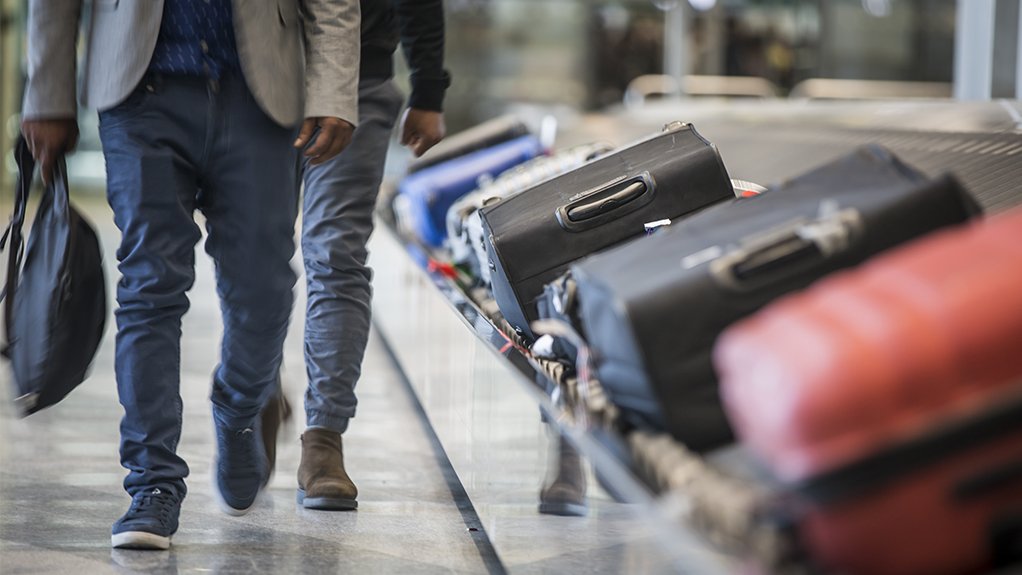
While global airlines have cut baggage mishandling to below pre-pandemic levels through AI, biometrics and real-time tracking, Africa remains the world’s weakest-performing region, highlighting the urgent need for digital investment as passenger numbers continue to rise.
Africa continues to record the world’s highest rate of mishandled airline baggage despite significant global improvements driven by artificial intelligence, biometric technology and real-time baggage tracking, according to the latest industry data released by aviation technology provider SITA.
The 2026 SITA Baggage IT Insights Report shows that African airports and airlines recorded 12.1 mishandled bags per 1,000 passengers in 2025, more than double the global average of 4.9 bags per 1,000 passengers.
The finding comes even as the global aviation industry achieved one of its strongest operational improvements in recent years, reducing baggage mishandling rates by 23pc compared to the previous year while handling a record 5 billion passengers worldwide.
For Africa, however, the report points to persistent structural challenges that continue to hamper baggage performance.
International travel involving multiple airlines, airports and baggage handlers remains the biggest source of disruptions across the continent. Capacity constraints and ageing airport infrastructure also continue to contribute to higher mishandling rates.
Despite these challenges, SITA believes Africa has the greatest opportunity for improvement through wider deployment of end-to-end baggage tracking, better data sharing between aviation stakeholders, biometric technologies and AI-powered prediction systems.
The report notes that global implementation of baggage tracking under the International Air Transport Association’s Resolution 753 has now exceeded 50pc, with full compliance targeted by 2027, providing a platform for improved baggage management across Africa.
Globally, baggage mishandling remains an expensive operational challenge despite the improvements.
SITA estimates airlines collectively lost USD6.3 billion in 2025 because of mishandled baggage, equivalent to around 15pc of the industry’s total annual profits.
The report also introduces a revised benchmark showing that each mishandled bag now costs airlines an average of USD260, substantially higher than the long-standing industry estimate of US$150.
According to SITA, delayed baggage accounts for about 70pc of total baggage-related costs, with airlines spending heavily on locating, rerouting and delivering luggage to passengers.
Transfers between connecting flights remain the leading cause of baggage mishandling globally, accounting for 39pcof all cases, although this represents a slight improvement from the previous year.
SITA says the industry’s recent gains have been driven less by individual technologies than by improved integration between digital systems, including real-time data sharing, AI-assisted baggage routing, biometric bag-drop facilities and connected passenger devices.
The company cited early successes from new technologies, including integration with consumer device tracking platforms that has significantly reduced permanently lost baggage and accelerated recovery of delayed luggage.
Looking ahead, the report suggests digital transformation will continue to reshape baggage handling. Three out of four airlines surveyed plan to invest in AI over the next two years, while half intend to provide passengers with real-time baggage updates throughout their journeys.
For Africa, where passenger traffic is projected to continue growing, the findings highlight the urgent need to modernise baggage operations if airports are to improve customer experience while coping with increasing demand without extensive physical expansion.
Related Posts
 Independence Marathon Turns to Blood Storage Gap in Maternal Health Drive
 Fine Spinners Injects Fresh USD5m Into Technology as Uganda Textile Maker Targets African, European Markets
 Equity Trade Mission Puts Uganda’s Manufacturing Capacity to Regional Test
 Uganda Seeks to Calm Coffee, Cocoa Markets as Global Prices Fluctuate on Positive Sentiment
 Uganda Green Entrepreneurs Set for Paris Visit as Stanbic-France Partnership Graduates 106
 Entebbe Airport Passenger Traffic Recovers in August but Remains Below 2025 Levels
Get business news delivered to you everyday
Latest News

Independence Marathon Turns to Blood Storage Gap in Maternal Health Drive

Fine Spinners Injects Fresh USD5m Into Technology as Uganda Textile Maker Targets African, European Markets

Equity Trade Mission Puts Uganda’s Manufacturing Capacity to Regional Test

Uganda Seeks to Calm Coffee, Cocoa Markets as Global Prices Fluctuate on Positive Sentiment

Uganda Green Entrepreneurs Set for Paris Visit as Stanbic-France Partnership Graduates 106

Nile Breweries, Next Media Renew Road Safety Push with Focus on Boda Boda Riders

Equity Bank Explores Value-Chain Financing to Support Zigoti Coffee Expansion

Uganda Breaks Ground on USD310m Kampala Fuel Terminal, Targets September 2028 Completion

Uganda Will Not Close Its 2.4-Million-Unit Housing Deficit with Ribbon-Cuttings in Kira

Nairobi’s 2029 World Athletics Win Draws Doping Scrutiny in UK Media