

How Clean Cooking Helped a Mbarara Restaurant Cut Fuel Costs by 60pc
 The honey-comb briquettes used for cooking at Polland Food centre
A 60 percent reduction in cooking fuel costs at Polland Food Centre highlights how energy-efficient technologies are becoming a business imperative for Uganda’s hospitality sector, transforming clean cooking from an environmental initiative into a driver of profitability.
For years, the conversation around clean cooking in Uganda has centred on environmental conservation and reducing pressure on forests. Increasingly, however, the business case is becoming just as compelling.
As energy costs continue to squeeze profit margins across the hospitality industry, restaurants are beginning to view efficient cooking technology not as a sustainability initiative but as an operational investment capable of delivering measurable financial returns.
One business illustrating this shift is Mbarara-based Polland Food Centre, which says it has reduced its daily cooking fuel costs by 60 percent after replacing traditional charcoal stoves with energy-efficient Ecostoves.
The restaurant, which opened in 2025, had been spending between UGX40,000 and UGX50,000 each day on charcoal to meet demand for its diverse menu. Besides the high fuel bills, traditional stoves generated excessive smoke, wasted heat and created difficult working conditions for kitchen staff.
Seeking a more efficient alternative, the restaurant installed built-in Ecostoves supplied by Elsmart Conservation Technologies. The insulated cooking systems use high-density honeycomb briquettes designed to burn longer while retaining heat more effectively than conventional charcoal stoves.
The result has been a reduction in daily fuel expenditure to about UGX20,000, allowing the business to redirect savings towards growth while improving operational efficiency.
“Previously, we spent between UGX40,000 and UGX50,000 on charcoal every day. Now we spend only about UGX20,000 on briquettes to prepare food for the entire day,” said Muhuza John Bosco, Head Chef at Polland Food Centre.
“The stoves are cost-effective. We cook faster, the insulation preserves heat, keeping food warm throughout the day without additional fuel, and since we started using them, we have not recorded a single accident.”
Beyond the reduction in fuel costs, the restaurant reports shorter cooking times, cleaner kitchens and improved staff welfare due to lower smoke emissions and reduced exposure to heat.
The experience reflects a broader trend emerging among Ugandan businesses seeking to reduce operating costs through energy-efficient technologies rather than relying solely on higher sales to improve profitability.
For sectors such as hospitality, food processing and small manufacturing—where cooking or heating represents a significant share of operating expenses—energy efficiency is increasingly becoming a competitive differentiator.
The transition is also receiving support from financial institutions and development partners promoting cleaner energy adoption.
According to Virginia Semakula, Equity Bank Uganda’s Manager for the Energy, Environment and Climate Change Pillar, businesses across multiple sectors are already benefiting from investments in cleaner technologies.
“Through our partnership with GIZ, we have expanded access to clean cooking systems and solar technologies across different communities,” she said.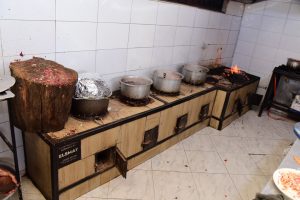
“Businesses have reduced dependence on charcoal, firewood and kerosene by adopting cleaner cooking solutions, while salons, retail shops, households and farms are increasingly using solar-powered systems to lower energy costs and extend operating hours.”
Uganda remains heavily dependent on biomass for cooking, with charcoal and firewood accounting for the dominant share of household and commercial energy use. That dependence exposes businesses to fluctuating fuel prices while contributing to deforestation and indoor air pollution.
Energy-efficient cooking technologies are increasingly being promoted as part of the country’s wider clean energy transition, offering businesses an opportunity to lower operating costs while supporting environmental sustainability.
For Polland Food Centre, the financial gains have been significant enough to influence its expansion strategy. Management plans to install additional Ecostoves as it increases kitchen capacity and intends to equip a planned second branch with the same technology from the outset.
The experience underscores a growing reality for Uganda’s small and medium-sized enterprises: investments once viewed primarily through the lens of environmental responsibility are increasingly proving their value on the balance sheet.
Related Posts
 Uganda Coffee Roasters Tap Richard Rugaya as Executive Director, with Focus on Commercial Growth
 Why Africa’s Institutions Must Turn Knowledge and Investment into Farmer Prosperity
 Forbes ranks MTN Group third globally on best telecom employer list
 Stanbic experts offer investment insights to navigate current market uncertainty
 Africa Carbon Markets Urged to Turn Potential into Investment and Delivery
 Corporate Buyers Could Help Unlock SAF Market Worth Millions of Tonnes by 2030
Get business news delivered to you everyday
Latest News

SITA Acquisition of Collins Airport Solutions Signals Moves to Consolidate Aviation Technology

Uganda Coffee Roasters Tap Richard Rugaya as Executive Director, with Focus on Commercial Growth

Equity Bank Reports UGX37.6 Billion in Green Loans as Uganda Seeks to Scale Climate Investment

Why Africa’s Institutions Must Turn Knowledge and Investment into Farmer Prosperity

Forbes ranks MTN Group third globally on best telecom employer list

Stanbic experts offer investment insights to navigate current market uncertainty

Africa Carbon Markets Urged to Turn Potential into Investment and Delivery

Bank of Uganda hikes base rate from 9.75% to 12% amidst global tensions

Airbus sees USD420bn Global Aviation Services Boom: Can Africa Capture its Share?

Nile Breweries Celebrates 75 Years of Growing with Uganda