

Africa Bucks Global Slowdown as Air Travel Demand Rises 6.7pc
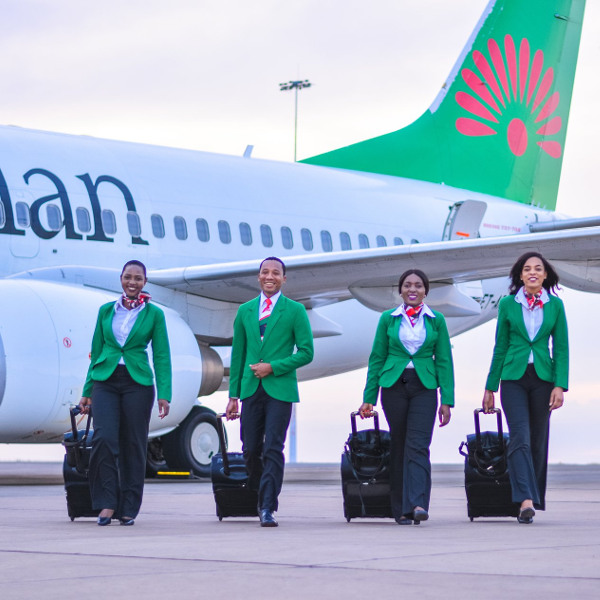
African airlines defied the global aviation slowdown in June, recording a 6.7pc rise in passenger demand even as worldwide air travel declined by 1.7pc. IATA says the continent’s resilient growth highlights Africa’s expanding role as one of the world’s fastest-growing aviation markets.
Africa remained one of the few bright spots in global aviation in June, recording robust growth in passenger demand even as worldwide air travel slipped into negative territory amid geopolitical tensions, higher fuel prices and weakening domestic markets in major economies.
Fresh data released by the International Air Transport Association (IATA) shows African airlines recorded a 6.7pc year-on-year increase in passenger demand during June, supported by a 7pc expansion in capacity.
The region achieved a 74.2pc passenger load factor, down just 0.3 percentage points from a year earlier, while accounting for 2.2pc of global passenger traffic.
The performance stood in sharp contrast to the global market, where passenger demand fell 1.7pc year-on-year and airline capacity contracted 1.3pc, resulting in an average load factor of 84.2pc.
“Global demand for air travel was down 1.7pc in June compared to 2025,” said Willie Walsh, IATA’s Director General.
He attributed much of the decline to weaker domestic markets in China, the United States and Japan, together with the lingering effects of conflict in the Middle East, which continue to disrupt international travel and keep fuel prices elevated.
“People continue to travel, which is an important contributor to global economic growth. There is no doubt, however, that stabilising the situation in the Middle East and normalising oil supplies would improve prospects for airlines, economies and societies the world over,” Walsh said.
Africa emerged as one of the strongest-performing international markets, trailing only Latin America, where airlines posted 3.5pc growth in international demand, and outperforming Europe (1.5pc) and Asia-Pacific (0.4pc).
By contrast, Middle Eastern airlines suffered a 14pc decline in international passenger demand as the effects of the Iran conflict continued to weigh on the region’s aviation sector. Although the pace of decline has eased since April, IATA said traffic remains well below last year’s levels because of prolonged operational disruptions.
Globally, international passenger demand fell 0.9pc, although excluding the Middle East it would have grown 1.1pc, highlighting the outsized impact of the region’s instability on worldwide aviation performance.
Domestic air travel also remained under pressure, shrinking 3pc worldwide. China recorded the steepest decline at 5.2pc, followed by Japan (3.8pc) and the United States (1.2pc), with IATA pointing to higher fuel costs as a key factor behind weaker demand.
For Africa, however, the latest figures reinforce the continent’s position as one of aviation’s fastest-growing frontiers. Rising connectivity, expanding middle-class travel, tourism recovery and stronger business links across the continent continue to support passenger growth despite persistent infrastructure and capacity constraints.
The June performance also suggests African carriers are continuing to rebuild networks and add seats in anticipation of sustained demand, even though passenger load factors remain below the global average.
Related Posts
 Equity Trade Mission Puts Uganda’s Manufacturing Capacity to Regional Test
 Uganda Seeks to Calm Coffee, Cocoa Markets as Global Prices Fluctuate on Positive Sentiment
 Entebbe Airport Passenger Traffic Recovers in August but Remains Below 2025 Levels
 Equity Bank Explores Value-Chain Financing to Support Zigoti Coffee Expansion
 Equity Trade Mission Targets Capital, Markets to Unlock Uganda’s Investment Potential
 COMESA Flags WBeauty Shampoo Recall in Three Member States
Get business news delivered to you everyday
Latest News

Independence Marathon Turns to Blood Storage Gap in Maternal Health Drive

Fine Spinners Injects Fresh USD5m Into Technology as Uganda Textile Maker Targets African, European Markets

Equity Trade Mission Puts Uganda’s Manufacturing Capacity to Regional Test

Uganda Seeks to Calm Coffee, Cocoa Markets as Global Prices Fluctuate on Positive Sentiment

Uganda Green Entrepreneurs Set for Paris Visit as Stanbic-France Partnership Graduates 106

Entebbe Airport Passenger Traffic Recovers in August but Remains Below 2025 Levels

Nile Breweries, Next Media Renew Road Safety Push with Focus on Boda Boda Riders

Equity Bank Explores Value-Chain Financing to Support Zigoti Coffee Expansion

Uganda Breaks Ground on USD310m Kampala Fuel Terminal, Targets September 2028 Completion

Uganda Will Not Close Its 2.4-Million-Unit Housing Deficit with Ribbon-Cuttings in Kira