

AfDB to add €217.37 million towards improving Rwanda-Uganda road links
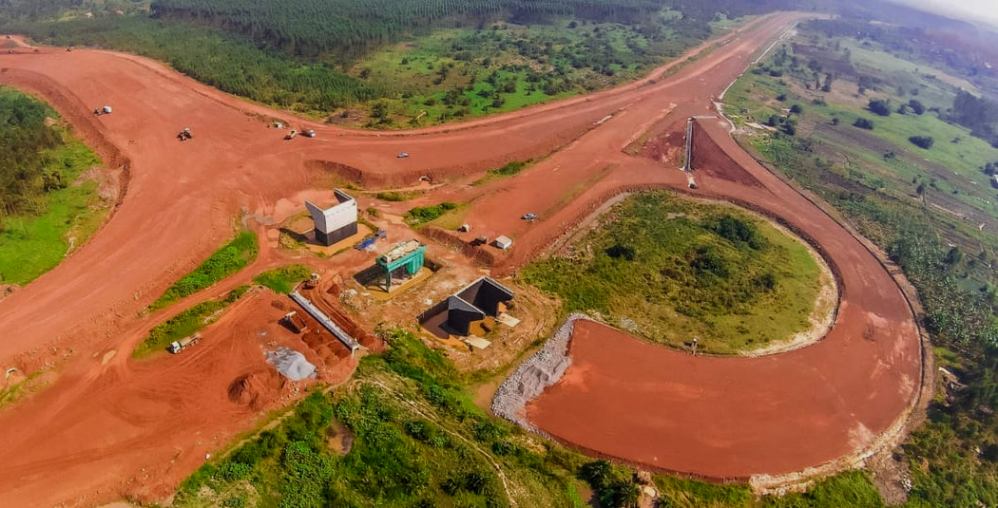 The Busega-Mpigi interchange is a crucial part of the Busega-Mpigi Expressway, designed to connect the new expressway to the Northern Bypass and Entebbe Expressway, alleviating traffic congestion in the area.
The African Development Bank (AfDB) has agreed to provide the Uganda government another €217.37 million ($250.78 million) towards completion of the Busega-Mpigi and Kagitumba-Kayonza-Rusumo Roads Project. The project is expected to substantially improve transportation links between Rwanda and Uganda, especially in removing the present traffic bottlenecks.
George Makajuma, the AfDB’s Principal Transport Engineer and Project Task Manager said, “This project is more than a road; it is a lifeline for communities and a gateway for trade. The additional financing ensures that the Busega–Mpigi Expressway delivers safer, faster, and more inclusive transport for millions, unlocking the region’s economic potential.”
According to AfDB, construction under the additional financing is scheduled to resume in early January 2026 and conclude by December 2029, with full project completion expected in 2030. The European Union-Africa Infrastructure Trust Fund is the major source of this money in an expansive program and managed by AfFB, designed to strengthen African integration. Since its launch in 2007, the Trust Fund has supported projects across Africa with an accrued value of just over €11 billion.
A consortium of two Chinese companies, China Civil Engineering Construction Corporation (CCECC) and China Railway 19th Bureau Group Company Limited were awarded the contract in 2019. The additional resources will finance the construction of new interchanges, bridges, toll plazas, and service lanes, including the Busega Interchange linking the expressway to the Northern Bypass.
The expected project outcomes are: improved transport services (reductions in vehicle operating costs and travel time); improved processing time for clearance of imports and exports, and improved safety.
These improvements will address chronic traffic congestion between Busega and Mpigi, a key bottleneck along the Northern Corridor connecting Kampala to Kigali. Funding will also cover land compensation, project management, and capacity enhancement for Uganda’s Ministry of Works and Transport to ensure smooth execution following recent institutional restructuring.
Once completed, the 27.3-kilometre expressway is expected to cut travel time from over two hours to under 45 minutes, improving access to markets and social services for more than one million residents and traders in Busega, Mpigi and the surrounding communities.
The total cost of the upgraded Uganda section now stands at €424.61 million, up from the original €176.26 million, reflecting a scaled-up project scope. The Bank Group will provide €217.37 million — comprising an ADB loan of €188.18 million, an ADF loan of €28.31 million, and a NEPAD IPPF grant of $1 million — while the Uganda government will contribute €30.98 million.
Additional components to be financed include seven new bridges and 54km of lined drainage channels. The project is expected to generate over 1,200 jobs – 800 during construction and 400 in operations – with at least 30% of opportunities reserved for women and youth. It will also empower local women through entrepreneurship and skills development initiatives linked to roadside economic opportunities.
First mooted 10 years ago, the project’s components in Uganda is the improvement of Kampala-Mpigi road (24 km-long located in Central Uganda) from the present two lane highway to dual carriageway highway. In Rwanda, the project comprises the rehabilitation of the Kagitumba-Kayonza road located along the northern corridor linking with Uganda at Mirama Hills/Kagitumba, and the 92-km section from Kayonza-Rusumo linking to Tanzania on the Central Corridor.
Related Posts
 Bank of Uganda hikes base rate from 9.75% to 12% amidst global tensions
 Stanbic Business Forum told Uganda’s Schools Need to Outlive Their Founders
 COMESA Competition Watchdog Calls for Stronger Skills-Sets to Police Complex Regional Markets
 CMA Opens Dangote Refinery IPO to Uganda’s Wealthy investors as SBG Securities Uganda Limited Becomes Sole Intermediary
 UDB Commissions Titivated Headquarter Tower as Development Lender Scales up Transformation Role
 Equity Bank Urges Diaspora Ugandans to Turn Remittances into Investments
Get business news delivered to you everyday
Latest News

Stanbic Seeks Northern Uganda Business Feedback as It Marks 35 Years in Country

Uganda Emerges as Africa’s Largest Organic Farming Country as Exports Reach USD225 Million

SITA Acquisition of Collins Airport Solutions Signals Moves to Consolidate Aviation Technology

Uganda Coffee Roasters Tap Richard Rugaya as Executive Director, with Focus on Commercial Growth

Equity Bank Reports UGX37.6 Billion in Green Loans as Uganda Seeks to Scale Climate Investment

Why Africa’s Institutions Must Turn Knowledge and Investment into Farmer Prosperity

Forbes ranks MTN Group third globally on best telecom employer list

Stanbic experts offer investment insights to navigate current market uncertainty

Africa Carbon Markets Urged to Turn Potential into Investment and Delivery

Bank of Uganda hikes base rate from 9.75% to 12% amidst global tensions