

Zambia, Zimbabwe and Madagascar Lead Africa into Global Aviation Carbon Alliance as US$5 Billion Market Takes Shape

Zambia, Zimbabwe and Madagascar have joined a global alliance aimed at expanding the supply of aviation carbon credits, opening new opportunities for Africa to tap into a rapidly growing market expected to be worth billions of dollars annually.
African countries are positioning themselves to capture a share of a rapidly expanding global aviation carbon market after Zambia, Zimbabwe and Madagascar joined an international alliance established to boost the supply of carbon credits needed by airlines under new emissions regulations.
The International Air Transport Association (IATA) announced this week that the three African nations, alongside Guyana and the United Kingdom, have signed the Aviation Carbon Market Compact and joined the Supporting Alliance for CORSIA Eligible Emissions Unit (EEU) Supply.
The move comes as the aviation industry prepares for the mandatory implementation of the Carbon Offsetting and Reduction Scheme for International Aviation (CORSIA), a global programme developed by the International Civil Aviation Organization (ICAO) to help curb emissions from international air travel.
For Africa, the development could unlock a significant new source of climate finance and foreign exchange earnings.
According to IATA estimates, Africa has the potential to supply as many as 57.6 million eligible emissions units to the global aviation market. As airlines around the world seek carbon credits to meet regulatory obligations, those units could become increasingly valuable.
Industry projections indicate that by 2028, airlines will need to purchase approximately 200 million carbon credits worth up to USD5 billion. Demand is expected to accelerate further as global passenger traffic expands alongside economic growth and rising populations.
Over the next decade, annual demand for eligible emissions units is projected to exceed two billion credits.
The challenge facing the aviation industry is that supply is not yet keeping pace with expected demand.
While CORSIA becomes mandatory for most countries from 2027, many governments have yet to establish the regulatory frameworks, approval systems and market mechanisms necessary to bring eligible carbon credits to market.
The alliance launched by IATA seeks to address that gap by helping governments navigate technical requirements, improve access to carbon finance and accelerate participation in international carbon markets.
Marie Owens Thomsen, IATA’s Senior Vice President Sustainability and Chief Economist, said growing participation by governments and carbon market stakeholders demonstrates increasing recognition of the need to align market demand with supportive policy frameworks.
“The engagement of governments and support from partners across the carbon market value chain shows a strong commitment to strengthening the link between market demand and the policy frameworks needed to unlock the full potential of CORSIA eligible emissions units,” she said.
The alliance now comprises 50 participating entities, including governments, airlines, carbon market operators, financial institutions and aviation manufacturers.
Among the aviation stakeholders involved are major global carriers including Air France-KLM, Singapore Airlines, Lufthansa Group, Qatar Airways and Japan Airlines, alongside aircraft manufacturer Airbus.
Carbon market organisations participating in the initiative include the International Emissions Trading Association (IETA), Gold Standard, South Pole, Climate Action Reserve and several leading carbon trading platforms.
For African governments, the emerging market presents a strategic opportunity because the continent possesses vast natural assets capable of generating carbon credits through forest conservation, renewable energy investments, clean cooking programmes, sustainable agriculture and other climate mitigation projects.
However, participation in global carbon markets increasingly depends on the ability of governments to establish transparent monitoring systems, verification processes and regulatory frameworks aligned with international standards.
Countries that move quickly to meet CORSIA requirements could gain an early advantage in attracting carbon finance and securing access to a market that is expected to expand sharply over the coming decade.
The inclusion of Zambia, Zimbabwe and Madagascar signals growing African interest in positioning national carbon markets to serve the aviation industry’s future compliance needs. It also reflects a broader shift in which climate action is becoming increasingly intertwined with economic opportunity.
As airlines search for high-quality emissions units to meet their obligations under CORSIA, African nations may find themselves sitting on one of the aviation industry’s most valuable emerging commodities.
Related Posts
 Uganda Coffee Roasters Tap Richard Rugaya as Executive Director, with Focus on Commercial Growth
 Why Africa’s Institutions Must Turn Knowledge and Investment into Farmer Prosperity
 Forbes ranks MTN Group third globally on best telecom employer list
 Stanbic experts offer investment insights to navigate current market uncertainty
 Africa Carbon Markets Urged to Turn Potential into Investment and Delivery
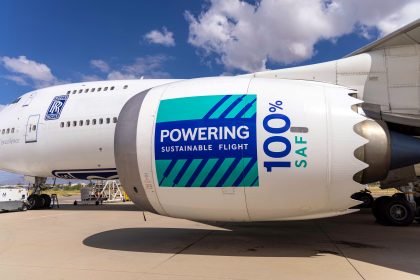 Corporate Buyers Could Help Unlock SAF Market Worth Millions of Tonnes by 2030
Get business news delivered to you everyday
Latest News

SITA Acquisition of Collins Airport Solutions Signals Moves to Consolidate Aviation Technology

Uganda Coffee Roasters Tap Richard Rugaya as Executive Director, with Focus on Commercial Growth

Equity Bank Reports UGX37.6 Billion in Green Loans as Uganda Seeks to Scale Climate Investment

Why Africa’s Institutions Must Turn Knowledge and Investment into Farmer Prosperity

Forbes ranks MTN Group third globally on best telecom employer list

Stanbic experts offer investment insights to navigate current market uncertainty

Africa Carbon Markets Urged to Turn Potential into Investment and Delivery

Bank of Uganda hikes base rate from 9.75% to 12% amidst global tensions

Airbus sees USD420bn Global Aviation Services Boom: Can Africa Capture its Share?

Nile Breweries Celebrates 75 Years of Growing with Uganda