

Youth symposium hands governance and development blueprint to Johannesburg leadership
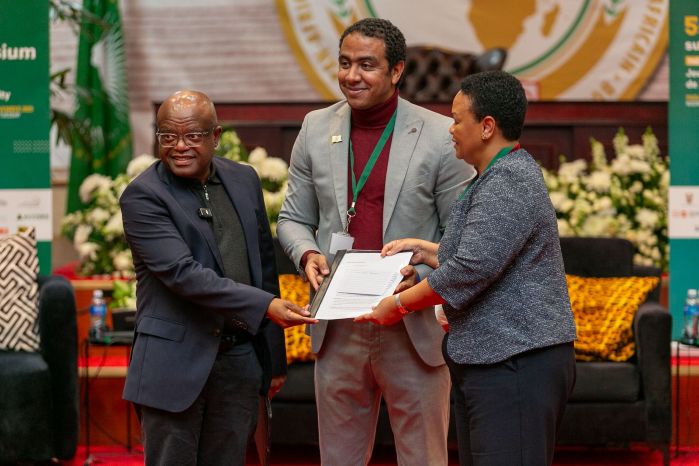
The 5th African Youth Symposium in Johannesburg brought together young leaders from across the continent to define actionable strategies for youth participation in governance, peacebuilding, and economic development, culminating in a report delivered to the city’s mayor.
The 5th African Youth Symposium concluded in Johannesburg with the presentation of its final outcomes to Executive Mayor Dada Morero and Ambassador Marie-Antoinette Vilakazi, Chairperson of the African Peer Review Mechanism (APRM). The two-day gathering at the Pan-African Parliament brought together youth delegates, AU officials, policymakers and civil society leaders under the theme “Youth in Governance: From Promise to Prosperity.”
Held as part of the APRM’s continued efforts to deepen youth engagement in governance across the continent, the symposium combined high-level dialogue with structured technical sessions. Senior officials from the Pan-African Parliament, the African Youth Union, the National Youth Development Agency of South Africa, the Office for Women, Youth and Persons with Disabilities, and several former AU leaders participated, underscoring the weight of the agenda.
The programme featured academic and political roundtables, youth-led innovation showcases, direct engagements with AU decision-makers, and a dedicated exhibition highlighting initiatives driven by young Africans across the continent.
Working groups convened around five core pillars.
The Peace and Security cluster explored mechanisms for strengthening youth participation in peacebuilding and early warning systems, particularly in the continent’s conflict hotspots. The Generation Z and Governance pillar examined digital tools and institutional reforms needed to create more youth-responsive governance systems. The Development and Employment discussions focused on economic inclusion, entrepreneurship, and policies to reduce unemployment. Delegates also conducted a substantive review of the African Youth Charter in the context of AU Agenda 2063. A final pillar on Restorative Justice debated reparations, colonial legacy and strategies for advancing economic justice.
Hassan Ghazaly, a member of the APRM Focal Point Committee who coordinated the delivery of the final report, played a facilitative role throughout the event, helping consolidate inputs from the various thematic groups. Presenting the summary recommendations, he said the outcomes represented a collective demand for more accountable and inclusive governance. “Moving from promise to prosperity requires courage, solidarity and the willingness to reform,” he noted, calling on AU leaders to prioritise youth-centred governance and action in regions experiencing instability, including Sudan, eastern DRC and the Sahel.
Delegates also urged reforms to reduce barriers to political participation—such as high candidacy fees—and emphasised the need to address youth unemployment, skills mismatches and the social vulnerabilities associated with both. Economic recommendations focused on strengthening entrepreneurship ecosystems, expanding support to national youth development agencies, operationalising AfCFTA and PAPSS, and shifting African economies from raw-material exports to value-added manufacturing anchored in science and technology.
The final outcomes, now formally handed to Johannesburg leadership and the APRM, will feed into ongoing governance processes across the continent. Delegates closed the symposium with a renewed commitment to shaping a more peaceful, prosperous and unified Africa through sustained youth participation and accountable leadership.
Related Posts
 Uganda Emerges as Africa’s Largest Organic Farming Country as Exports Reach USD225 Million
 Uganda Coffee Roasters Tap Richard Rugaya as Executive Director, with Focus on Commercial Growth
 Why Africa’s Institutions Must Turn Knowledge and Investment into Farmer Prosperity
 Forbes ranks MTN Group third globally on best telecom employer list
 Stanbic experts offer investment insights to navigate current market uncertainty
 Africa Carbon Markets Urged to Turn Potential into Investment and Delivery
Get business news delivered to you everyday
Latest News

Stanbic Seeks Northern Uganda Business Feedback as It Marks 35 Years in Country

Uganda Emerges as Africa’s Largest Organic Farming Country as Exports Reach USD225 Million

SITA Acquisition of Collins Airport Solutions Signals Moves to Consolidate Aviation Technology

Uganda Coffee Roasters Tap Richard Rugaya as Executive Director, with Focus on Commercial Growth

Equity Bank Reports UGX37.6 Billion in Green Loans as Uganda Seeks to Scale Climate Investment

Why Africa’s Institutions Must Turn Knowledge and Investment into Farmer Prosperity

Forbes ranks MTN Group third globally on best telecom employer list

Stanbic experts offer investment insights to navigate current market uncertainty

Bank of Uganda hikes base rate from 9.75% to 12% amidst global tensions

Corporate Buyers Could Help Unlock SAF Market Worth Millions of Tonnes by 2030