

Uganda weathers global oil shock as pump prices rise modestly amid Middle East tensions
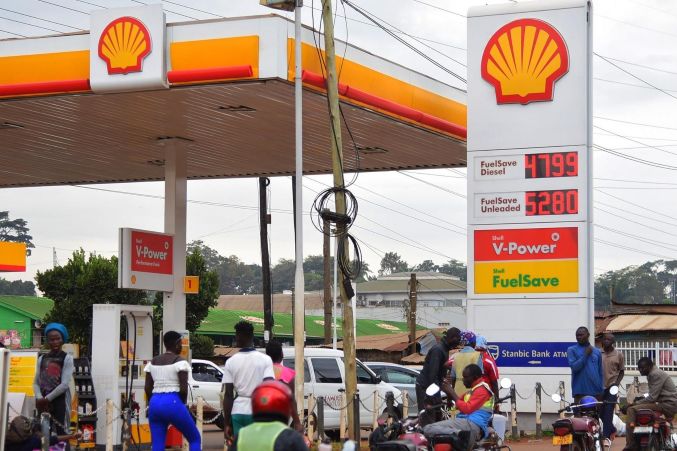
Uganda’s fuel prices have risen modestly by about 5 pc amid Middle East tensions, but strong fuel reserves and reforms led by the Uganda National Oil Company have helped cushion the country from sharper global shocks.
Uganda’s fuel pump prices have edged up by an average of 5 percent, as global energy markets react nervously to escalating tensions in the Middle East. However, analysts note that the increases remain moderate and well below the highs recorded before the Uganda National Oil Company (UNOC) assumed control of bulk petroleum procurement in July 2024.
At the peak of earlier price volatility, petrol prices in Uganda surged to about UGX 5,600 per litre, while diesel reached UGX 5,300. Current price movements, though upward, are still trending below those levels—suggesting a degree of insulation from global shocks that had previously transmitted directly into the domestic market.
The latest wave of uncertainty was triggered by joint military action involving the United States and Israel against targets in Iran beginning February 28, 2026. The conflict, now stretching into its fifth week, has disrupted critical energy infrastructure across the region and heightened fears of supply constraints. Of particular concern is Iran’s tightening grip over the Strait of Hormuz—a vital corridor through which roughly 20 percent of global oil supplies pass.
Despite these pressures, Uganda appears to be holding steady. Government officials say the country has sufficient fuel reserves to maintain supply for at least two months, cushioning consumers from the full impact of the global turmoil. This resilience has been attributed largely to UNOC’s centralised procurement model, which has reduced speculative pricing behaviour by oil marketing companies.
Data from global monitoring platform GlobalPetrolPrices.com shows that, as of March 23, 2026, petrol in Uganda averaged UGX 4,950 per litre, while diesel stood at UGX 4,690. These figures compare favourably with global averages of approximately UGX 5,283 for petrol and UGX 5,411 for diesel over the same period.
Speaking March 25, Energy Minister Ruth Nankabirwa pushed back against recent price increases at the pump, arguing they are not justified by underlying supply costs. She noted that there had been no upward adjustment in the price at which oil marketers lift products from UNOC, suggesting that recent hikes may be driven more by market sentiment than actual supply constraints.
Industry insiders point instead to exchange rate pressures, with some marketers reportedly adjusting prices in anticipation of a weakening Ugandan shilling against the US dollar. Such hedging behaviour, they argue, is contributing to the current upward drift in pump prices.
“Currently, there should be no reason for marketing companies to exploit the situation to escalate pump prices,” Nankabirwa said.
Looking ahead, supply risks appear contained. In a joint statement issued on March 30, the Uganda National Oil Company (UNOC) and the Ministry of Energy said that, as of March 27, Uganda’s fuel stock levels and inland supply chain remained stable and sufficient to meet short-term national demand.
Available stocks for distribution stood at approximately 81 million litres of petrol, 80 million litres of diesel, and 18.5 million litres of Jet A-1. “These volumes translate to about 22 days of stock cover for petrol, 23 days for diesel, and 30 days for Jet A-1, effectively sustaining the country through to the end of April 2026,” the statement said.
In addition, 195 million litres of petrol, 155 million litres of diesel, and 24 million litres of Jet A-1 are expected to be delivered during April. These incoming volumes will extend stock cover by an estimated 52 days for petrol, 44 days for diesel, and 39 days for Jet A-1, further reinforcing supply stability.
Regionally, Uganda’s fuel prices remain competitive. Kenya continues to post the highest pump prices in East Africa, with petrol averaging UGX 5,116 per litre and diesel UGX 4,782. Rwanda follows with petrol at UGX 5,015 and diesel at UGX 5,000, while Burundi’s prices hover at UGX 5,048 for petrol and UGX 4,953 for diesel. Tanzania, benefiting from a different procurement model, records the lowest prices in the region, with petrol at UGX 4,173 and diesel at UGX 4,165.
Globally, the price shock has been far more pronounced in advanced economies. Diesel prices have surged to the equivalent of UGX 10,663 per litre in Singapore, UGX 15,583 in Hong Kong, and UGX 8,385 in the United Kingdom—underscoring the uneven impact of the crisis across markets.
Nankabirwa credited President Yoweri Museveni for championing reforms that enabled UNOC to partner with international suppliers such as Vitol Bahrain, helping diversify Uganda’s fuel supply chain and reduce exposure to geopolitical disruptions.
With global oil prices climbing past $100 per barrel in recent weeks, Uganda’s experience suggests that structural reforms in procurement and supply management may be playing a decisive role in shielding the domestic market from external shocks for now.
Related Posts
 China’s GPMI Interface Leapfrogs HDMI, USB With 192Gbps Speeds and 480W Power
 Stanbic Seeks Northern Uganda Business Feedback as It Marks 35 Years in Country
 Uganda Emerges as Africa’s Largest Organic Farming Country as Exports Reach USD225 Million
 SITA Acquisition of Collins Airport Solutions Signals Moves to Consolidate Aviation Technology
 Uganda Coffee Roasters Tap Richard Rugaya as Executive Director, with Focus on Commercial Growth
 Equity Bank Reports UGX37.6 Billion in Green Loans as Uganda Seeks to Scale Climate Investment
Get business news delivered to you everyday
Latest News

China’s GPMI Interface Leapfrogs HDMI, USB With 192Gbps Speeds and 480W Power

Stanbic Seeks Northern Uganda Business Feedback as It Marks 35 Years in Country

Uganda Emerges as Africa’s Largest Organic Farming Country as Exports Reach USD225 Million

SITA Acquisition of Collins Airport Solutions Signals Moves to Consolidate Aviation Technology

Uganda Coffee Roasters Tap Richard Rugaya as Executive Director, with Focus on Commercial Growth

Why Africa’s Institutions Must Turn Knowledge and Investment into Farmer Prosperity

Forbes ranks MTN Group third globally on best telecom employer list

Stanbic experts offer investment insights to navigate current market uncertainty

Africa Carbon Markets Urged to Turn Potential into Investment and Delivery

Bank of Uganda hikes base rate from 9.75% to 12% amidst global tensions