

Uganda earns US$31 million in landmark Green Climate Fund payment for cutting deforestation
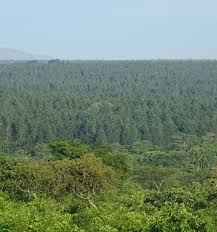
Uganda has received US$31 million from the Green Climate Fund (GCF) in recognition of its measurable progress in reducing deforestation and greenhouse gas emissions — a landmark achievement that marks the first results-based payment of its kind on the African continent.
The disbursement follows Uganda’s verified performance under the “Uganda REDD-plus Results-Based Payment for Emission Reductions (2016–2017)” programme, through which the country reduced net emissions by more than eight million tonnes of carbon dioxide. This accomplishment, equivalent to nurturing the growth of roughly 133 million tree seedlings for a decade, highlights Uganda’s growing leadership in climate-smart forestry and sustainable land management.
The achievement was made possible through a multi-stakeholder effort involving the Food and Agriculture Organization of the United Nations (FAO), the Ministry of Water and Environment, and a broad coalition of development partners and local communities. Together, they strengthened Uganda’s forest monitoring systems, enhanced community participation in conservation, and promoted sustainable livelihoods that reduce pressure on forests.
According to the Ministry of Water and Environment, the US$31 million will be reinvested in expanding sustainable land management and agroforestry initiatives, restoring degraded forest reserves, and supporting the establishment of community and smallholder woodlots. Additional investments will go into scaling up climate-smart fuelwood production and strengthening Uganda’s monitoring, reporting, and verification systems to ensure continued transparency and accountability in tracking emissions reductions.
Officials say the payment underscores Uganda’s progress toward achieving its Nationally Determined Contributions (NDCs) under the Paris Agreement, reaffirming forests as a cornerstone of the country’s climate resilience and sustainable development strategy.
Commentators say the milestone reinforces the notion that forests are not just ecological assets but can be economic and social foundations for climate resilience and inclusive growth.
Uganda’s success sets a precedent for the continent, demonstrating that results-based climate finance can drive both environmental protection and community development when national policy, international partnership, and local action converge.
Related Posts
 Uganda Emerges as Africa’s Largest Organic Farming Country as Exports Reach USD225 Million
 Uganda Coffee Roasters Tap Richard Rugaya as Executive Director, with Focus on Commercial Growth
 Why Africa’s Institutions Must Turn Knowledge and Investment into Farmer Prosperity
 Forbes ranks MTN Group third globally on best telecom employer list
 Stanbic experts offer investment insights to navigate current market uncertainty
 Africa Carbon Markets Urged to Turn Potential into Investment and Delivery
Get business news delivered to you everyday
Latest News

China’s GPMI Interface Leapfrogs HDMI, USB With 192Gbps Speeds and 480W Power

Stanbic Seeks Northern Uganda Business Feedback as It Marks 35 Years in Country

Uganda Emerges as Africa’s Largest Organic Farming Country as Exports Reach USD225 Million

SITA Acquisition of Collins Airport Solutions Signals Moves to Consolidate Aviation Technology

Uganda Coffee Roasters Tap Richard Rugaya as Executive Director, with Focus on Commercial Growth

Equity Bank Reports UGX37.6 Billion in Green Loans as Uganda Seeks to Scale Climate Investment

Why Africa’s Institutions Must Turn Knowledge and Investment into Farmer Prosperity

Forbes ranks MTN Group third globally on best telecom employer list

Stanbic experts offer investment insights to navigate current market uncertainty

Bank of Uganda hikes base rate from 9.75% to 12% amidst global tensions