

Sustainable architecture, creative economy, take centre-stage at USA annual symposium
Architects, creatives, policymakers, and cultural thought leaders, converged in Kampala on September 11 for the Uganda Society of Architects’ annual symposium, which this year explored how sustainable architecture and the creative economy can accelerate Uganda’s GDP growth.
Jointly organized by the Uganda Society of Architects (USA) and the Uganda Parliamentary Forum on Creative Industries (UGAPAFOCI), the one-day dialogue was held under the theme “Sustainable Architecture and the Creative Economy: Driving Uganda’s GDP Growth through Design, Film, Music, Fashion, Digital Media and Cultural Heritage.”
Tradition Meets Modernity
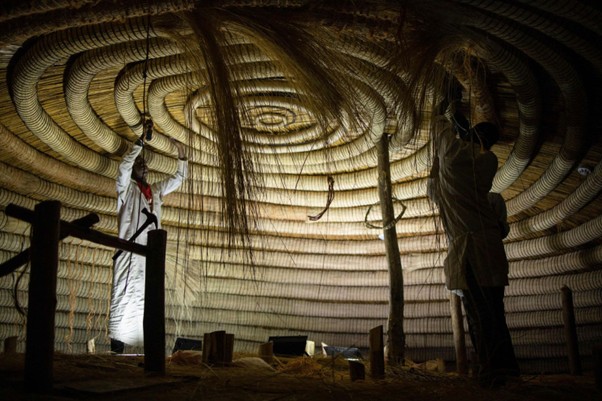
Tunisian architect and keynote speaker Fida Sassi, urged African nations to draw inspiration from indigenous building practices. “Traditional African architecture is more energy efficient and sustainable than modern materials. By integrating indigenous materials such as stabilised earth bricks into contemporary design, we can build for Africa’s climate while cutting energy costs,” she said.
Indigenous building materials have better thermal properties, resulting in buildings that don’t require the elaborate heating and colling systems, typical of new age construction materials, resulting into a lower carbon footprint, Sassi explained.
Her remarks resonated in Uganda, where concerns over energy use, environmental sustainability, and cultural identity are rising amidst rapid urbanisation.
Architecture as Identity and Heritage
According to James Wasula, Executive Director of UGAPAFOCI, architecture represents more than physical structures — it embodies culture, heritage, and national identity. “The most visited cities in the world – Paris and Rome – are known for their built heritage: the Eiffel Tower, the Colosseum. In Uganda, sites such as the Kasubi Tombs remain underutilised in national branding,” he noted.
Wasula cautioned that cultural expression in Uganda, and Africa more broadly, is too often misunderstood or dismissed as “witchcraft,” limiting the continent’s ability to harness heritage to inform modern practices in architecture and creative industries.
Architects Seek Their Place in the Economy
In her welcome remarks, Jacqueline Namayanja, President of the Uganda Society of Architects, emphasised the profession’s interconnectedness with other creative fields.
“We don’t work in a bubble. For galleries, theatres and production homes, we consult artists and filmmakers. For hospitals, we consult medical professionals. Architecture stretches everywhere,” Namayanja said.
She stressed that the symposium sought to identify both challenges and opportunities. “Ultimately, we are trying to find our place in the economy,” she added.
Namayanja further explained that the Uganda Society of Architects plays a key role in uniting professionals, lobbying for better policy, and ensuring capacity building across generations. Partnering with Parliament’s creative industries forum, she said, was vital in situating architecture within the broader creative economy agenda.
Linking Creativity to GDP Growth
The symposium underscored that architecture — alongside film, fashion, music, digital media, and cultural heritage — holds untapped potential for Uganda’s economy. By framing creative sectors as economic drivers rather than peripheral activities, organisers hope to influence policy, investment, and regulation.
Namayanja closed with a call to action: “We are a diverse gathering today, and opportunities fill the air. Take hold of them and go big.”
Related Posts
 Africa Carbon Markets Urged to Turn Potential into Investment and Delivery
 Corporate Buyers Could Help Unlock SAF Market Worth Millions of Tonnes by 2030
 Airbus sees USD420bn Global Aviation Services Boom: Can Africa Capture its Share?
 Nile Breweries Celebrates 75 Years of Growing with Uganda
 Nawangwe Urges Architects to Document Uganda’s Built Heritage
 Stanbic installs solar power system at Mbale School for the Deaf
Get business news delivered to you everyday
Latest News

Africa Carbon Markets Urged to Turn Potential into Investment and Delivery

Bank of Uganda hikes base rate from 9.75% to 12% amidst global tensions

Corporate Buyers Could Help Unlock SAF Market Worth Millions of Tonnes by 2030

Airbus sees USD420bn Global Aviation Services Boom: Can Africa Capture its Share?

Nile Breweries Celebrates 75 Years of Growing with Uganda

Nawangwe Urges Architects to Document Uganda’s Built Heritage

NWSC Seeks Grundfos Partnership to Manufacture Pumps, Spare Parts in Uganda

Airbus-Kratos Valkyrie Unmanned Combat Aircraft Completes First Flight Ahead of 2029 Combat Target

Uganda to Host 2027 Global Water Congress as NWSC Targets Better Services

Lt Gen Frederick Alexander Okecho: The Gallant Soldier Who Knew When to be Still