

Stanbic widens Unsecured Credit offering as Digital Lending targets Households, Farmers and Businesses
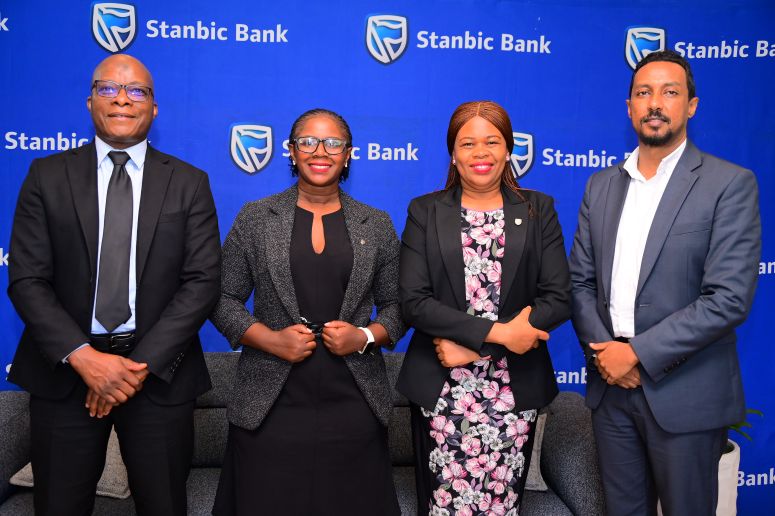
Stanbic Bank Uganda is widening access to unsecured credit, offering loans of up to UGX350 million while using digital channels to speed up lending for households, entrepreneurs and farmers.
Stanbic Bank Uganda is expanding access to unsecured credit, combining higher borrowing limits with faster digital loan processing as it seeks to reach households, entrepreneurs and farmers with financing needs.
The move, launched under a revamped Oli in Charge campaign, comes as households prepare for the third school term and businesses and farmers enter the final quarter of the year with financing needs ranging from working capital to agricultural investment.
Under the enhanced offering, salaried customers can access unsecured loans of up to UGX350 million, repayable over a period of up to 120 months. Non-salaried customers, including entrepreneurs and farmers, can access unsecured financing of up to UGX250 million.
The bank is also pushing digital channels as a key route to expanding access to credit. Customers can apply for loans through the Stanbic Mobile App and USSD platform, with loan decisions available in as little as two minutes, according to the bank.
Yvone Namutosi, Head of Digital and E-Commerce at Stanbic Bank Uganda, said the shift was intended to reduce the friction traditionally associated with borrowing.
“At Stanbic, we are reimagining how customers access credit. Through our digital platforms, customers can apply for a loan from wherever they are and receive a response in as little as two minutes,” Namutosi said.
The bank said digital lending reduces paperwork and the need for customers to visit branches, while allowing borrowers to manage their finances remotely.
The campaign also provides for Instant Cash loans of up to UGX5 million through Stanbic Mobile Banking, with eligible customers benefiting from interest-free access under the campaign terms.
The focus on smaller digital loans is significant for customers facing short-term liquidity requirements, while the larger unsecured facilities are positioned to support longer-term household and business financing needs.
Stanbic is also encouraging customers to use its digital platforms for school-fee payments and other essential transactions. Its mobile app, USSD platform, internet banking and agency network provide alternatives to cash-based payments and branch visits.
Sylvia Atuhairwe, Head of Distribution at Stanbic Bank Uganda, said the initiative was designed around the different financial pressures facing customers.
“Behind every loan application is a parent preparing for a school term, a business owner seeking to expand, a farmer investing in production, or a family planning for the future,” Atuhairwe said.
The expansion of unsecured lending comes as banks increasingly use digital channels to widen access to financial services while lowering the time and administrative costs associated with conventional credit.
For entrepreneurs and farmers, the availability of unsecured financing can be particularly relevant where borrowers may have viable business or production opportunities but limited conventional collateral.
Stanbic is, however, pairing the expanded lending proposition with insurance protection, arguing that increased access to credit should be accompanied by measures to protect borrowers and their families against unforeseen risks.
Dogo Singh, Insurance Manager at Stanbic Bank Uganda, said financial protection should form part of the borrowing decision.
“A loan can help you acquire an asset, invest in a business, or achieve an important personal goal, but insurance helps ensure that those achievements are protected,” Singh said.
The campaign forms part of Stanbic’s wider 35th anniversary activities in Uganda, with the bank highlighting its focus on financial inclusion, enterprise development and digital banking.
The latest push illustrates how competition in Uganda’s banking sector is increasingly moving beyond the availability of credit to the speed, convenience and accessibility with which customers can obtain and manage it.
For the broader industry, the challenge will be to translate faster digital credit into productive borrowing while maintaining responsible lending and ensuring that expanded access contributes to household resilience, enterprise growth and agricultural production.
Related Posts
 SITA Acquisition of Collins Airport Solutions Signals Moves to Consolidate Aviation Technology
 Uganda Coffee Roasters Tap Richard Rugaya as Executive Director, with Focus on Commercial Growth
 Equity Bank Reports UGX37.6 Billion in Green Loans as Uganda Seeks to Scale Climate Investment
 Why Africa’s Institutions Must Turn Knowledge and Investment into Farmer Prosperity
 Stanbic experts offer investment insights to navigate current market uncertainty
 Africa Carbon Markets Urged to Turn Potential into Investment and Delivery
Get business news delivered to you everyday
Latest News

SITA Acquisition of Collins Airport Solutions Signals Moves to Consolidate Aviation Technology

Uganda Coffee Roasters Tap Richard Rugaya as Executive Director, with Focus on Commercial Growth

Equity Bank Reports UGX37.6 Billion in Green Loans as Uganda Seeks to Scale Climate Investment

Why Africa’s Institutions Must Turn Knowledge and Investment into Farmer Prosperity

Forbes ranks MTN Group third globally on best telecom employer list

Stanbic experts offer investment insights to navigate current market uncertainty

Bank of Uganda hikes base rate from 9.75% to 12% amidst global tensions

Corporate Buyers Could Help Unlock SAF Market Worth Millions of Tonnes by 2030

Airbus sees USD420bn Global Aviation Services Boom: Can Africa Capture its Share?

Nile Breweries Celebrates 75 Years of Growing with Uganda