

Stanbic Business Incubator concludes training for first cohort of Green Transformation Project

The Stanbic Business Incubator Limited (SBIL) has completed training for the first cohort under the Green Businesses and Jobs for the Green Transformation Project, marking a key milestone in efforts to strengthen women-led enterprises advancing environmental sustainability.
The programme, implemented in partnership with GIZ and the Ministry of Gender, Labour and Social Development, supports green entrepreneurship in Kenya, Tanzania, and Uganda. It forms part of the broader Women for the Green Transformation in Africa (WE4D) initiative funded by the Government of Norway and the European Union.
During the final session in Kampala, 32 women-led enterprises pitched business plans outlining how they intend to enhance access to finance, improve operational efficiency, and scale their environmental impact. The two-month training exposed participants to financial literacy, governance systems, value chain development, and efficiency tools aimed at reducing operating costs.
Fatumah Kayaga Ntanzi, GIZ Programme Coordinator at SBIL, said the judging panel assessed the entrepreneurs’ grasp of the training content, readiness to apply the lessons, and commitment to transforming their operations. “Thirty-two businesses have successfully completed this phase and pitched before the judges,” she said.
The project focuses on strengthening enterprises in renewable energy, circular economy, waste management, blue economy, ecotourism, and sustainable agriculture. Over its two-year cycle, it will run four cohorts featuring classroom sessions, workshops, coaching, and site visits.
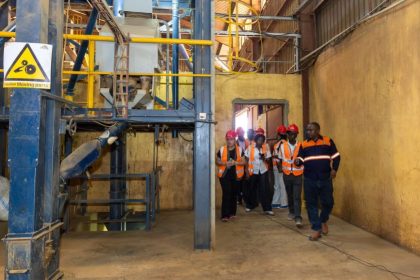
Kayaga noted that the programme was delivered with support from Regenerate Africa and included exposure visits to leading businesses such as Sumz Food Industries. The next phase will involve linking entrepreneurs to financing opportunities and investor networks, including venture capital firms.
Regenerate Africa’s Executive Director, Charles Kabiswa, said the initiative is helping more SMEs adopt greener business models. “It is inspiring to see businesses embracing sustainability—whether in renewable energy, sustainable agriculture, circular solutions, or waste management.”
Participants reported increased confidence and practical skills. Veronica Nandugwa Brenda, CEO of Yoola Kasasilo, said the programme motivated her to scale her waste-to-fertiliser model nationally. Dr. Proscovia Athieno, founder of Aroza Group Limited, said she had learned actionable approaches to reducing her company’s carbon footprint while strengthening community impact.
Related Posts
 Independence Marathon Turns to Blood Storage Gap in Maternal Health Drive
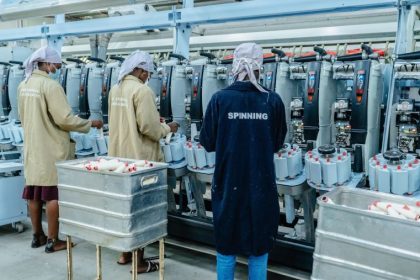 Fine Spinners Injects Fresh USD5m Into Technology as Uganda Textile Maker Targets African, European Markets
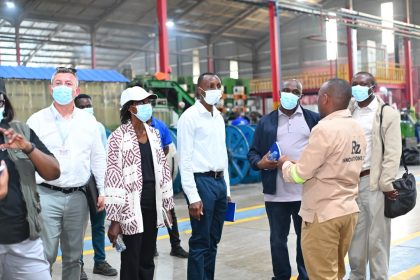 Equity Trade Mission Puts Uganda’s Manufacturing Capacity to Regional Test
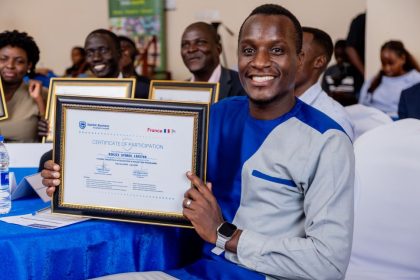 Uganda Green Entrepreneurs Set for Paris Visit as Stanbic-France Partnership Graduates 106
 Entebbe Airport Passenger Traffic Recovers in August but Remains Below 2025 Levels
 Equity Bank Explores Value-Chain Financing to Support Zigoti Coffee Expansion
Get business news delivered to you everyday
Latest News

Independence Marathon Turns to Blood Storage Gap in Maternal Health Drive

Fine Spinners Injects Fresh USD5m Into Technology as Uganda Textile Maker Targets African, European Markets

Equity Trade Mission Puts Uganda’s Manufacturing Capacity to Regional Test

Uganda Seeks to Calm Coffee, Cocoa Markets as Global Prices Fluctuate on Positive Sentiment

Uganda Green Entrepreneurs Set for Paris Visit as Stanbic-France Partnership Graduates 106

Entebbe Airport Passenger Traffic Recovers in August but Remains Below 2025 Levels

Nile Breweries, Next Media Renew Road Safety Push with Focus on Boda Boda Riders

Uganda Breaks Ground on USD310m Kampala Fuel Terminal, Targets September 2028 Completion

Uganda Will Not Close Its 2.4-Million-Unit Housing Deficit with Ribbon-Cuttings in Kira

Nairobi’s 2029 World Athletics Win Draws Doping Scrutiny in UK Media