

Isaiah Rwanyekiro: Wearing my Scars with Pride After Years of Battling Cancer
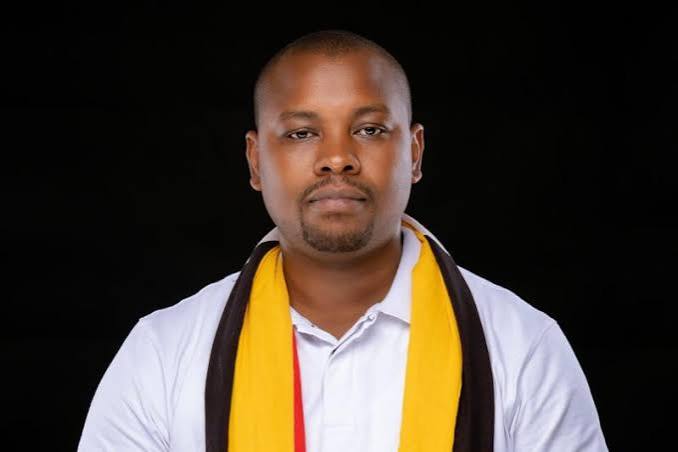
At a time when conversations about cancer often focus on diagnosis, treatment and survival, Isaiah Jobs Rwanyekiro offers a different perspective. Nearly a decade after his colorectal cancer diagnosis, the founder and chief executive of Breathtaking Uganda says his journey has taught him that survival is not simply about overcoming illness, but also about finding purpose, embracing life’s scars and refusing to let adversity define one’s identity.
In a deeply personal account, Rwanyekiro reflects on the medical interventions, family sacrifices, friendships and faith that have sustained him through years of treatment. He also explains how his ambition to build Breathtaking Uganda into a tourism and media enterprise has given him a reason to keep moving, even as he continues to navigate the demands of living with cancer.
His message is neither a plea for sympathy nor a celebration of suffering. It is a testament to resilience, gratitude and the conviction that life’s most difficult battles need not extinguish one’s dreams or take away one’s smile.
Isaiah Jobs Rwanyekiro – CEO and Founder, Breathtaking Uganda
10th Year Colon Cancer Survival Story
Part One: MY JOURNEY
Today, I want to share a story I rarely talk about. Not because I am ashamed of it. Far from it.
I simply do not enjoy being seen as a victim or as a sob story. I share this not for pity, but for perspective and to encourage everyone out there who might be going through the same or through equally life-challenging situations to take heart and soldier on, where possible, with a smile.
When I was in India in June 2018, preparing for one of the biggest battles of my life, I came across a message from a Japanese philosopher who encouraged people to wear their scars with pride.
He said scars are proof that you have been tried, tested and emerged victorious — that your battles did not defeat you.
Scars are proof of concept. They are evidence that you have been there, done that, seen it all, and by God’s grace, you are still here, alive and able to tell your story.
My first diagnosis with low anterior colorectal cancer came in late 2017, but, to be honest, I had been feeling not so well way before that, as early as perhaps 2015.
Immediately this was confirmed, we quietly got together with family and friends and organised resources for me to travel to India with my younger sister Rose for further comprehensive tests, staging and all the necessary interventions that the specialists would prescribe to arrest my colon cancer.
As soon as we got to India later in June 2018, and before my surgery later that year on 25th October, 2018, I underwent adjuvant (pre-surgery) chemotherapy and 28 fractions of radiotherapy spread over about 40 days. The objective was to shrink the tumour and make it easier to operate upon.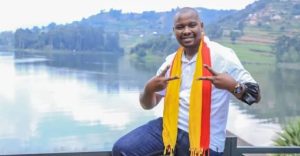
Therefore, in June 2018, Rose and I travelled to India, where I was placed under the care of an exceptional sphincter-saving surgical oncologist, Sir Dr. Ibrahim Mohammed — a man I proudly refer to as one of my life’s heroes and saviours.
Among the many medical experts I have encountered over the years (Prof. Dr. Anita Ramesh, clinical oncologist; Dr. Gupta, radiology oncologist; Dr. Fred Okuku, Ugandan consultant oncologist; Dr. Alex Bakenga, consultant oncologist; Dr. Patson Makobore, Najera Hospital; and Dr. Niwagaba and Dr. Emmanuel Byaruhanga, family friend doctors), few have impacted my life as profoundly as he did.
It is because of his extraordinary surgical skills, his dedication and his care that I am still here today, plus, of course, the combined efforts of all the other above-mentioned doctors — alive, smiling and able to tell my story.
For that, I shall always remain grateful.
Since then, many people have often asked me:
“Isaiah, how do you go through so much pain and so many medical challenges, yet somehow it rarely shows?”
My answer is always simple.
First, God’s grace.
Second, perhaps those resilient Bakiga and other tribes that form part of my DNA.
And third, the incredible men and women in medicine whom God uses to perform His work here on earth.
One of my doctors, Dr. Fred Okuku, often greets me with a smile and jokingly asks:
“So, how is Isaiah, the walking miracle, doing today?”
Over the years, despite everything, he has never really known me as a hospital bed patient. Regardless of what the reports or scans may say, I somehow always walk into his office smiling and covered in God’s grace.
Some days I am doing chemotherapy in Kampala at the Uganda Cancer Institute Fred Hutch Global Oncology Centre’s private clinics, and the next day I am somewhere in Murchison Falls National Park chasing dreams, building Breathtaking Uganda and creating memories.
And perhaps that is the greatest lesson I have learnt: Do not allow pain to become your identity.
Part Two: A PURPOSE-DRIVEN LIFE
Find something that gives you a reason to wake up every morning.
Find something that excites you.
Find something that keeps your spirit alive.
For me, that reason is Breathtaking Uganda.
Breathtaking Uganda is deeply personal to me. It is more than a company. It is more than a brand. It is a dream, a calling and a mission that God placed on my heart.
Every morning, it gives me a reason to keep going.
To connect one more dot. To make one more phone call. To secure one more partnership. To take one more step towards building Breathtaking Uganda into a tourism and media conglomerate that will hopefully outlive me.
Even on difficult days, when the body may be weak and the challenges seem overwhelming, the vision itself keeps me moving.
Because purpose has a remarkable ability to help you live beyond your pain.
Yes, the pain may still be there. Yes, the scars may remain. But when your life is anchored in purpose, your struggles become chapters in your story — not the title of your life.
Wear your scars with pride.
That is why I have never tried to hide my protruding colostomy bag. Ironically, many uninformed people mistake it for some kind of waist pistol holster.
I simply smile and move on.
And that is only part of the story.
Since October 2025, I have also been living with bilateral nephrostomy tubes in my back, inserted in both kidneys. Since my operation in 2018, I have had a titanium chemotherapy port implanted in my chest.
It is this chemo port that, every two weeks since November 2025, is used to infuse chemotherapy drugs into my body in sessions that usually take up to 10 hours on average.
These are daily reminders of battles fought, but I refuse to see them as symbols of defeat.
To me, they are badges of survival.
Perhaps because I do not focus much on these things, most people I meet and interact with rarely even notice them.
Life has taught me that people often see what you teach them to see.
If you constantly define yourself by your wounds, the world will do the same. But if you define yourself by your purpose, your dreams and your spirit, people will remember those things far more than they remember your scars.
And perhaps that is why I rarely speak publicly about this side of my life-threatening challenges.
Not because I am ashamed. Far from it.
I simply do not enjoy being seen as a victim or as a sob story.
I share this not for pity, but for perspective.
Because if my journey encourages even one person not to give up, then every scar has served a purpose.
 Part Three: ACKNOWLEDGEMENTS
And perhaps no testimony of mine would ever be complete without acknowledging the people God placed around me.
My mum, Lillian Mary; brothers and sisters Annette, David, Denitz, Julius, Rose and Christine; and the extended family — my nieces and cousins, uncles and aunties — and a long list of friends.
The list of friends is long and, at the risk of forgetting and alienating some, let me mention a few: Vince Mutahunga, Julius Rutukura, Wilfred Musinguzi, Roland Mwesigwa, David Mushabe, Sonia, Phibz Kankazi, Shakira, Mutuzo, GW Kasekende, Gibbs, Becky, Big Phil, Mzee Mayanja, Edonyu, Frank Kweronda, Allan Aturinda, Stephen Rwebagira and Collins Tusiime.
And my Lions Class of St. Mukasa Preparatory Seminary, headed by Daniel Ebyarimpa, and all the gallant lions that support and check on me daily.
My tourism sector buddies Isa Kato, Yogi Birigwa, Mackay Mwebingwa, Muhiire, Nicholas Bampata, Bruce Muhame Kariisa and Sarah Kagingo, to mention a few.
My business partners Collins Mugume, Edna Kainomugasho, Muhereza Kyamuteteera, Bernard Ology and Nancy Karunganwa.
And here, St. Kyamuteteera, Vince, Tinywana and Wilfred, among others, deserve special mention for openly leading a ‘digital campaign’ to help me raise funds to go back to India for “another rap”.
My extended family friends and uncles and aunties, the Kamuhandas, Alice and family, the Mugaruras, Owiny-Dollo family and the Bitarabehos, to mention but a few.
My former workmates, RP family and Uganda Media Centre family — Emma, Dennis, Obed, Tinywana, Landa, James, Patrick, Kabob, Ben B, Jalina, Afande Bruno T and Ubaldo Bamunoba, to mention a few.
And finally, the Ibanda-Kagongo community, led by Geoffrey, Julius Katagwenda, Pat and Busingye Kafiire, the Kakundura family, the Tinka family, to once again mention but a few, and a long list of priest friends led by Msgr JB Kauta, Fr. Mutambi, Fr. Paul Byaruhanga, Fr. Dr. Francis Nnaku and Fr. Charles Nuwagaba, to once again mention a few.
Since late 2017, my family and friends have been my greatest anchors.
Against all odds, they have sacrificed their time, their money, their prayers and countless resources to keep me going, to keep me smiling and, quite literally, to help keep me alive.
There were moments when they believed for me when I was too tired to believe for myself.
There were moments when they prayed for me when I lacked the strength to pray.
There were moments when they carried burdens I could never have carried alone.
To all of them, I remain eternally grateful.
Because the truth is, no man survives such a journey by himself.
And so, on this day, I share this story not because I consider myself extraordinary, but because every scar tells a story of battles fought and grace received.
Perhaps this has been my own heroic journey.
Not one fought on battlefields with guns and uniforms, but one fought through hospital corridors, operating theatres, chemotherapy sessions, radiotherapy treatments, prayers, hope and an unwavering belief that tomorrow can still be better than today.
And perhaps if someone reading this is currently going through a difficult season in life, I hope my journey reminds you of one thing: Do not give up.
Keep believing.
Keep praying.
Keep fighting.
Keep dreaming.
Your current chapter is not your final chapter.
Wear your scars with pride.
They are evidence that you fought.
They are evidence that you endured.
They are evidence that your battles did not defeat you.
They are evidence that by God’s grace, you survived.
And sometimes, simply being alive and able to tell your story is victory enough.
Your scars are not signs of weakness.
They are medals earned in battles you refused to lose.
My battles gave me scars, but they never took away my smile.
— Isaiah Jobs Rwanyekiro
Founder & CEO, Breathtaking Uganda
Related Posts
 Equity Bank Unveils Richard Byarugaba as it Targets Ugandans in Kenya with Cross-border Investment Proposition
 SITA’s New eWAS+ Electronic Flight Bag Integrates Weather and Flight Operations Data for Pilots
 United Opens new Dulles Concourse as it Expands International Network
 ICEA LION Urges Stronger Employee Protection as Insurer Backs HR Conference with UGX15m
 Nissan Patrol Marks 75 Years with Exclusive Anniversary Edition for Middle East Market
 Financing Gap Hobbles Uganda’s Shift to Mercury-Free Gold Mining
Get business news delivered to you everyday
Latest News

Isaiah Rwanyekiro: Wearing my Scars with Pride After Years of Battling Cancer

Equity Bank Unveils Richard Byarugaba as it Targets Ugandans in Kenya with Cross-border Investment Proposition

SITA’s New eWAS+ Electronic Flight Bag Integrates Weather and Flight Operations Data for Pilots

United Opens new Dulles Concourse as it Expands International Network

ICEA LION Urges Stronger Employee Protection as Insurer Backs HR Conference with UGX15m

Stanbic Alerts Customers to Tighter OTC Transaction Limits Ahead of January 2027 Changes

Nissan Patrol Marks 75 Years with Exclusive Anniversary Edition for Middle East Market

Equity’s MSME Financing Helps Fill the Missing Middle in Uganda’s Economy

Commonwealth Study finds AI Could add USD900m to Uganda’s GDP by 2036

Equity Group Reports UGX3.1 trillion in Sustainability Investments