

Small Stove, Big Dividend: How Clean Cooking is Rewriting Rural Uganda’s Economy
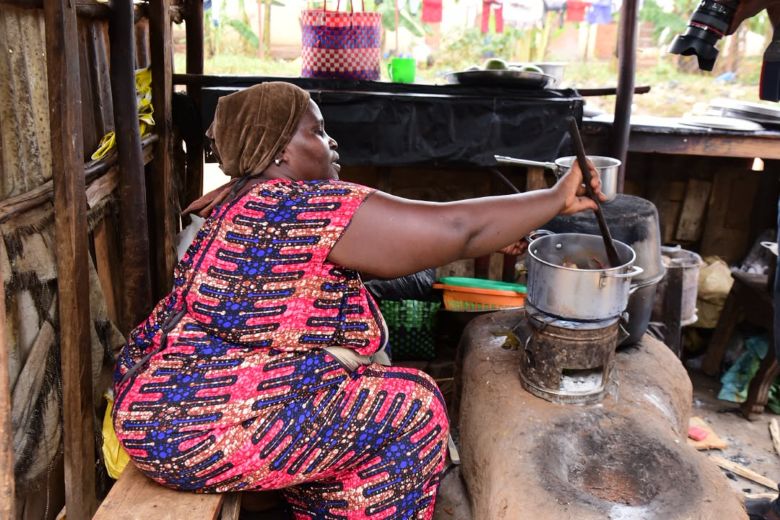
Fuel-efficient eco-stoves are delivering more than cleaner kitchens across rural Uganda; cutting fuel costs, reducing pressure on forests, improving health outcomes, and creating new income opportunities, for women and small businesses.
In discussions about Uganda’s energy future, attention often gravitates toward large-scale investments—hydropower dams, solar farms, transmission lines, and petroleum infrastructure. Yet one of the country’s most significant energy transformations is taking place in kitchens, where a simple cooking stove is delivering measurable economic, environmental, and social returns.
Across rural Uganda, fuel-efficient eco-stoves are emerging as an important tool in the country’s transition toward sustainable development. By reducing household fuel consumption, lowering cooking costs, improving health outcomes, and easing pressure on forests, these modest innovations are generating benefits that extend far beyond the home.
The numbers illustrate the scale of the challenge. Nearly all rural households continue to rely on biomass fuels such as firewood and charcoal for cooking. Traditional three-stone fires and rudimentary charcoal stoves remain widespread despite their inefficiency. The result is a cycle of rising fuel costs, environmental degradation, and health risks associated with indoor air pollution.
For many women, who bear the primary responsibility for cooking and fuel collection, this dependence has long translated into lost time, higher household expenditure, and daily exposure to smoke-filled cooking spaces.
That reality has changed dramatically for Florence Nabutsebi, a resident of Busamaga West Constituency in Mbale District. Like many rural households, her family depended heavily on charcoal and firewood. The arrival of an eco-stove through a local cooperative initially generated skepticism. Butthe results quickly changed her mind.
A sack of charcoal that previously lasted one month now serves her household for nearly two and a half months. Firewood consumption has fallen significantly, cooking takes less time, and the family spends less money on energy.
Those savings matter. In many rural households, reduced spending on cooking fuel creates room in already constrained budgets for food, education, healthcare, and agricultural investment.
The economic impact is even more visible among small businesses.
In Namatala, Mbale City, restaurant owner Fatimah Nanfuma says the amount of charcoal that previously lasted only a few weeks can now support her operations for up to three months. For a small enterprise operating on tight margins, lower energy expenditure directly improves profitability and business sustainability.
Such experiences highlight an often-overlooked reality: access to efficient energy is not merely a household welfare issue. It is also a business competitiveness issue.
The benefits extend beyond savings. Some households and entrepreneurs have begun producing fuel briquettes from charcoal dust, sawdust, and organic waste. What was once discarded as waste is being converted into a marketable product, creating new income streams while reducing pressure on forests.
Environmental gains are equally palpable. Uganda continues to face deforestation driven largely by demand for fuelwood and charcoal. Every reduction in household biomass consumption translates into lower pressure on forest resources. As adoption expands, improved cookstoves are becoming a practical climate adaptation and conservation tool that complements broader environmental policies.
Health outcomes are another important part of the equation. Traditional cooking methods expose women and children to prolonged smoke inhalation, increasing the risk of respiratory illnesses and other health complications. Cleaner-burning stoves significantly reduce indoor air pollution, creating healthier living conditions and potentially lowering healthcare costs for families.
Importantly, the growth of the sector is being supported through partnerships designed to make clean cooking affordable. Initiatives such as the Results-Based Financing programme implemented through Equity Bank Uganda and GIZ Energising Development Uganda are helping suppliers reach underserved communities while lowering costs for consumers.
As a result, some improved cookstove models are now available at prices affordable to low-income households, accelerating adoption across rural communities.
Perhaps the most powerful driver of growth, however, remains word of mouth. Families that experience savings and convenience often become advocates within their communities, encouraging neighbours to make the switch. This organic diffusion is helping clean cooking technologies reach households that traditional awareness campaigns might struggle to influence.
The broader lesson is that sustainable development does not always arrive through billion-dollar projects. Sometimes it comes in the form of a simple innovation that solves multiple challenges simultaneously.
By reducing household expenditure, improving public health, supporting women, creating business opportunities, and protecting natural resources, the clean cooking transition is proving that the path to a greener future can begin with something as ordinary as preparing a family meal.
Related Posts
 Uganda Coffee Roasters Tap Richard Rugaya as Executive Director, with Focus on Commercial Growth
 Why Africa’s Institutions Must Turn Knowledge and Investment into Farmer Prosperity
 Forbes ranks MTN Group third globally on best telecom employer list
 Stanbic experts offer investment insights to navigate current market uncertainty
 Africa Carbon Markets Urged to Turn Potential into Investment and Delivery
 Corporate Buyers Could Help Unlock SAF Market Worth Millions of Tonnes by 2030
Get business news delivered to you everyday
Latest News

SITA Acquisition of Collins Airport Solutions Signals Moves to Consolidate Aviation Technology

Uganda Coffee Roasters Tap Richard Rugaya as Executive Director, with Focus on Commercial Growth

Equity Bank Reports UGX37.6 Billion in Green Loans as Uganda Seeks to Scale Climate Investment

Why Africa’s Institutions Must Turn Knowledge and Investment into Farmer Prosperity

Forbes ranks MTN Group third globally on best telecom employer list

Stanbic experts offer investment insights to navigate current market uncertainty

Africa Carbon Markets Urged to Turn Potential into Investment and Delivery

Bank of Uganda hikes base rate from 9.75% to 12% amidst global tensions

Airbus sees USD420bn Global Aviation Services Boom: Can Africa Capture its Share?

Nile Breweries Celebrates 75 Years of Growing with Uganda