

SITA launches predictive flight delay notifications to reduce passenger disruption and airline costs
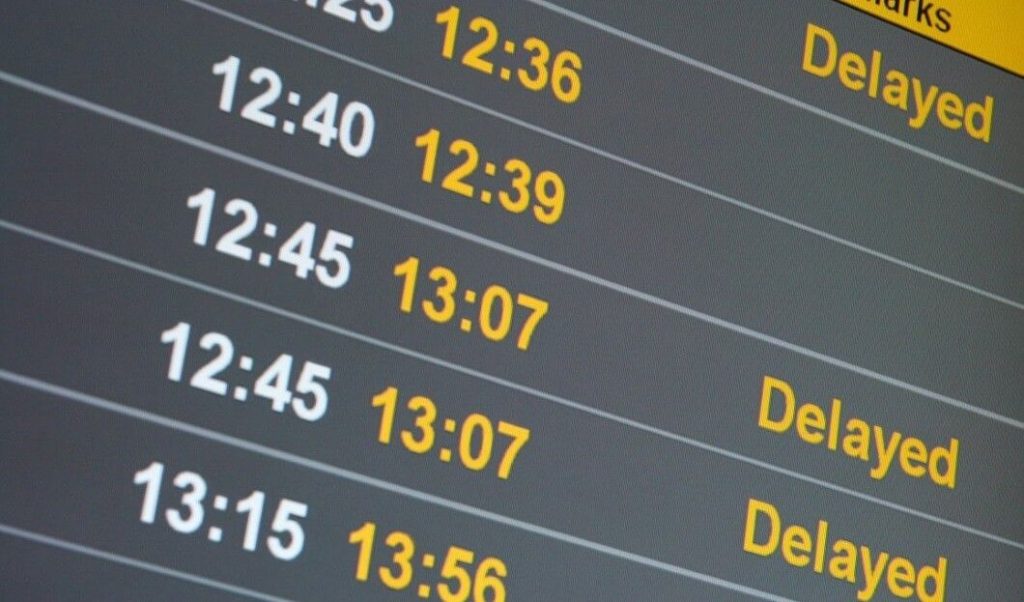
SITA has unveiled its Advance Flight Delay Notification API, a new solution designed to give airlines and airports earlier visibility of potential delays. By alerting arrival airports before disruption spreads, the tool aims to cut operational costs, protect passenger connections and improve overall network resilience.
As global air traffic volumes climb and operational margins tighten, timely information is emerging as one of aviation’s most valuable assets. In response, SITA has introduced its Advance Flight Delay Notification API, a new digital tool designed to provide earlier visibility of potential delays before they cascade through airline networks.
When arrival airports are informed too late about delays, disruption spreads quickly. Ground handling teams may be positioned unnecessarily, gates can remain occupied, crew duty limits may be exceeded and passengers risk missing onward connections. The result is not just inconvenience, but mounting operational costs and reputational strain.
According to the International Air Transport Association (IATA), air traffic flow management delays in Europe alone have cost airlines and passengers an estimated €16.1 billion over the past decade. A significant portion of this cost stems not from the initial delay, but from the lack of early, actionable information needed to adjust schedules, reassign resources and protect downstream operations.
SITA’s Advance Flight Delay Notification API seeks to close this information gap. The solution uses the latest departure data combined with business logic based on expected flight duration to anticipate potential delays. It then automatically alerts destination airports, delivering early warnings and real-time updates directly to operational teams responsible for managing arrivals.
By shifting visibility forward in the operational timeline, the system enables arrival airports to move from reactive management to proactive intervention. Gate allocation can be adjusted earlier, ground handling resources can be rescheduled efficiently and crew planning can be optimised before legal duty time becomes a constraint. Passenger processing and onward connections can also be safeguarded with greater precision.
Martin Smillie, Senior Vice President, Communications and Data Exchange at SITA, noted that much of aviation’s disruption is amplified by delayed awareness rather than the initial operational setback. By providing earlier and reliable signals, the new API gives decision-makers time to respond strategically rather than under pressure, reducing financial impact and improving passenger outcomes.
The system centralises alerts and delivers push notifications to key stakeholders at arrival airports. Aircraft servicing teams, ground handlers and connecting crews receive early insight into inbound disruption, helping to minimise idle time and last-minute operational reshuffling. This coordination is particularly critical as airports and airlines operate with tighter turnaround windows and leaner staffing structures.
Technically, the API is delivered via secure, encrypted HTTP connections, eliminating the need for repeated schedule queries and manual updates. Automated alerts are triggered when a flight is projected to depart 15 minutes later than its original scheduled time, providing a crucial buffer for operational adjustments.
Offered as a subscription service, the Advance Flight Delay Notification API forms part of SITA’s broader portfolio of flight information APIs. The wider ecosystem enables airlines and airports to securely exchange real-time operational data with trusted partners across the air transport value chain.
As the aviation industry continues its recovery and growth trajectory, digital integration and data-sharing are increasingly central to maintaining efficiency. With tighter capacity and rising passenger expectations, preventing disruption before it escalates may prove more valuable than managing it after the fact.
SITA’s latest launch reflects a broader industry shift toward predictive operations — where early warning systems, real-time data exchange and automation work together to protect network performance.
Related Posts
 SITA Acquisition of Collins Airport Solutions Signals Moves to Consolidate Aviation Technology
 Uganda Coffee Roasters Tap Richard Rugaya as Executive Director, with Focus on Commercial Growth
 Equity Bank Reports UGX37.6 Billion in Green Loans as Uganda Seeks to Scale Climate Investment
 Nile Breweries Celebrates 75 Years of Growing with Uganda
 Stanbic installs solar power system at Mbale School for the Deaf
 Airbus-Kratos Valkyrie Unmanned Combat Aircraft Completes First Flight Ahead of 2029 Combat Target
Get business news delivered to you everyday
Latest News

SITA Acquisition of Collins Airport Solutions Signals Moves to Consolidate Aviation Technology

Uganda Coffee Roasters Tap Richard Rugaya as Executive Director, with Focus on Commercial Growth

Equity Bank Reports UGX37.6 Billion in Green Loans as Uganda Seeks to Scale Climate Investment

Why Africa’s Institutions Must Turn Knowledge and Investment into Farmer Prosperity

Forbes ranks MTN Group third globally on best telecom employer list

Stanbic experts offer investment insights to navigate current market uncertainty

Africa Carbon Markets Urged to Turn Potential into Investment and Delivery

Bank of Uganda hikes base rate from 9.75% to 12% amidst global tensions

Corporate Buyers Could Help Unlock SAF Market Worth Millions of Tonnes by 2030

Airbus sees USD420bn Global Aviation Services Boom: Can Africa Capture its Share?