
Uganda’s schools are increasingly turning to specialised financing solutions to manage term-opening expenses, highlighting the growing […]
Uganda’s schools are increasingly turning to specialised financing solutions to manage term-opening expenses, highlighting the growing role of credit and financial inclusion in sustaining education delivery.
As thousands of learners return to classrooms across Uganda this term, a less visible but equally important reopening exercise is unfolding in school finance offices.
While parents focus on tuition fees, uniforms and transport, school administrators are grappling with a recurring challenge that has become one of the defining realities of Uganda’s private education sector: finding enough cash to keep operations running before fees are fully collected.
For many schools, the start of a term brings an immediate wave of expenditure. Teachers’ salaries must be paid, food stocks replenished, utilities settled and learning materials procured, often weeks before a significant proportion of school fees reaches school accounts.
The result is a persistent cash flow mismatch that education sector analysts say continues to constrain investment, service delivery and long-term planning.
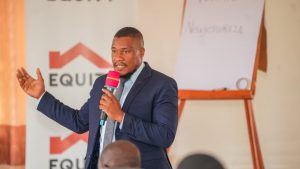
“Schools operate in a unique financial cycle,” explains Brian Ddamba, Manager Bridge Finance at Equity Bank Uganda.
“Schools have predictable revenue streams, but they also face significant upfront expenses every term. Our role is to provide the financial support necessary to bridge that gap, allowing school owners and administrators to focus on delivering quality education rather than worrying about short-term liquidity challenges.”
The challenge is particularly pronounced among privately owned schools, which account for a significant share of Uganda’s secondary and nursery education capacity.
Unlike businesses that receive revenue continuously throughout the month, schools typically rely on termly fee payments that often arrive in instalments. Yet operational costs remain constant and immediate.
Industry players say the financing gap has become even more apparent as schools face rising food prices, utility costs, infrastructure maintenance requirements and growing expectations from parents regarding the quality of learning environments.
Increasingly, financial institutions are positioning themselves to fill this gap through education-focused lending products.
Among them is Equity Bank Uganda, whose School Bridge Financing facility offers unsecured loans of up to UGX500 million to schools seeking working capital during peak expenditure periods.
The financing can be used for operational expenses such as staff salaries, food supplies, scholastic materials, facility maintenance and security upgrades.
Education stakeholders argue that such financing solutions are becoming increasingly important as schools seek to maintain standards while expanding capacity.
Many institutions are investing in classroom blocks, dormitories, digital learning tools and improved security systems to remain competitive in an increasingly crowded education market.
Without access to affordable financing, school proprietors often delay critical investments or divert resources away from long-term development projects to meet immediate operational needs.
Parents face a similar challenge.
For households with multiple school-going children, the beginning of each term can place substantial pressure on family budgets.
School fees, textbooks, uniforms and transport costs frequently coincide with other household obligations, forcing some families to delay payments or seek short-term financing.
To address this demand, financial institutions have also introduced school fees loan products targeted at parents and guardians.
Equity Bank’s education financing package, for example, provides school fees loans of up to Shs5 million per child, enabling families to spread payments over a longer period while ensuring learners return to school on time.
The growing availability of such products reflects a broader recognition that access to education is increasingly linked not only to school infrastructure and teaching quality, but also to financial inclusion.
As Uganda’s education sector expands and competition intensifies, experts believe financing will play a larger role in determining which institutions thrive and which struggle to remain sustainable.
For policymakers, educators and financiers alike, the challenge is no longer simply about getting children into classrooms.
It is increasingly about ensuring that schools themselves have the financial resilience needed to deliver consistent, quality education throughout the academic year.
That conversation is expected to continue on June 23 when education stakeholders gather at Hotel Africana for an engagement on school financing, institutional growth and investment opportunities within the sector.