

Rising Energy Bills Push Schools Towards Renewables, Stanbic Forum Hears
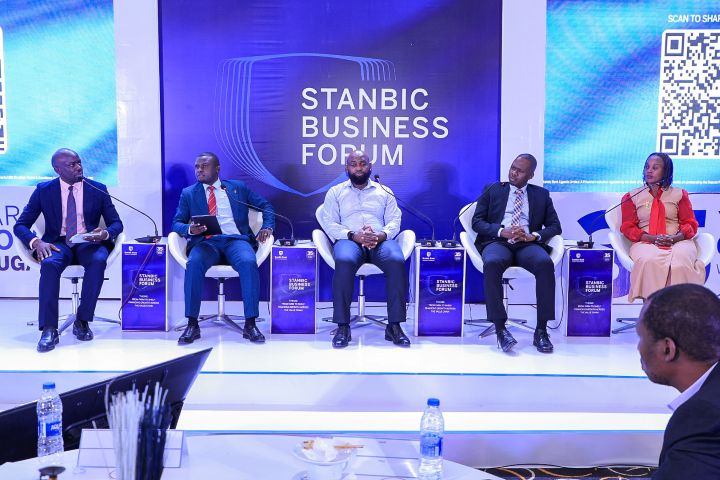
As they grope for survival amidst rising electricity tariffs, generator costs and firewood expenses, education institutions are increasingly turning to renewable energy solutions to improve financial sustainability.
Escalating energy costs are emerging as one of the biggest operational challenges facing Uganda’s education sector, prompting growing interest in renewable energy solutions that can lower costs and improve long-term sustainability.
The issue came into sharp focus during a business forum organised by Stanbic Bank Uganda for education sector clients, where school proprietors, energy experts, financiers and policymakers examined how renewable energy could help institutions manage rising expenditure while improving service delivery.
The forum forms part of Stanbic Bank’s year-long regional business engagement programme marking the bank’s 35 years of operation in Uganda.
Participants heard that while access to electricity has expanded significantly across the country, many schools continue to grapple with high utility bills, unreliable power supply, rising generator fuel costs and dependence on firewood for cooking.
For institutions operating under tight budgets, these costs are increasingly competing with spending on infrastructure, learning materials and staff development.
Eng. David Birimumaaso, Assistant Commissioner for Energy Efficiency and Conservation at the Ministry of Energy and Mineral Development, said access to reliable and affordable energy remains critical for improving educational outcomes.
“Access to reliable and affordable energy is essential for creating conducive learning environments. Renewable solutions can bridge existing gaps while supporting Uganda’s broader climate and development objectives,” he said.
The discussion highlighted a broader shift taking place across Uganda’s economy as businesses and institutions seek alternatives to conventional energy sources in response to rising operating costs.
For schools, renewable energy is increasingly being viewed through a commercial lens rather than purely as an environmental intervention.
Tunde Thorpe, Stanbic Bank Uganda’s Executive Head of Business and Commercial Banking, said investments in clean energy can help institutions reduce inefficiencies that drain resources.
“Many institutions still struggle with energy-related inefficiencies that affect service delivery. Clean energy solutions free up resources that can be redirected to improving learning outcomes,” Thorpe said.
He noted that access to financing remains a major barrier for many institutions seeking to transition to renewable technologies, adding that Stanbic has developed financing solutions aimed at making such investments more affordable.
Uganda’s energy landscape has evolved significantly in recent years. Current estimates show national electricity access at 56.7 percent, with solar energy accounting for 37.7 percent of access compared to 18.9 percent connected through the national grid.
Despite this progress, many educational institutions, particularly those located outside major urban centres, continue to experience energy reliability challenges that affect teaching, administration and student welfare.
Noah Ochima of the Uganda Energy Credit Capitalisation Company said technological advances and falling costs have made renewable energy systems increasingly viable for schools.
“Renewable energy is no longer a future option; it is a present-day necessity,” he said.
Private sector players participating in the forum argued that institutions should increasingly view renewable energy investments as long-term cost management strategies capable of generating measurable financial returns.
Mohammed Lubowa, Managing Director of All in Trade Uganda, said schools should assess renewable energy projects based on their ability to deliver operational savings and improve energy security over time.
Beyond electricity, participants also highlighted the continued dependence on firewood by many schools, raising concerns about environmental sustainability, health impacts and rising fuel costs.
Melissa Nyakwera, Stanbic Bank’s Head of Commercial Banking, said addressing these challenges would require stronger collaboration between financial institutions, government agencies, development partners and energy providers.
She said the bank is expanding support to schools through financing, technical advisory services and partnerships designed to accelerate adoption of sustainable technologies.
The bank is also offering financing products beyond energy solutions, including asset financing for school transport and lending facilities that rely on transaction history rather than traditional collateral requirements.
As operating costs continue to rise, school administrators are under pressure to find efficiencies without compromising educational quality. Renewable energy, once viewed primarily as an environmental consideration, is now emerging as a strategic investment capable of protecting budgets, improving reliability and strengthening the long-term sustainability of educational institutions.
Related Posts
 Relief as UAE Eases Ebola-era Entry Curbs on Ugandans, Reopening Key Aviation Corridor
 13 Feared Killed as Tracep Aviation L-410 Crashes in DRC
 IATA Warns Cargo Screening Alone Cannot Contain Undeclared Dangerous Goods Risk
 Rwenzori Marathon: A Case of What’s Possible in Diversifying Uganda’s Tourism Offering
 Entebbe-Based Jet Fresh Cargo Takes Ugandan Air Freight into Global Awards Contest
 Uganda Set for First National ESG Conference as Sustainable Finance Gains Ground
Get business news delivered to you everyday
Latest News

Why Unlocking Africa’s Next Mining Powerhouse Requires Strong Financial Partnerships

Relief as UAE Eases Ebola-era Entry Curbs on Ugandans, Reopening Key Aviation Corridor

Equity Turns Schools into Climate Restoration Hubs as Lender Launches 200,000-tree Uganda drive

13 Feared Killed as Tracep Aviation L-410 Crashes in DRC

IATA Warns Cargo Screening Alone Cannot Contain Undeclared Dangerous Goods Risk

Rwenzori Marathon: A Case of What’s Possible in Diversifying Uganda’s Tourism Offering

Entebbe-Based Jet Fresh Cargo Takes Ugandan Air Freight into Global Awards Contest

Afreximbank Issues USD29m Guarantee to Expand EAC Customs Bond

Uganda puts UGX1.4tn Treasury Bonds on Auction

DHL Launches Direct Bahrain-Johannesburg Freighter Service