

Regional Banking Network helps Ugandan Manufacturer tackle Cross-Border Payment friction
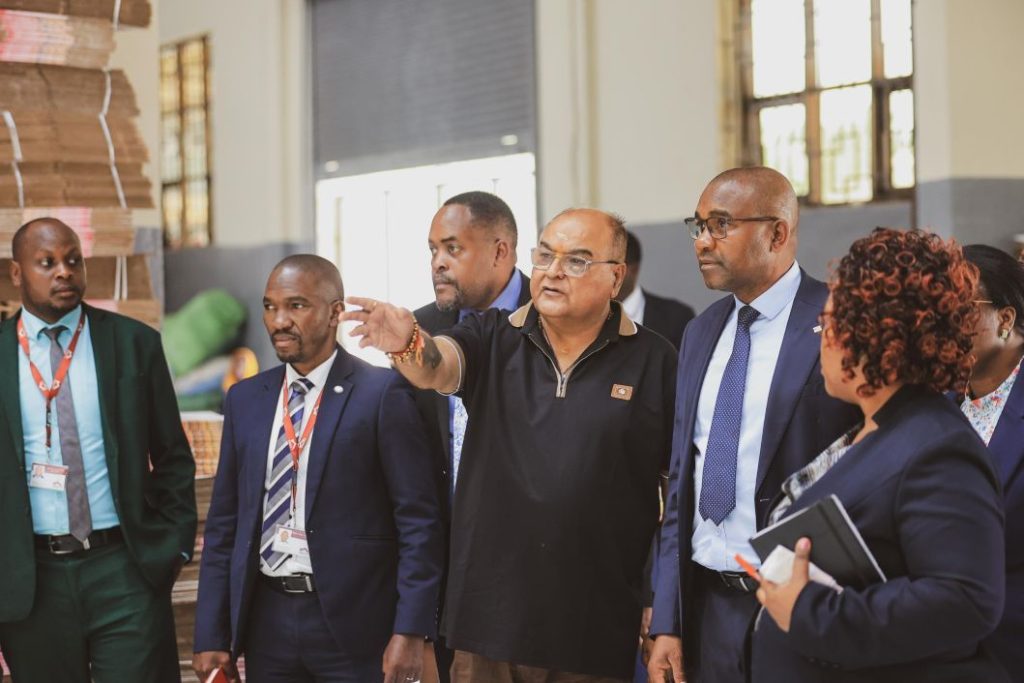
Ugandan manufacturer UKI is leveraging Equity Bank’s regional network to simplify collections in the DRC, highlighting how financial connectivity can strengthen the country’s export competitiveness.
For Ugandan manufacturers seeking to expand into regional markets, the ability to move money as efficiently as they move goods is becoming an increasingly important part of export competitiveness.
Mbale-based manufacturer, importer and exporter UKI Uganda Limited is seeking to address one of the practical obstacles to its expansion into East and Central Africa by leveraging Equity Bank’s regional banking network.
The company says delays and complexity in cross-border payments, particularly in the Democratic Republic of Congo (DRC), have affected the ease with which it can serve customers and manage liquidity as it expands its distribution footprint.
Through Equity Bank’s interconnected operations in Uganda, Kenya and the DRC, UKI is seeking to reduce its reliance on third-party payment agents and multiple financial institutions, potentially shortening settlement times and lowering transaction costs.
Faster settlement can improve cash flow, allow businesses to replenish stock more quickly and provide greater flexibility to respond to demand in regional markets.
Equity Bank Uganda Managing Director Gift Shoko said the bank’s expanding regional footprint provides an advantage to businesses seeking to trade across African markets.
The bank is also positioning its regional infrastructure as a tool for helping Ugandan exporters manage collections in overseas markets.
Olivia Mugaba, Head of SME at Equity Bank Uganda, said exporters can use non-resident collection accounts to collect local sales proceeds in markets such as the DRC and transfer funds back to Uganda, subject to applicable export licences and regulatory requirements.
For UKI, simplifying how customers in the DRC pay for its products is a priority.
“Our customers in the DRC need a simpler way to pay for their supplies. Relying on local payment agents takes time and slows down business,” said Anant Kumar Manjithia, Managing Director of UKI Uganda Limited.
“We want to test a direct model where buyers in Congo can deposit funds into our account seamlessly, quickly and without extra charges,” he said.
The proposed approach could reduce one of the less visible costs of intra-African trade: payment friction between buyers and sellers operating in different financial jurisdictions.
While the movement of goods across African borders has received considerable attention through initiatives such as the African Continental Free Trade Area, the financial infrastructure supporting those transactions remains an important part of whether businesses can successfully scale.
For Ugandan manufacturers, access to regional banking services can therefore become an extension of their export strategy rather than simply a financial service.
The Equity-UKI relationship also extends beyond cross-border payments, with the bank providing customised financial solutions and capacity-building support for UKI’s broader business ecosystem, including distributors and employees.
The experience of UKI illustrates the importance of financial connectivity as Ugandan companies seek to convert regional market opportunities into sustainable export growth.
The DRC, in particular, represents a significant market for Ugandan businesses, but operating successfully there requires more than identifying customers. Companies must also be able to collect revenues efficiently, maintain liquidity and keep their supply chains moving.
Related Posts
 SITA Acquisition of Collins Airport Solutions Signals Moves to Consolidate Aviation Technology
 Uganda Coffee Roasters Tap Richard Rugaya as Executive Director, with Focus on Commercial Growth
 Equity Bank Reports UGX37.6 Billion in Green Loans as Uganda Seeks to Scale Climate Investment
 Why Africa’s Institutions Must Turn Knowledge and Investment into Farmer Prosperity
 Stanbic experts offer investment insights to navigate current market uncertainty
 Africa Carbon Markets Urged to Turn Potential into Investment and Delivery
Get business news delivered to you everyday
Latest News

SITA Acquisition of Collins Airport Solutions Signals Moves to Consolidate Aviation Technology

Uganda Coffee Roasters Tap Richard Rugaya as Executive Director, with Focus on Commercial Growth

Equity Bank Reports UGX37.6 Billion in Green Loans as Uganda Seeks to Scale Climate Investment

Why Africa’s Institutions Must Turn Knowledge and Investment into Farmer Prosperity

Forbes ranks MTN Group third globally on best telecom employer list

Stanbic experts offer investment insights to navigate current market uncertainty

Bank of Uganda hikes base rate from 9.75% to 12% amidst global tensions

Corporate Buyers Could Help Unlock SAF Market Worth Millions of Tonnes by 2030

Airbus sees USD420bn Global Aviation Services Boom: Can Africa Capture its Share?

Nile Breweries Celebrates 75 Years of Growing with Uganda